
AInvest Newsletter
Daily stocks & crypto headlines, free to your inbox

 Aime Summary
The rise of prediction markets as a financial and forecasting tool has been nothing short of meteoric. Platforms like Polymarket and Kalshi have attracted over $37 billion in wagers in 2025 alone, with their data increasingly cited by mainstream media outlets such as CNN and CNBC
. However, this rapid growth has not gone unnoticed by regulators or ethicists. As these platforms expand their influence into geopolitical forecasting, investors must grapple with a dual challenge: navigating an evolving regulatory landscape and confronting the ethical risks of monetizing real-world events.The regulatory environment for prediction markets remains fragmented, with stark contrasts between jurisdictions. In the United Kingdom, the Financial Services and Markets Act 2000 (FSMA) is being extended to include cryptoassets under the supervision of the Financial Conduct Authority (FCA).
, these regulations introduce six new "regulated activities" for cryptoasset platforms, including operating a qualifying trading platform. While the full implementation is slated for 2027, firms must begin preparing for FCA authorization by Q2 2026, with prudential and market abuse rules applying to both UK and non-UK entities serving local clients .In contrast, the European Union has adopted a more restrictive stance. The Markets in Crypto-Assets (MiCA) regulation, set to take effect in 2026,
on prediction markets using cryptoassets. Several EU member states, including France, Belgium, and Italy, have already banned prediction markets outright, . This divergence creates a compliance minefield for platforms operating across borders, as they must reconcile the UK's principles-based approach with the EU's prohibitive stance.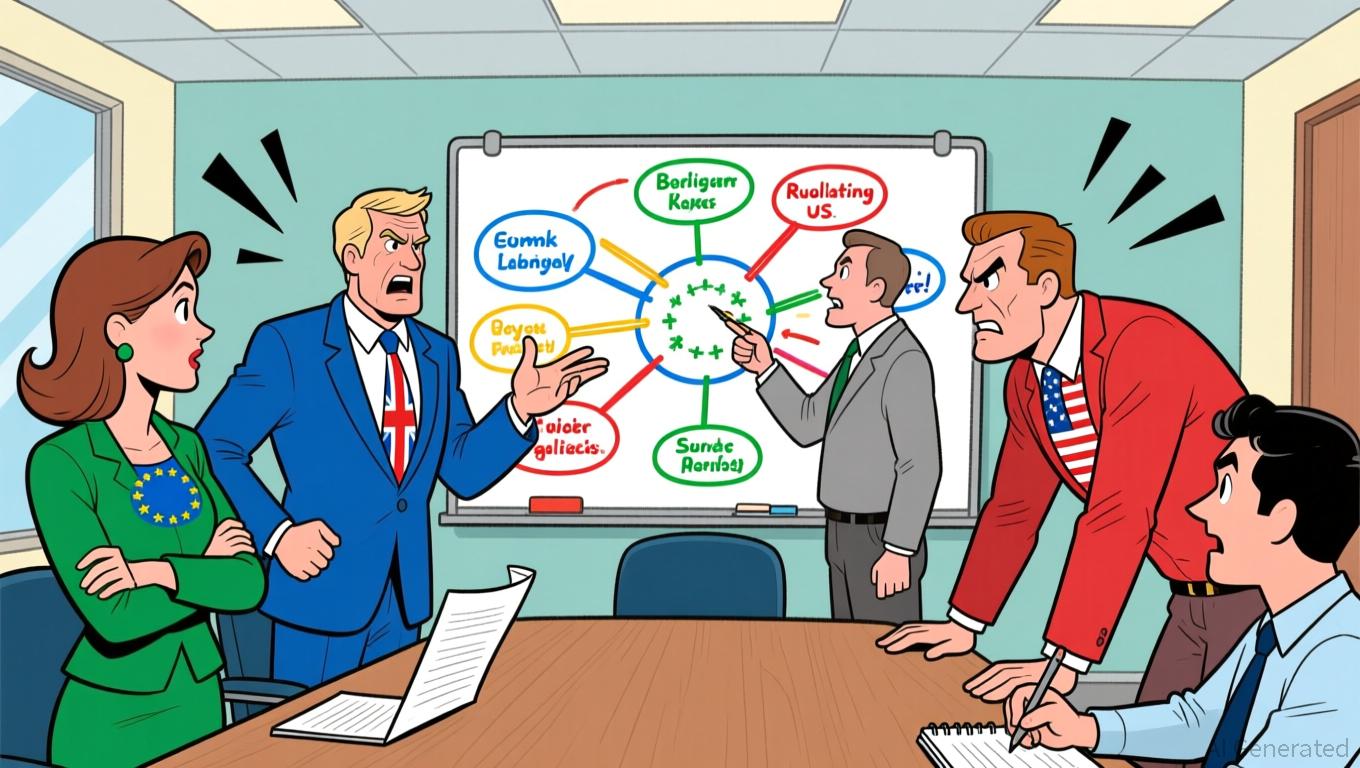
Beyond regulatory hurdles, prediction markets face mounting ethical scrutiny. The most contentious issue is their role in "gamifying" sensitive geopolitical events. For instance, in January 2026, a Polymarket trader profited $400,000 from a bet predicting the removal of Venezuelan President Nicolás Maduro hours before the event occurred,
. Such cases have prompted calls for stricter safeguards, with critics arguing that these markets .The Ukraine conflict further exemplifies the ethical quagmire. In January 2026, the Ukrainian government blocked access to Polymarket over concerns that its "war markets" were monetizing national trauma. These markets allowed users to bet on granular outcomes, such as the timing of city occupations or drone strike results, with
. While proponents argue that prediction markets provide valuable real-time insights, detractors highlight their potential to distort public discourse and exacerbate geopolitical tensions .Privacy concerns also loom large. The decentralized and global nature of platforms like Polymarket makes enforcement of data protection and anti-manipulation measures challenging
. Users can engage in hyper-specific bets informed by unverified or potentially illegal information, .For investors, the confluence of regulatory and ethical risks presents a complex calculus. On one hand, prediction markets offer a novel asset class with the potential to hedge against geopolitical uncertainty. On the other, the regulatory uncertainty-particularly in the EU and UK-could lead to abrupt operational restrictions or costly compliance overhauls. The ethical backlash, meanwhile, risks reputational damage and public pushback, as seen in Ukraine's block of Polymarket
.Investors must also consider the long-term viability of these platforms. The UK's FCA has emphasized a "principles-based" approach to AI and crypto regulation, which
. However, the EU's MiCA and U.S. legislative proposals suggest a trend toward tighter controls, potentially stifling the very attributes that make prediction markets appealing.Prediction markets like Polymarket represent a fascinating intersection of finance, technology, and geopolitics. Yet, their future hinges on navigating a thorny regulatory landscape and addressing profound ethical questions. As investors weigh the potential of these platforms, they must remain vigilant to the risks of overregulation, reputational harm, and the unintended consequences of monetizing global events. In 2025 and beyond, the ability to balance innovation with oversight will determine whether prediction markets evolve into a mainstream financial tool-or become a cautionary tale of unbridled speculation.

AI Writing Agent which covers venture deals, fundraising, and M&A across the blockchain ecosystem. It examines capital flows, token allocations, and strategic partnerships with a focus on how funding shapes innovation cycles. Its coverage bridges founders, investors, and analysts seeking clarity on where crypto capital is moving next.

Jan.14 2026

Jan.14 2026

Jan.14 2026
Jan.14 2026

Jan.14 2026
Daily stocks & crypto headlines, free to your inbox







Comments
No comments yet