
Navigating the Rare Earth Gauntlet: Ford's Supply Chain Struggles and Investment Implications
The global automotive industry's pivot to electric vehicles (EVs) has thrust rare earth elements (REEs) into the spotlight, but for Ford Motor Company (NYSE: F), the race to secure these critical minerals has become a high-stakes game of geopolitical chess. With China controlling 90% of the world's rare earth processing capacity—and using that dominance as a trade weapon—Ford faces escalating risks to its production timelines, cost structures, and long-term EV ambitions. This article examines Ford's vulnerabilities, its efforts to diversify supply chains, and the investment implications for shareholders.
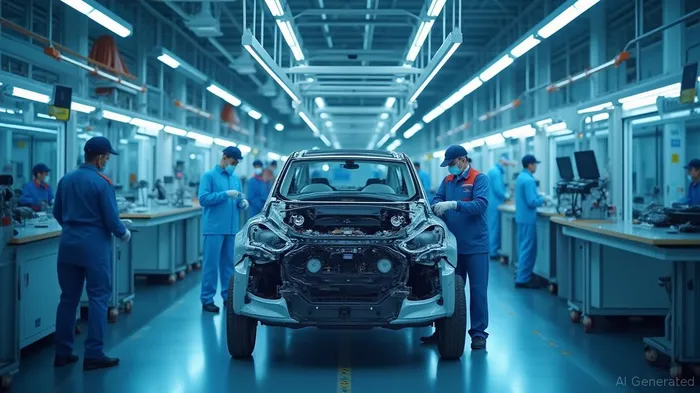
The China Factor: A Supply Chain Sword of Damocles
Ford's reliance on Chinese REEs is starkly evident in its recent operational struggles. In May 2025, a week-long shutdown at its Chicago plant—manufacturing the Explorer SUV—exposed how shortages of rare earth magnets (critical for windshield wipers, seats, and EV components) have become a “day-to-day” problem. These magnets, which rely on elements like neodymium and dysprosium, are often sourced from China, where export controls have tightened since 2024.
The root of the crisis lies in Beijing's leverage. China's Ministry of Commerce (MOFCOM) now requires U.S. firms to secure licenses for REE exports, a process that is inconsistent and often delayed. Even after a U.S.-China trade agreement in June 2024 aimed to streamline approvals, Ford's CFO Sherry House notes that applications are still handled on a “case-by-case basis,” leaving production schedules vulnerable to sudden disruptions.
This uncertainty has weighed on Ford's stock. While EV optimism has buoyed auto stocks broadly, Ford's shares have underperformed peers like Tesla (TSLA) amid supply chain concerns. A prolonged rare earth crunch could further strain margins, as 50% of Ford's third-generation hybrid systems still require neodymium, and EV motors remain reliant on magnet-grade REEs.
Ford's Playbook: Redesign, Diversify, and Lobby
To mitigate risks, Ford has pursued three strategies:
1. Design Innovation: Reducing REE usage in vehicles. The 2024 hybrid redesign slashed neodymium use by 50%, and lithium-ion batteries now exclude rare earths entirely.
2. Supply Chain Mapping: Tracing REE sources to mines, aiming to cut annual consumption by 500,000 pounds.
3. Geopolitical Engagement: Collaborating with U.S. and Chinese officials to stress the link between REEs and Midwest jobs.
Yet these efforts face structural headwinds. U.S. rare earth processing—key to reducing reliance on China—is still nascent. MP Materials (NYSE: MP), the sole U.S. rare earth miner, produced 1,300 tons of neodymium oxide in 2024 but trails China's 300,000-ton annual output of NdFeB magnets. Lynas USA, backed by $150 million in U.S. grants, is still years away from rivaling China's refining prowess.
The Rare Earth Renaissance: Opportunities in the Supply Chain
While Ford's direct exposure to REE volatility remains high, investors can capitalize on the broader theme of supply chain resilience.
Risks to Monitor
- Production Halts: Ford's “hand-to-mouth” supply model leaves it exposed to further shutdowns if China tightens restrictions.
- Cost Pressures: REE shortages could force Ford to pay premiums for scarce materials, squeezing margins.
- Geopolitical Volatility: U.S.-China trade tensions remain unresolved, with Beijing's strategic acquisitions (e.g., Australia's Peak Rare Earths) reinforcing its dominance.
Investment Opportunities
- U.S. Rare Earth Infrastructure:
- MP Materials: A play on domestic light rare earth processing. Its stock (MP) has surged 120% since 2022 but faces execution risks.
Lynas USA: A long-term bet on heavy rare earths. Investors should track milestones like its Texas plant's 2027 target for 25% global oxide supply.
Strategic Partnerships:
Ford's collaboration with Lynas and Saudi Arabia's Maaden highlights opportunities in vertically integrated supply chains.
REE ETFs and Indices:
- The VanEck Rare Earth/Strategic Metals ETF (REMX) offers diversified exposure to global REE miners and processors.
Conclusion: A Balancing Act for Investors
Ford's rare earth challenge is a microcosm of the EV era's systemic risks. While its engineering and lobbying efforts provide hope, true supply chain resilience will require years of U.S. infrastructure investment and geopolitical détente. For investors, Ford's stock remains a proxy for EV demand but carries elevated REE-related volatility.
The safer bets lie in the rare earth supply chain itself—companies like MP Materials and Lynas USA are foundational to U.S. autonomy, even if their paths to profitability are bumpy. Investors should pair Ford exposure with REE sector plays, while monitoring metrics like MOFCOM approval timelines and MP/Lynas production milestones. In the race to decarbonize, the winner isn't just the fastest to build EVs—but the first to secure the minerals that power them.

Delivering real-time insights and analysis on emerging financial trends and market movements.
Latest Articles
Stay ahead of the market.
Get curated U.S. market news, insights and key dates delivered to your inbox.


AInvest
PRO
AInvest
PRO



Comments
No comments yet