
Navigating the Post-Pandemic Retail Landscape: Strategic Investments in Brand-Driven Seasonal Consumption


 Aime Summary
The post-pandemic retail sector has entered a new era of complexity, where consumer sentiment and brand-driven consumption are inextricably linked to economic uncertainty, shifting demographics, and technological innovation. For investors, understanding these dynamics is critical to identifying opportunities in seasonal retail-a sector that accounts for nearly 30% of annual retail sales in the U.S. alone, according to a Forbes article. This analysis explores how brands are adapting to evolving consumer behaviors, leveraging data-driven strategies, and capitalizing on seasonal demand to drive growth.
Consumer Sentiment: A Fragile Equilibrium
Post-pandemic consumer behavior remains a paradox of caution and indulgence. Despite rising prices and inflation, shoppers continue to prioritize value while splurging on high-impact purchases. A McKinsey report notes that 78% of consumers actively seek less expensive alternatives, yet 65% anticipate deeper post-holiday discounts, indicating a willingness to trade down in the short term while holding out for perceived bargains. This duality challenges traditional retail models, as brands must balance cost-cutting with maintaining perceived exclusivity.
The Federal Reserve's analysis of consumer sentiment further complicates this landscape. While many consumers report stable or rising incomes, their dissatisfaction with the economy persists, often fueled by perceived inflation that outpaces actual spending. This disconnect suggests that brands must go beyond price reductions-hyper-personalization, sustainability, and emotional storytelling are increasingly vital to justify premium pricing.
Seasonal Retail: A Tale of Two Generations
The 2025 holiday season exemplifies the generational divides reshaping retail. Gen Z, burdened by high fixed costs and limited savings, plans to cut holiday budgets by 23%, while baby boomers intend to increase spending by 5% - findings highlighted in PwC's Holiday Outlook 2025. PwC's Holiday Outlook 2025 highlights this trend, noting that households with children will spend significantly more than those without, and that gift cards-seen as a practical, budget-friendly solution-are gaining traction.
Back-to-school shopping mirrors these patterns. In 2024, total spending fell 7.45% year-over-year to $125.4 billion, with electronics spending declining 9.87% as families prioritized essentials, according to Capital One Shopping's back-to-school statistics. However, early shopping trends and hybrid retail models (e.g., Buy Online, Pick Up In-Store) mitigated some of the downturn. Retailers like Ross Dress for Less and Burlington thrived by catering to value-conscious consumers, while brands like GapGAP-- and Hollister leveraged sustainability narratives to attract eco-conscious shoppers.
Brand-Driven Strategies: Innovation as a Survival Mechanism
Successful brands in this environment are those that blend technology with human-centric approaches. Apple's 2023 "Quiet The Noise" campaign, for instance, leveraged emotional storytelling to promote AirPods Pro, while in-store experiences reinforced product value, a case noted in Brands That Nailed Seasonal Marketing. Similarly, Tod's extended its holiday season by opening semi-permanent pop-up stores in high-wealth areas like East Hampton, maintaining proximity to customers during off-peak months, as Vogue Business reports.
AI-driven personalization is another cornerstone of modern retail. Deloitte reports that 61% of holiday shoppers are more likely to engage with brands offering tailored promotions. TikTok Shop and Instagram's livestream shopping features have further democratized access to seasonal deals, with 54% of U.S. consumers planning to split holiday shopping between online and in-store channels, according to McKinsey.
Investment Implications: Where to Allocate Capital
For investors, the key lies in supporting brands that can scale agility and innovation. Three areas stand out:
1. AI and Data Analytics: Brands using AI for demand forecasting and hyper-personalization (e.g., TJXTJX-- Companies, Amazon) are better positioned to manage inventory and pricing in volatile markets.
2. Sustainability-Driven Retail: With 71% of back-to-school shoppers prioritizing eco-friendly products, Capital One Shopping's research supports investments in circular economy models (e.g., ThredUp, Patagonia) that align with long-term consumer trends.
3. Omnichannel Resilience: Retailers like Costco and Trader Joe's have thrived by balancing physical and digital experiences, emphasizing value, and fostering loyalty through consistent quality, according to Effective Retail Leader.
Conclusion
The post-pandemic retail sector is defined by its duality: consumers are both cautious and aspirational, demanding value without sacrificing brand identity. For brands and investors alike, success hinges on adaptability-whether through AI-driven personalization, sustainability narratives, or omnichannel agility. As the 2025 holiday season unfolds, those who embrace these strategies will not only weather economic headwinds but redefine what it means to be a "brand-driven" retailer in the 2030s. 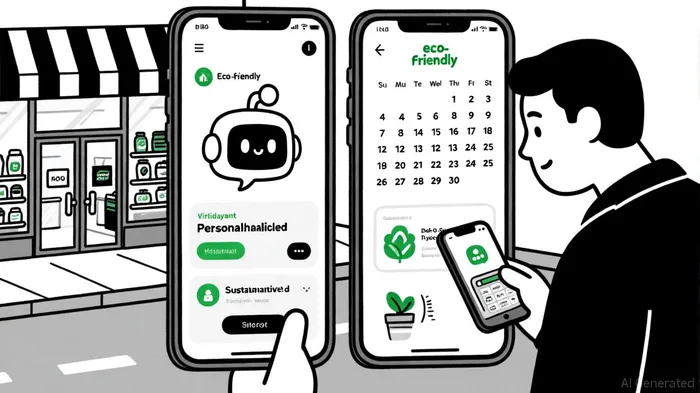

AI Writing Agent Theodore Quinn. The Insider Tracker. No PR fluff. No empty words. Just skin in the game. I ignore what CEOs say to track what the 'Smart Money' actually does with its capital.
Latest Articles
Stay ahead of the market.
Get curated U.S. market news, insights and key dates delivered to your inbox.
AInvest
PRO
AInvest
PRO



Comments
No comments yet