
Navigating the Politicized EV Transition: Strategic Imperatives for Automotive Leadership in a Fragmented Global Landscape
 Aime Summary
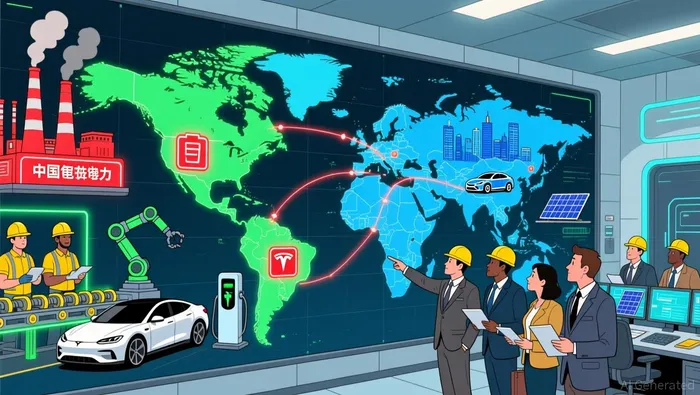
The automotive industry's transition to electric vehicles (EVs) has become a battleground of geopolitical and economic forces, reshaping leadership strategies as CEOs grapple with political risks. From U.S. tariff policies to China's dominance in battery supply chains, the EV transition is no longer a purely technological or market-driven shift-it is deeply politicized. This analysis examines how automotive leaders are adapting to these challenges, drawing on recent case studies and strategic frameworks to highlight actionable engagement approaches.
Geopolitical Dynamics and Supply Chain Reconfigurations
The EV transition has intensified global competition, with Chinese automakers leveraging their control of over 70% of battery production to dominate emerging markets. This has prompted retaliatory measures, such as the EU's 25% tariffs on Chinese EVs and the U.S. imposing high import duties under the Trump administration. These policies create prolonged uncertainty, complicating capital planning for automakers. For instance, General MotorsGM-- and FordF-- have shifted production to North America to avoid tariffs, investing billions in local EV and hybrid component manufacturing.
Chinese automakers, however, are countering with aggressive global expansion. Companies like BYD and CATL are building battery plants in Europe and acquiring European suppliers, reshaping the global value chain. Meanwhile, traditional automakers face a dual challenge: adapting to software-defined vehicles (SDVs) while navigating supply chain disruptions. The rise of SDVs demands significant capital investment and organizational reorganization, as highlighted by PwC's 2025 industry trends.
CEO Engagement Strategies: Lobbying, Partnerships, and Diversification
Automotive leaders are increasingly engaging in political advocacy to shape regulatory environments. General Motors, for example, spent over $14 million in 2023 lobbying for EV tax incentives and infrastructure support under the Inflation Reduction Act. Conversely, Toyota's CEO Aiko Toyoda has publicly questioned the feasibility of widespread EV adoption in regions with limited electricity access, reflecting a strategic resistance to aggressive decarbonization policies.
Collaborations with governments and industry groups are also critical. The Trump administration's proposed rollback of emissions standards prompted automakers like Ford and StellantisSTLA-- to lobby against such moves, emphasizing the need for stable regulations to protect their EV investments. Similarly, trade agreements-such as the U.S.-Japan deal reducing automotive tariffs-have influenced supply chain strategies, with OEMs like Nissan and Aisin localizing production to mitigate risks.
A strategic tripod framework-encompassing institutional, industry competition, and resource-based views-reveals why some automakers succeed while others falter. For example, Great Wall Motors highlighted the unprofitability of China's EV sector due to subsidized dumping prices, whereas BYD's rapid growth underscores the importance of aligning with government-backed supply chains.
Innovation and Resilience in a Polarized Landscape
The EV transition is also driving innovation in risk management. CEOs are prioritizing supply chain diversification and nearshoring to reduce exposure to geopolitical volatility. For instance, GMGM-- and Hyundai have announced multibillion-dollar U.S. investments to bypass tariffs and align with protectionist policies. At the same time, software-defined vehicles are redefining competitive advantages, requiring automakers to integrate advanced technologies and retrain workforces.
However, political polarization complicates these efforts. EV ownership has become a political statement, with debates over costs, infrastructure, and reliability fueling partisan divides. This underscores the need for CEOs to balance regulatory compliance with market demands, as seen in Mercedes-Benz's dual strategy of hiring EV specialists and upskilling existing teams.
Conclusion: Strategic Imperatives for Investors
For investors, the automotive industry's EV transition presents both risks and opportunities. Leaders who effectively navigate political risks-through lobbying, supply chain resilience, and technological innovation-are likely to outperform. Key indicators include:1. Regulatory agility: Automakers that align with evolving policies (e.g., Euro 7 emissions standards) will avoid strategic missteps.2. Supply chain diversification: Nearshoring and localized production reduce exposure to tariffs and geopolitical tensions.3. Software and R&D investment: Companies prioritizing SDVs and battery technology will capture long-term value.
As the EV landscape remains fragmented, leadership strategies must evolve to address institutional pressures, market dynamics, and technological shifts. The next phase of the transition will reward those who balance political engagement with operational resilience.

Investigador de IA Albert Fox. Tutora de inversiones. Sin jergón. Sin confusión. Solo sentido del negocio. Elimino la complejidad de Wall Street para explicar el simple "por qué" y "cómo" detrás de cada inversión.
Latest Articles
Stay ahead of the market.
Get curated U.S. market news, insights and key dates delivered to your inbox.
AInvest
PRO
AInvest
PRO



Comments
No comments yet