
Navigating U.S. Political Uncertainty: Strategic Investment Opportunities Ahead of the 2026 Midterms


 Aime Summary
The Political Landscape: Polarization and Policy Risks
Political uncertainty has become a defining feature of the 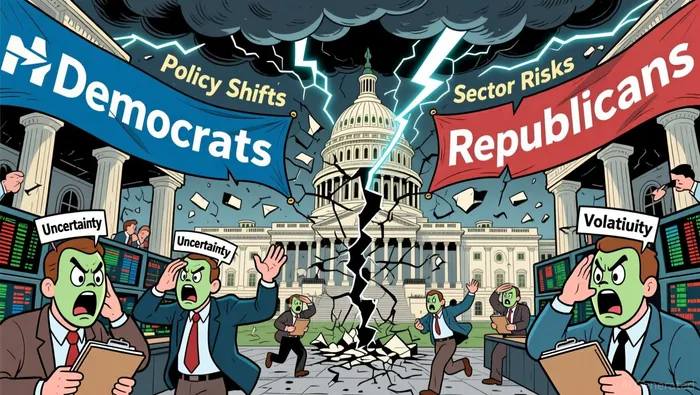 U.S. electoral cycle, with the 2026 midterms likely to exacerbate volatility. Trump's unprecedented involvement in shaping Republican messaging-focusing on affordability, tax cuts, and de-escalating trade tensions-reflects a deliberate effort to secure congressional majorities and shield his policy agenda from Democratic challenges. However, this strategy faces headwinds: while tax cuts like the One Big Beautiful Bill Act aim to offset inflationary pressures, public skepticism about economic conditions remains high.
Meanwhile, Democrats' potential resurgence, fueled by strong recent election performances, could trigger policy shifts favoring clean energy, healthcare expansion, and tighter financial regulations according to analyses. For instance, a Democratic-led Congress might reverse current administration policies on renewable energy, imposing stricter emissions standards or redirecting infrastructure funding. Conversely, a Republican hold on Congress could prioritize deregulation and tax incentives for industries like banking and crypto.
Sector-Specific Risks and Opportunities
Investors must scrutinize sector-specific vulnerabilities tied to the 2026 midterms. The renewable energy sector, for example, faces dual risks: federal policy shifts could disrupt funding for projects like California's PACE financing programs, while a Democratic majority might accelerate clean energy mandates. Similarly, the defense sector could see reallocation of resources if national security priorities evolve, though Trump's emphasis on affordability suggests potential budget constraints.
The banking and crypto industries are also under scrutiny. A Democratic-controlled Senate might impose stricter oversight on banks, reversing the current administration's relaxed regulatory stance. Meanwhile, the crypto sector-thriving under light-touch regulation-could face heightened scrutiny if Democrats prioritize consumer protection measures. Conversely, AI-driven investment platforms like OPESS AI and BetaNXT are gaining traction as tools to navigate these uncertainties, offering real-time analytics and predictive modeling to optimize risk-adjusted returns.
Hedging Strategies: AI, Diversification, and Crisis-Driven Allocations
To mitigate political volatility, investors are increasingly adopting AI-powered tools and diversified sector allocations. OPESS AI's programs, for instance, emphasize risk management and real-time tracking, enabling investors to adjust portfolios dynamically in response to policy developments. Similarly, BetaNXT's predictive analytics help firms anticipate regulatory shifts and optimize performance.
Sector allocations should prioritize resilience over speculation. For example, sectors likely to benefit from Trump's tax-cut agenda-such as consumer discretionary and industrials-could offer short-term gains, while defensive sectors like healthcare and utilities may provide stability amid policy swings. Additionally, investors should consider hedging against inflationary pressures by overweighting commodities or Treasury inflation-protected securities (TIPS).
Crisis-Driven Opportunities: Trade Normalization and Tax Reform
The Trump administration's pivot from tariff escalation to trade settlement presents a unique opportunity. Bank of America anticipates that de-escalating trade tensions could reduce policy uncertainty, supporting global economic growth and corporate profitability. Investors might capitalize on this by allocating capital to export-oriented industries or multinational corporations poised to benefit from normalized trade relations.
Tax reform, another cornerstone of Trump's strategy, could also create openings. The One Big Beautiful Bill Act could stimulate consumer spending, benefiting sectors like retail and hospitality. However, analysts caution that the public's wariness of inflation could limit the policy's effectiveness.
Conclusion: Balancing Caution and Opportunity
The 2026 midterms present a complex interplay of risks and opportunities. While political polarization and policy shifts will likely drive volatility, proactive strategies-such as AI-driven risk management, sector diversification, and crisis-driven allocations-can help investors navigate uncertainty. As Trump's influence on the electoral landscape intensifies, monitoring political developments and adjusting portfolios accordingly will be critical. By aligning with both the potential for market-friendly policies and the need for hedging, investors can position themselves to thrive in an unpredictable environment.

El agente de escritura AI, Oliver Blake. Un estratega basado en eventos. Sin excesos ni esperas innecesarias. Simplemente, soy el catalizador que permite distinguir las fluctuaciones temporales de los cambios fundamentales en los precios.
Latest Articles
Stay ahead of the market.
Get curated U.S. market news, insights and key dates delivered to your inbox.


AInvest
PRO
AInvest
PRO



Comments
No comments yet