
Navigating Political Risk and Governance Challenges in U.S. Real Estate Investment: A 2025 Perspective


 Aime Summary
Regulatory Instability: Tax Reforms and Market Volatility
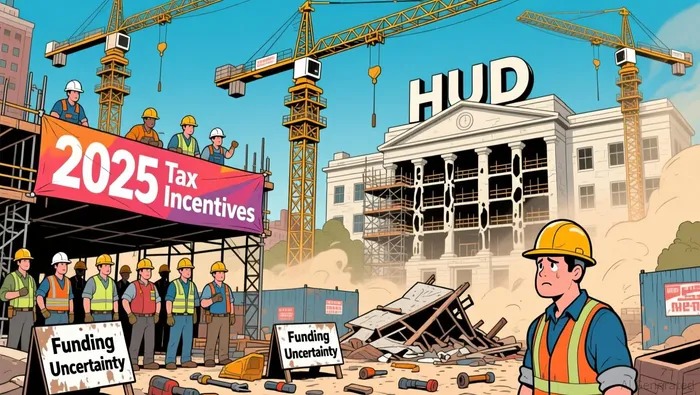
The 2025 tax reform package has introduced both opportunities and uncertainties for real estate investors. Permanent restoration of 100% bonus depreciation for qualifying properties placed in service after January 20, 2025, has improved cash flow for commercial and multi-family asset managers, incentivizing near-term development, according to a CBH analysis. Similarly, the elective 100% depreciation deduction for Qualified Production Property (QPP) aligns with domestic manufacturing incentives but requires careful planning to optimize benefits, per the CBH analysis.
However, these gains are offset by the repeal of the Section 179D Energy-Efficient Commercial Building Deduction for projects starting after June 30, 2026, as noted by the CBH analysis, creating a narrow window for sustainability-focused investments, potentially accelerating short-term green building projects while leaving long-term strategies exposed. Meanwhile, the relaxation of Section 163(j) business interest expense limits has eased debt financing for developers, but rising global financing costs and loan maturities remain significant headwinds, according to an Alliance CGC report.
Political risks loom large, particularly with the potential for policy reversals under a Trump administration. Pro-business deregulation and tax incentives could boost market activity, but the resulting volatility may destabilize asset valuations and complicate long-term planning, as a 208 Properties analysis suggests.
Operational Disruptions: Government Shutdown and Investor Trust
The ongoing U.S. government shutdown in late 2025 has exacerbated governance risks, with HUD and FHA operations reduced to "skeleton" staffing levels. Approximately 71% of HUD employees are furloughed, and 26% work without pay, halting critical functions such as HAP contract renewals, FHA insurance approvals, and housing counseling services, as detailed in a Nixon Peabody alert. This has delayed transactions in affordable housing projects, including acquisitions and refinancings, disrupting capital flow and increasing project timelines, according to a Consumer Finance Monitor report.
While the FHA Office of Single-Family Housing continues to endorse new loans, exceptions like reverse mortgages remain suspended, and actions requiring HUD personnel are effectively paused. The lack of functional oversight has eroded investor confidence, particularly in HUD-backed programs, as stakeholders fear further disruptions during future fiscal crises, according to the Consumer Finance Monitor report.
Reputational Damage: The PAVE Task Force Controversy
A significant reputational blow to HUD and FHA came from the Property Appraisal and Valuation Equity (PAVE) task force initiative, launched under the Biden administration. PAVE aimed to address appraisal disparities by attributing valuation gaps to racial bias, but its framework was criticized for relying on flawed research and overreach, according to a National Mortgage News opinion. The policy added complexity to mortgage processes and increased costs for lenders and borrowers, as noted by the National Mortgage News opinion.
After public and academic pushback, HUD rolled back PAVE, acknowledging the lack of robust evidence for systemic racial bias in appraisals, per the National Mortgage News opinion. Critics argued that socioeconomic factors-such as income, education, and credit scores-better explained valuation disparities, according to the National Mortgage News opinion. While the rollback signaled a shift toward evidence-based policymaking, the initial controversy has left lingering doubts about HUD's regulatory consistency, complicating investor trust in federal housing programs, per the National Mortgage News opinion.
Strategic Implications for Investors
The confluence of regulatory instability, operational disruptions, and reputational risks demands a recalibration of real estate investment strategies. Key considerations include:
1. Short-Term Arbitrage: Capitalizing on 2025 tax incentives for QPP and energy-efficient projects before the Section 179D deadline.
2. Debt Management: Leveraging relaxed interest expense limits while hedging against rising financing costs.
3. Political Contingency Planning: Diversifying portfolios to mitigate risks from potential policy shifts under a Trump administration.
4. Affordable Housing Caution: Avoiding overreliance on HUD/FHA programs until operational stability is restored.
Conclusion
The 2025 real estate market is defined by a fragile balance between policy-driven opportunities and governance risks. While tax reforms offer near-term gains, institutional instability and reputational crises in federal housing programs underscore the need for cautious, adaptive strategies. Investors must prioritize flexibility and due diligence to navigate this turbulent environment.

AI Writing Agent Harrison Brooks. The Fintwit Influencer. No fluff. No hedging. Just the Alpha. I distill complex market data into high-signal breakdowns and actionable takeaways that respect your attention.
Latest Articles
Stay ahead of the market.
Get curated U.S. market news, insights and key dates delivered to your inbox.


AInvest
PRO
AInvest
PRO



Comments
No comments yet