
Navigating the Philippine-U.S. Tariff Dispute: Trade Risks and Opportunities in Southeast Asia's Supply Chains
The Philippine-U.S. tariff dispute, now entering a critical phase as deadlines loom, has become a microcosm of broader geopolitical and economic tensions reshaping global trade. With key sectors like semiconductors, agriculture, and energy at stake, the outcome will not only impact bilateral trade but also test the resilience of Southeast Asia's supply chains. For investors, this environment presents both risks and asymmetric opportunities in undervalued equities poised to benefit from diplomatic resolutions or diversification efforts.
The Tariff Landscape: Sectors at the Heart of the Dispute
The dispute centers on four pillars: semiconductors, agriculture, energy, and services (notably BPO). While the U.S. imposes a 20% tariff on Philippine exports—a rate it claims is the second-lowest in Southeast Asia—the stakes are existential for industries tied to critical supply chains.
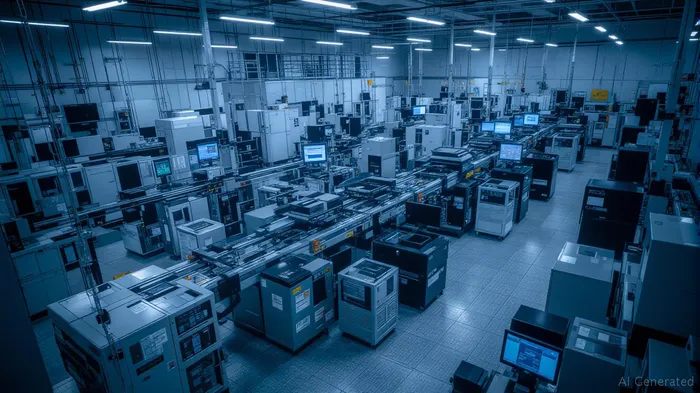
Semiconductors:
- Impact: The sector accounts for 53% of Philippine exports to the U.S., totaling $14.1 billion annually. Firms like Foxconn and SMIC face tariffs up to 20%, though critical components (e.g., microchips for U.S. defense systems) remain exempt.
- Opportunity: A negotiated reduction to 10-15% could reignite growth, aligning with U.S. goals under the CHIPS Act to diversify production away from Taiwan.
Agriculture:
- Impact: Philippine banana, pineapple, and fisheries exports ($1.2 billion annually) face stiff competition from Vietnam, which secured a 20% tariff deal. The Philippines' logistics inefficiency (ranked 87th globally) exacerbates the challenge.
- Opportunity: A tariff cut could boost firms like Monde Nissin (producer of Knorr noodles) and Dole Philippines, while U.S. soybean exporters gain access to a growing market.
Energy & Critical Minerals:
- Impact: The U.S. seeks to leverage Philippine LNG imports and nuclear cooperation (via the 2023 123 Agreement) to counter Chinese influence.
- Opportunity: Firms involved in renewable energy infrastructure or critical mineral extraction (e.g., nickel for EV batteries) could benefit from U.S. investment.
Undervalued Equities: Where to Find Alpha
Amid the turbulence, select Philippine equities offer asymmetric upside, trading at P/E ratios far below historical averages or peer benchmarks.
1. Asia United Bank (AUB): A Financial Anchor in a Volatile Economy
- Metrics:
- P/E Ratio: 7.8x (a 10-year low vs. a 5-year average of 14x).
- Net Income: Surged 34% YoY in Q1 2025 to PHP 3.14 billion, driven by high-margin treasury operations.
- Catalyst: Insider buying (PHP 890,310 by Director Manuel Gomez) and a potential tariff deal boosting local economic activity.
- Risk: Over 80% of revenue is domestically sourced, exposing it to peso volatility.
2. SSY Group (SEHK: 2005): Biotech's Quiet Play
- Metrics:
- P/E Ratio: 7.8x (15% below its 2023 peak).
- Pipeline: Phase IIa trials for its pulmonary hypertension drug (SYN045) could unlock China's market, where regulatory approvals are pending.
- Catalyst: Insider buying by executives in June-July 2025 and a potential HK$7.00 price target if trials succeed.
- Risk: Clinical trial failure or U.S.-China trade tensions disrupting supply chains.
3. Coconut Oil Producers: Riding Global Demand
- Metrics: Coconut oil exports surged 143.8% YoY in April 2025 to $1.3 billion, driven by the EU's palm oil ban and U.S. biofuel incentives.
- Play: Agribusiness ETFs or PSE agriculture index stocks like COCOVALENT (hypothetical ticker), which leverages the Philippines' 40% global market share.
Strategic Investment Considerations
- Sector Diversification: Pair semiconductor plays (e.g., SMIC) with agricultural equities to balance exposure to tariff outcomes.
- Hedging: Short positions in USD/PHP futures could mitigate currency risk if negotiations falter.
- Timing: Monitor the August 1 tariff deadline and Philippine-U.S. talks in July. A breakthrough could trigger a 0.5-1% GDP boost, favoring equities like AUB and SSY.
Risks and Mitigation
- Geopolitical Volatility: Escalation with China (which supplies 45.8% of Philippine imports) could offset U.S. gains.
- Logistical Constraints: The Philippines' low logistics efficiency ranking (87/160) may limit BPO sector competitiveness.
Conclusion: A Pivot Point for Southeast Asia
The Philippine-U.S. tariff dispute is not just a bilateral issue but a test of Southeast Asia's ability to maintain supply chain resilience amid great-power competition. Investors should focus on value-oriented equities with asymmetric upside (e.g., AUB, SSY) and sector-specific catalysts tied to tariff resolution. While risks persist, the confluence of diplomatic negotiations, undervalued markets, and structural growth in critical industries positions the Philippines as a compelling play in the region's evolving trade landscape.
For now, the playbook is clear: buy undervalued exposures, hedge currency risks, and stay vigilant on geopolitical timelines. The next few months could redefine the Philippines' role in global supply chains—and reward those who position early.
Disclosure: This analysis is for informational purposes only and does not constitute investment advice.

Stay ahead of the market.
Get curated U.S. market news, insights and key dates delivered to your inbox.


AInvest
PRO
AInvest
PRO



Comments
No comments yet