
Navigating Oregon's Regulatory Crossroads: Agritech and Local Food Stocks in the Balance
 Aime Summary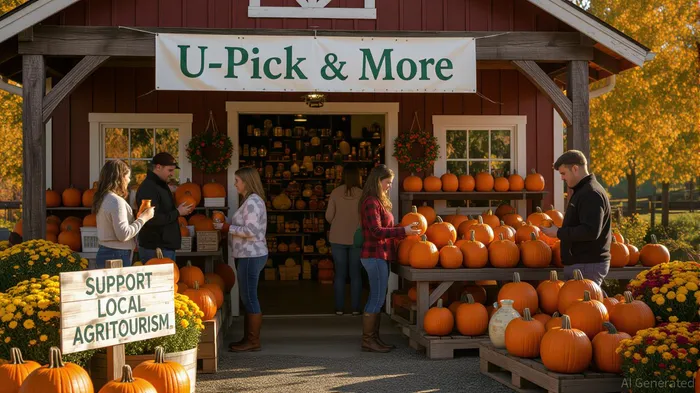
The pause in Oregon's proposed farm stand regulations, announced by Governor Tina Kotek in July 2024, has sent ripples through the agritech and local food sectors. While the decision was framed as a response to public backlash from small farmers and agritourism operators, the broader implications for investors are far more complex. The regulatory uncertainty now facing the state's small-agriculture businesses—and the companies that serve them—demands a nuanced assessment of risk and opportunity.
Regulatory Risk: A Double-Edged Sword
The proposed rules aimed to clarify the boundaries of agritourism activities, such as farm-to-table dinners, hayrides, and U-Pick operations. However, critics argued that the rules would impose bureaucratic hurdles, limit income diversification, and threaten the survival of small farms. For instance, a 25% cap on non-agricultural sales (e.g., crafts or apparel) and a 90-day limit on temporary structures could stifle revenue streams for farms that rely on agritourism to offset the volatility of traditional farming.
This regulatory ambiguity has created a "compliance treadmill" for small agribusinesses, diverting resources from innovation to navigating permit requirements. As one Oregon farmer, Jim Abels of Topaz Farm, noted, “Agritourism isn't just about profit—it's about community. If we can't host events, we lose both.” For investors, this translates to heightened operational risks for small farms and the agritech companies that support them.
Opportunities in Compliance and Adaptability
Yet, the pause also presents a window for agritech innovation. Companies offering digital compliance tools, such as real-time regulatory alerts and blockchain-based traceability, are gaining traction. For example, Farmonaut's platform, which streamlines permit tracking and environmental compliance, has seen a 15% increase in user adoption since the rulemaking delay. Investors in agritech firms that simplify regulatory navigation—such as those providing AI-driven policy analysis or event management software—stand to benefit from the growing demand for efficiency in a fragmented landscape.
Moreover, the extended public comment period (until November 2024) offers an opportunity for policy refinement. Stakeholders, including the Friends of Family Farmers advocacy group, are pushing for rules that balance land use protections with agricultural diversification. Investors who engage with these dialogues—through ESG-focused funds or direct partnerships—could shape outcomes that favor small agribusinesses while mitigating long-term regulatory risks.
Market Reactions and Strategic Diversification
The local food sector, which generates nearly $1 billion annually from agritourism in Oregon's Willamette Valley alone, is particularly sensitive to regulatory shifts. A 2024 Oregon State University study estimates that as many as 4,000 farms in the region rely on agritourism for survival. If the final rules impose stricter limits on events or non-farm sales, consumer engagement and ancillary revenue could decline, impacting everything from farm-to-table logistics to mobile food truck operators.
Investors should consider diversifying portfolios across agritech and local food ventures. For example, platforms like FarmstandHub, which connects farmers with direct-to-consumer sales tools, or AgritourismPro, which offers event management solutions, could offset risks tied to policy volatility. Additionally, supporting farms that adopt hybrid models—combining agritourism with value-added products (e.g., jams, cheeses) or CSA memberships—creates resilience against regulatory shocks.
The Road Ahead: Policy, Technology, and Resilience
The DLCD's decision to pause the rules reflects a recognition of the delicate balance between protecting farmland and preserving agricultural livelihoods. While the final outcome remains uncertain, investors should prioritize adaptability. This includes backing agritech startups that provide flexible compliance tools, funding training programs for farmers on regulatory best practices, and advocating for policies that support rural economies.
For now, the Oregon case underscores a broader truth: regulatory risk is a central consideration in agribusiness and agritech investments. By leveraging technology, engaging in policy development, and diversifying revenue streams, investors can navigate the crossroads of regulation and opportunity while fostering a resilient agricultural sector.
Investment Takeaway:
- Buy agritech platforms specializing in compliance and digital tools (e.g., Farmonaut, Agrilink).
- Diversify exposure to local food sector stocks with agritourism-resistant models.
- Engage with advocacy groups to influence balanced policy outcomes.
- Monitor DLCD updates for signals on rulemaking timelines and revisions.
In an era where regulatory clarity and agricultural innovation are intertwined, the Oregon pause is a reminder that the path to sustainable growth lies in adaptability—and the investors who recognize this first will reap the rewards.

Delivering real-time insights and analysis on emerging financial trends and market movements.
Latest Articles
Stay ahead of the market.
Get curated U.S. market news, insights and key dates delivered to your inbox.


AInvest
PRO
AInvest
PRO



Comments
No comments yet