
Navigating Oil Market Volatility Amid U.S.-Middle East Tensions: A Strategic Play on Geopolitical Risks
The Middle East has once again become the epicenter of global energy market uncertainty. Recent Israeli strikes on Iranian nuclear facilities and Tehran's threats to close the Strait of Hormuz have sent oil prices soaring, with Brent crude breaching $75 per barrel in early June. This article examines the interplay between geopolitical risks, OPEC's buffer capacity, and the likelihood of diplomatic resolution, while offering actionable strategies for investors to capitalize on volatility.
Geopolitical Risks Escalate: The Strait of Hormuz Crucible
The Israeli-Iranian conflict has elevated the risk of a major supply disruption through the Strait of Hormuz, a chokepoint for 25% of global oil exports. 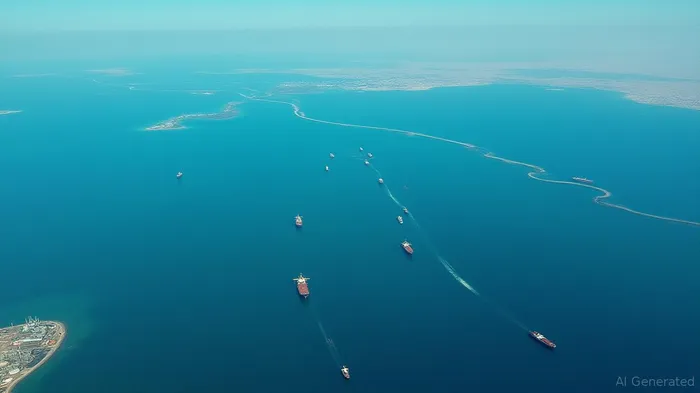 . With Goldman SachsAAAU-- assigning a 65% probability of U.S. military intervention by July, the market faces a precarious balancing act: prices could surge if tensions escalate, but a diplomatic breakthrough could trigger a sharp correction.
The South Pars Gas Field, Iran's crown jewel, has already been damaged by Israeli strikes, while shipping costs for Middle Eastern crude have surged to $5.5 per barrel for clean products—up 20% since April. These developments underscore the fragility of supply chains and the need for investors to monitor geopolitical developments closely.
OPEC's Buffer Capacity: A Safety Valve in Turbulent Waters
OPEC+'s spare capacity—estimated at 4-5% of global demand—remains a critical stabilizing force. The alliance's ability to unwind production cuts or boost output quickly could mitigate disruptions. For instance, OPEC+ is set to add 411,000 barrels per day (bpd) in July, with further adjustments possible if Hormuz chokepoint risks materialize.
This buffer, combined with strategic reserves and non-OPEC+ supply growth (projected to rise by 1.8 mb/d in 2025), provides a cushion against immediate shortages. However, the alliance's credibility hinges on unity—a challenge given differing national priorities.
Oil Price Dynamics: Between Geopolitics and Fundamentals
While geopolitical risks have driven recent volatility, underlying fundamentals remain mixed. U.S. crude inventories have fallen to 10% below the five-year average, reflecting strong demand, while Russian oil revenues hit a four-year low in May due to falling volumes and prices.
Macquarie analysts predict prices could reach the low $80s if Hormuz tensions escalate, but sustained disruptions are unlikely unless actual supply cuts occur. The Fed's pause on rate hikes and potential 2025 cuts also favor oil by weakening the dollar and boosting demand.
Investment Strategies: Hedging for Volatility and Reward
Investors should adopt a dual approach:
- Equity Exposure:
- OPEC+ Producers: Consider energy equities with exposure to OPEC+ members, such as Saudi Aramco (through its international listings) or UAE-based Mubadala.
- U.S. Majors: Firms like ExxonMobil (XOM) and Chevron (CVX) benefit from high oil prices and geopolitical stability.
ETFs: The Energy Select Sector SPDR Fund (XLE) offers diversified exposure to U.S. energy companies.
Futures and Options:
- Long Positions: Investors bullish on geopolitical risks could buy call options on Brent or WTI futures.
Straddles: A combination of call and put options allows profiting from volatility regardless of price direction.
Monitor Key Metrics:
- Track Goldman Sachs' U.S. military intervention probability (currently at 65%) and OPEC+ production decisions.
- Watch EIA inventory reports and Hormuz shipping data for real-time supply signals.
Conclusion: Balancing Risk and Reward
The current U.S.-Middle East standoff presents both risks and opportunities. While a full-blown conflict could send prices to $80+, a negotiated de-escalation might spark a sell-off. Investors should use the 65% intervention probability and OPEC's buffer as key decision points, pairing equity exposure with futures-based hedging. As always, stay nimble: geopolitical markets reward preparedness over prediction.
In this volatile landscape, investors who blend strategic exposure to energy equities with tactical futures positions will be best positioned to navigate—and profit from—the region's shifting sands.

Stay ahead of the market.
Get curated U.S. market news, insights and key dates delivered to your inbox.


AInvest
PRO
AInvest
PRO



Comments
No comments yet