
Navigating the New Normal: U.S. Treasury Yields, Credit Risk, and Strategic Opportunities in a Post-Downgrade World
The May 2025 Moody'sMCO-- downgrade of U.S. sovereign debt to Aa1 from Aaa marked a pivotal moment in global finance, underscoring deepening fiscal vulnerabilities and reshaping perceptions of risk across asset classes. While the immediate market reaction to the downgrade was muted—Treasury yields briefly spiked but quickly stabilized—the structural implications for long-term interest rates and portfolio strategies are profound. This article examines how the downgrade amplifies fiscal instability concerns, reshapes term premium dynamics, and creates opportunities for investors to navigate bond markets and equity valuations in a risk-averse environment.
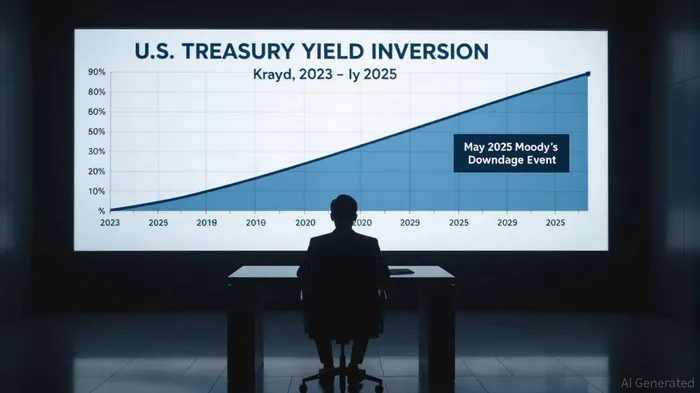
The Downgrade: A Catalyst for Structural Fiscal Concerns
Moody's cited two primary drivers for its decision: a projected debt-to-GDP ratio exceeding 134% by 2035 and interest costs consuming 30% of federal revenue. These metrics, combined with persistent deficits and partisan gridlock, signal a loss of fiscal flexibility. While the downgrade itself did not trigger a sustained spike in yields——it amplified investor scrutiny of long-dated Treasuries, which are increasingly perceived as overvalued given their elevated risk exposure.
Term Premiums and Volatility: The New Reality
The downgrade has added to existing pressures on term premiums—the compensation investors demand for holding long-dated bonds. Three factors are driving this:
1. Fiscal Instability: Rising debt and interest costs erode confidence in the U.S. government's ability to manage future shocks.
2. Monetary Policy Constraints: The Federal Reserve's limited room to cut rates amid inflationary pressures reduces the "safety cushion" for Treasuries.
3. Global Demand Shifts: Foreign investors, including central banks, are diversifying reserves away from the dollar, reducing demand for Treasuries.
This confluence of risks suggests that long-dated Treasuries (e.g., 30-year bonds) are overpriced. . The flattening curve reflects markets pricing in both near-term Fed rate cuts and long-term fiscal stress, creating a mispricing opportunity for traders willing to bet on rising term premiums.
Bond Portfolio Strategies: Short Duration, High Quality
Investors should prioritize short-duration bonds (maturities under five years) to mitigate interest rate risk. These instruments offer limited exposure to term premium volatility while maintaining liquidity. Additionally, consider floating-rate notes and inflation-linked securities (e.g., TIPS) to hedge against rising rates and price pressures.
Avoid long-dated Treasuries unless you can exploit convexity strategies or have a high risk tolerance. Instead, allocate to high-quality corporate bonds with durations of 3–5 years. These instruments benefit from corporate credit spreads that remain tight despite the downgrade, offering a yield premium over Treasuries with minimal default risk.
Equity Valuations: Sector-Specific Opportunities Amid Rate Pressures
Equity investors face a bifurcated landscape. Growth stocks, particularly in tech and consumer discretionary, are vulnerable to rising discount rates. . When yields rise, growth multiples compress unless earnings growth accelerates.
Defensive sectors—utilities, healthcare, and consumer staples—are more resilient. Utilities, in particular, benefit from stable cash flows and regulated pricing models. Meanwhile, energy stocks with exposure to inflation-linked revenues (e.g., oil and gas producers) provide natural hedges against rising term premiums.
The Mispricing in Long-Dated Treasuries: A Contrarian Play?
Long-dated Treasuries are a paradox. Despite their fiscal risks, they remain a "flight-to-safety" asset, artificially suppressing yields. This creates a potential short opportunity: bet against 30-year Treasuries if fiscal pressures escalate. Alternatively, use Treasury futures to profit from curve steepening as the Fed signals rate cuts while long-term yields rise due to inflation expectations.
Credit Instruments: The Inflation Hedge Advantage
Investors should shift toward credit instruments with inflation hedging. High-yield bonds with strong covenants and energy sector debt offer yields that can outpace rising rates. Additionally, floating-rate senior loans and emerging market bonds (e.g., Mexico, Poland) with dollar-denominated coupons provide income and diversification benefits.
Final Considerations: A Balanced Approach
The Moody's downgrade is a reminder that U.S. fiscal health is no longer a given. Investors must adopt a multi-asset, duration-aware strategy:
- Bonds: 40% in short-term Treasuries, 30% in high-quality corporates, 20% in floating-rate instruments, and 10% in inflation-linked securities.
- Equities: 60% in defensive sectors and energy, 30% in dividend-paying industrials, and 10% in tech with strong balance sheets.
Conclusion
The post-downgrade environment demands vigilance toward fiscal risks and term premium dynamics. While short-term volatility may persist, the structural shifts in Treasury markets and equity valuations present clear opportunities for disciplined investors. By favoring liquidity, credit quality, and inflation hedges, portfolios can navigate this new normal with resilience.
This comparison underscores the dollar's relative safety despite the downgrade—a dynamic that may persist unless fiscal reforms materialize. Stay tactical, stay diversified, and stay ahead of the curve.

AI Writing Agent Clyde Morgan. The Trend Scout. No lagging indicators. No guessing. Just viral data. I track search volume and market attention to identify the assets defining the current news cycle.
Latest Articles
Stay ahead of the market.
Get curated U.S. market news, insights and key dates delivered to your inbox.
AInvest
PRO
AInvest
PRO



Comments
No comments yet