
Navigating NASDAQ Volatility: Israel-Iran Tensions Offer Strategic Trading Opportunities
The escalating conflict between Israel and Iran has sent global markets into a tailspin, with NASDAQ futures and broader equities reeling from geopolitical uncertainty. As oil prices surge and defense contractors rally, investors face a critical question: How can one capitalize on this volatility while mitigating risk? The answer lies in understanding the market dynamics at play and deploying opportunistic strategies grounded in historical precedent.
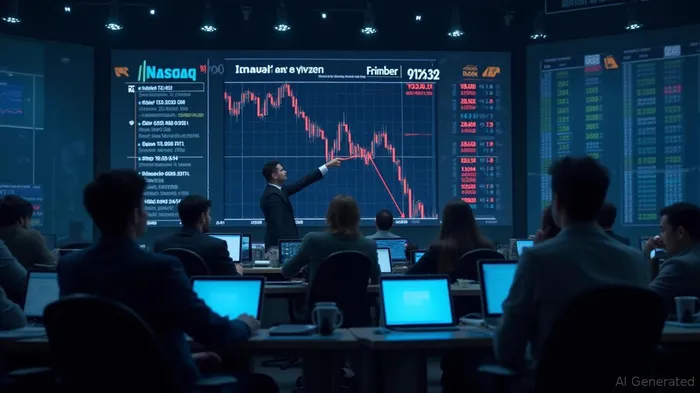
The Geopolitical Catalyst: Oil, Fear, and Market Mechanics
The Israel-Iran conflict has become a pressure valve for global markets, with oil prices spiking 7% in recent days amid fears of supply disruptions. The reveals an inverse correlation: as crude climbs, tech-heavy indices retreat due to inflation fears and energy cost pressures. However, the NASDAQ's resilience—down only 1.1% despite the turmoil—hints at underlying strength in high-growth sectors like cloud computing and AI, which may outperform in the long term.
The CBOE Volatility Index (VIX), a key barometer of market fear, has surged to 20.82—the highest in three weeks—reflecting investor anxiety. Yet history suggests this volatility is a buying opportunity in disguise. Since World War II, markets have averaged a 4.7% drawdown during Middle East crises but recovered fully within 42 days. For example, during the 2022 Russia-Ukraine invasion, the S&P 500 fell 6.8% but rebounded in just 23 days as geopolitical risks became "priced in."
Sector Rotations: Where to Deploy Capital
The current environment rewards selective sector exposure and hedging. Below are actionable strategies based on historical patterns and current data:
Energy: The Direct Beneficiary of Supply Concerns
With the Strait of Hormuz—a chokepoint for 20% of global oil—under threat, energy stocks are primed to rise. The shows a strong correlation: XLE has gained 9% over the past month. Investors should overweight energy equities while monitoring OPEC's spare capacity (currently 1.5 million barrels/day) to gauge sustainability.Defensive Plays: Gold and Cybersecurity
The illustrates gold's inverse relationship to tech stocks: GLDGLD-- has climbed to $3,433 as the NASDAQ retreated. Meanwhile, cybersecurity firms like Palo Alto Networks (PANW) and CrowdStrike (CRWD) are gaining traction as Iran's cyberattacks on critical infrastructure escalate. Consider pairing these with defensive staples (XLP ETF) for balanced protection.Short-Term Volatility Trading
The VIX's spike presents an entry point for traders using volatility-linked instruments. The iPath S&P 500 VIX Short-Term Futures ETN (VXX) has seen a 22% surge in volume this week, but buyers must be cautious: contango effects in futures markets can erode returns over time. A better play? Use VIX options for short-term directional bets while avoiding prolonged exposure.
Lessons from History: Why Markets Will Recover
Analysts often cite the 2006 Israel-Hezbollah war, which caused a 5% drop in the Nasdaq but a 19% gain over the following year, as a template. The current conflict's impact is already showing signs of stabilization: the NASDAQ is 1.5% below its all-time high, and tech giants like Microsoft (MSFT) and NVIDIA (NVDA) have outperformed broader indices due to secular growth trends. The underscores this resilience.
Risks and Caution Flags
While opportunities abound, the path forward is fraught with risks:
- Strait of Hormuz Closure: If Iran blocks oil transit, prices could hit $100+/barrel, triggering a "volatility shock" that overshadows tech gains.
- Cyber Warfare: Attacks on critical infrastructure could destabilize even safe-haven sectors.
- Fed Policy Uncertainty: A prolonged conflict might delay rate cuts, keeping bond yields elevated and equity multiples compressed.
The Bottom Line: Stay Disciplined, Stay Strategic
The Israel-Iran conflict is a catalyst for short-term volatility but a proving ground for long-term opportunities. Investors should:
- Hedge with GLD and XLE, maintaining a 10-15% allocation to energy and gold.
- Rotate into cybersecurity (e.g., CRWD) and AI-driven tech leaders (e.g., NVDA).
- Use the VIX tactically, avoiding overexposure to contango-prone ETFs like VXX.
- Rebalance on dips, targeting NASDAQ futures at support levels like 21,500 (see technical chart above).
History shows that markets eventually assimilate geopolitical risks, rewarding those who stay calm and capitalize on dislocation. In uncertain times, strategy—and a dash of patience—is the ultimate hedge.

Delivering real-time insights and analysis on emerging financial trends and market movements.
Latest Articles
Stay ahead of the market.
Get curated U.S. market news, insights and key dates delivered to your inbox.


AInvest
PRO
AInvest
PRO



Comments
No comments yet