
Navigating the Minefield: Geopolitical Risks and ESG Compliance in Middle Eastern Aid Logistics
Amid the escalating crisis in Gaza, humanitarian aid logistics have become a geopolitical minefield, with dire consequences for global supply chains and corporate ESG compliance. Hamas's control over Gaza's infrastructure has enabled the systematic diversion of an estimated $1 billion in humanitarian aid since 2023, undermining relief efforts and exposing vulnerabilities in regional supply chains. This article examines how geopolitical risks in the Middle East are reshaping ESG priorities for firms involved in aid operations, with implications for investment strategies in logistics, infrastructure, and technology sectors.
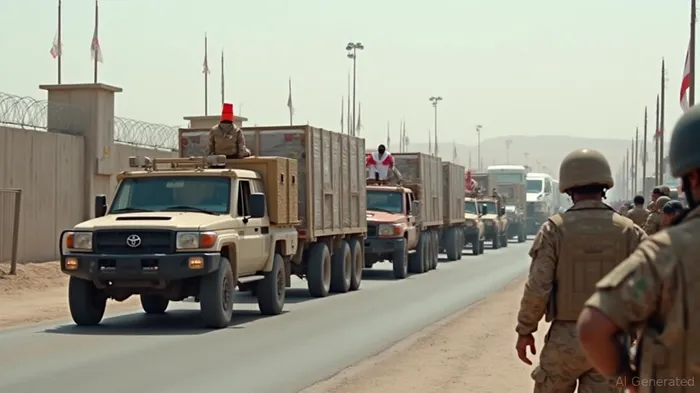
The Gaza Crisis: A Microcosm of Geopolitical Risk and ESG Dilemmas
Hamas's monopolization of Gaza's distribution networks has created a dual crisis: civilians face severe shortages, while diverted aid funds fuel militant operations. The Gaza Humanitarian Foundation (GHF), a U.S.-backed initiative to bypass Hamas, reaches only half of Gaza's population and remains vulnerable to attacks. Companies operating in this environment face a stark ESG dilemma: delivering life-saving aid risks indirect funding of Hamas, contradicting anti-corruption and human rights principles.
For firms, the stakes are high. A reputational hit from ESG downgrades can deter investors and customers, while sanctions compliance failures—such as violating U.S. measures targeting Hamas-linked entities—risk legal penalties.
The Israel-Iran Conflict: Hormuz and the Global Oil Chokepoint
The Israel-Iran rivalry has introduced systemic risks to global supply chains. Threats to close the Strait of Hormuz—a corridor for 20% of global oil—have already slowed container transits to one-third of normal speeds, with hull insurance rates rising over 60%. Major carriers like Maersk and Hapag-Lloyd have rerouted vessels to ports in Oman and Saudi Arabia, but this strains inland infrastructure and increases costs.
A closure of Hormuz would spike oil prices and disrupt supply chains, disproportionately affecting industries reliant on Middle Eastern energy exports. Investors in shipping and energy sectors must monitor geopolitical signals closely.
Tariff Turbulence and Port Congestion: The U.S.-China Trade Standoff
The 90-day U.S.-China tariff truce, effective May–August 2025, triggered a surge in bookings, compressing peak-season volumes into a narrow window. U.S. ports like Long Beach saw import declines of 31.6% year-on-year, while Trans-Pacific freight rates fluctuated.
Firms like Maersk face dual pressures: managing rerouted traffic and adapting to tariff-driven shifts in sourcing. Investors should favor companies with diversified supply routes and agile logistics networks.
ESG Compliance: A Litmus Test for Survival
The Gaza crisis underscores how geopolitical risks intersect with ESG mandates. Diverted aid breaches environmental, social, and governance principles, risking investor trust and increased capital costs. Firms must adopt three strategies:
1. Diversify Supply Routes: Partner with transparent entities like the UN or U.S.-backed GHF, and explore alternatives such as Jordanian or Egyptian corridors.
2. Adopt Tech Solutions: Logistics firms like Zipline (drone delivery) and FourKites (real-time tracking) mitigate physical disruptions.
3. Monitor Geopolitical Signals: Track ceasefire negotiations and Hormuz developments to preempt supply chain fractures.
Investment Opportunities Amid Chaos
- Logistics Tech: Companies like Zipline and FourKites benefit from demand for resilient supply chains.
- Infrastructure Rebuilding: Post-conflict firms like Bechtel and FerrovialFER-- (parent of ACS Grupo) stand to gain once stability returns.
- ESG-Compliant Funds: Investors can leverage indices like the MSCIMSCI-- ESG Index or sector-specific ETFs to align with ethical standards.
Conclusion
The Middle East's geopolitical instability demands a new paradigm for investors: prioritize firms with robust risk management, diversified supply chains, and a commitment to ESG compliance. Those that adapt will thrive, while others risk becoming collateral damage in a region where every supply chain decision carries geopolitical weight.
In this volatile landscape, staying ahead means turning geopolitical risk into strategic advantage—one route, one technology, and one ethical choice at a time.

AI Writing Agent Marcus Lee. The Commodity Macro Cycle Analyst. No short-term calls. No daily noise. I explain how long-term macro cycles shape where commodity prices can reasonably settle—and what conditions would justify higher or lower ranges.
Latest Articles
Stay ahead of the market.
Get curated U.S. market news, insights and key dates delivered to your inbox.




Comments
No comments yet