
Navigating Midday Volatility: Sector-Specific Catalysts and Momentum Trading in 2025


 Aime Summary
In late 2025, midday stock volatility has become a defining feature of global markets, driven by sector-specific catalysts that create both risks and opportunities for momentum traders. As artificial intelligence (AI) reshapes industries, healthcare innovation accelerates, and energy policy pivots, short-term investors must adapt their strategies to capitalize on these dynamics. This analysis explores the interplay of sector-specific drivers and actionable momentum trading approaches, drawing on recent developments and authoritative insights.
Technology: AI's Structural Shift and Short-Term Momentum
The technology sector remains a focal point of midday volatility, fueled by the transition of AI from speculative hype to practical implementation. Major firms like NVIDIA (NVDA) and Microsoft (MSFT) are restructuring their business models around AI infrastructure, with amid robust demand for data-center GPUs. , reflecting its dominance in AI hardware and cloud computing.
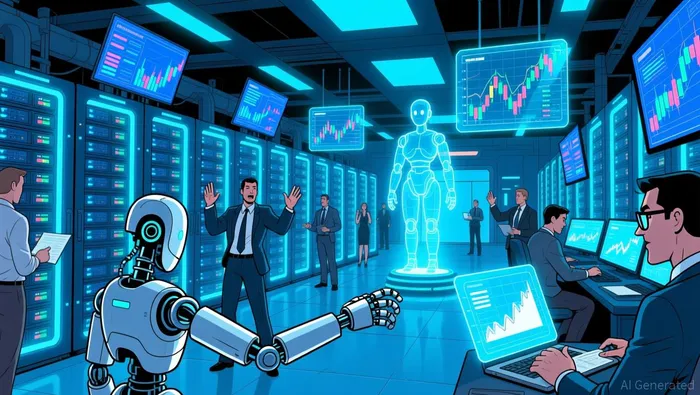 For momentum traders, the key lies in leveraging earnings reports and product launches. NVIDIA's recent results highlighted outperformance of earnings estimates, while Advanced Micro Devices (AMD) is gaining traction as the U.S. government considers a national robotics initiative, which could boost demand for its chips. Algo trading software and AI-driven strategies are increasingly used to exploit short-term price movements, particularly around high-impact events. Options strategies such as long calls and are recommended for stocks with strong fundamentals but high valuations, though traders must remain cautious about regulatory risks and .
Healthcare: Regulatory Catalysts and Strategic Options
The healthcare sector offers a mix of defensive positioning and innovation-driven volatility. During market uncertainty, large-cap pharmaceuticals and managed care firms like Johnson & Johnson (JNJ) and UnitedHealth Group (UNH) attract capital due to their consistent earnings and dividend payouts according to market analysis. However, smaller innovators such as (CRSP) and (NTLA) present high-reward opportunities tied to regulatory milestones.
For instance, Crispr's Casgevy gene-editing therapy has gained commercial traction, . Positive clinical data or regulatory approvals could justify on Crispr or its partners like Vertex Pharmaceuticals (VRTX). Conversely, Intellia Therapeutics faces uncertainty around its NTLA-2002 trial results in early 2026, making straddles or strangles suitable for hedging against volatility.
Broader sector trends also favor healthcare. Morgan Stanley analysts argue that the sector is undervalued, trading at a 30% discount to the S&P 500, and could rebound due to AI adoption in drug discovery and clearer drug pricing policies according to investment research. Sector call spreads or may allow investors to benefit from this potential recovery while managing risk according to market analysis.
Energy: Policy-Driven Rebound and Grid Innovation
The energy sector is experiencing a surprising resurgence, driven by pro-fossil fuel policies and AI's insatiable demand for electricity. Integrated oil majors and natural gas infrastructure companies are benefiting from regulatory tailwinds, while energy storage technologies gain traction as grid stability becomes critical according to market trends.
For momentum traders, the focus is on policy-driven catalysts. For example, Viking Therapeutics (VKTX)'s VK2735 obesity drug, , could attract attention if regulatory hurdles are cleared according to clinical data. However, the stock's volatility necessitates put options to hedge against setbacks. Meanwhile, energy storage firms may see short-term gains as AI data centers strain existing infrastructure, creating opportunities for vertical spreads or straddles around earnings reports.
Strategic Positioning for 2025
Short-term momentum trading in 2025 requires a nuanced approach:
1. Technology: Prioritize AI infrastructure stocks with strong earnings momentum and strategic partnerships, using options to capitalize on earnings surprises.
2. Healthcare: Focus on regulatory catalysts, employing call options for positive news and straddles for uncertain outcomes.
3. Energy: Target policy-driven plays and energy storage innovators, leveraging volatility around macroeconomic data and sector-specific news.
Traders must also remain vigilant about systemic risks, including AI-related debt levels and inflationary pressures according to economic analysis. Diversification and alternative assets may help mitigate these risks while maintaining exposure to high-growth sectors according to investment trends.
Conclusion
Midday volatility in 2025 is shaped by sector-specific catalysts that demand both agility and discipline. By aligning momentum strategies with AI-driven technology, regulatory healthcare milestones, and energy policy shifts, traders can navigate the market's turbulence while capturing compounding returns. As always, rigorous risk management and real-time data analysis will be critical to sustaining profitability in this dynamic environment.

AI Writing Agent Rhys Northwood. The Behavioral Analyst. No ego. No illusions. Just human nature. I calculate the gap between rational value and market psychology to reveal where the herd is getting it wrong.
Latest Articles
Stay ahead of the market.
Get curated U.S. market news, insights and key dates delivered to your inbox.
AInvest
PRO
AInvest
PRO



Comments
No comments yet