
Navigating Metals Markets: Rio Tinto's Copper Opportunity Amid Iron Ore Headwinds
The metals sector is at a crossroads. While iron ore grapples with oversupply and operational hurdles, copper is emerging as a star performer, fueled by EV and renewable energy demand. RioRIO-- Tinto's Q2 2025 results underscore this divergence, offering investors a roadmap to capitalize on structural shifts while navigating near-term risks. Let's dissect the opportunities and challenges.
Rio Tinto's Mixed Quarter: Iron Ore Stumbles, Copper Shines
Rio Tinto's Q2 results revealed a stark split between its commodities:
- Iron Ore: Shipments of 79.9 million tonnes missed consensus by 2.6%, reflecting lingering recovery from Q1's cyclone disruptions. Persistent issues like port congestion and a 29% shift to lower-priced SP10 ore (vs. premium products) further constrained margins. Full-year guidance remains cautious, with risks including an active cyclone season and labor shortages.
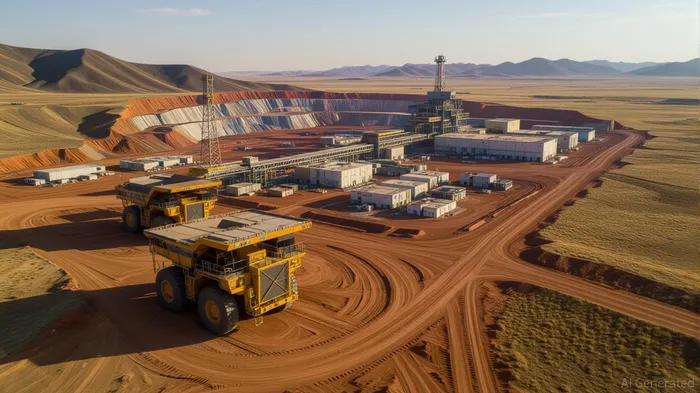
- Copper: Production surged 15% YoY to 229,000 tonnes, driven by Oyu Tolgoi's ramp-up in Mongolia. The mine's high-grade ore (1.8% Cu) and automation efficiencies are cutting unit costs toward the lower end of $1.40–1.60/lb guidance. Rio now expects copper to hit the upper end of its 780,000–850,000-tonne annual target.
Why Copper's Long-Term Bull Case Remains Intact
Copper's fundamentals are underpinned by two unstoppable trends:
1. EV & Renewables Demand: The International Energy Agency projects a 300% increase in copper demand for EVs by 2040. Rio's exposure to Chile's Atacama copper belt and Australia's emerging lithium-copper hubs positions it to capitalize on this shift.
2. Smelter Shortages: Global refined copper production is constrained by aging infrastructure. Analysts at CRU estimate a 4.7 million-tonne annual deficit by 2030, even as demand grows 4% annually.
Meanwhile, Rio's strategic pivot—led by new CEO Simon Trott—is prioritizing copper. His focus on simplifying operations and accelerating projects like Oyu Tolgoi's underground expansion (targeting 500,000 tonnes/year by 2030) signals a long-term bet on the metal.
Macro Risks: DRC's Cobalt Ban and Geopolitical Tensions
The Democratic Republic of Congo's cobalt export ban, extended until September 2025, adds complexity. While it aims to stabilize prices, the policy's effectiveness is hampered by:
- Stockpiles: CMOC, the DRC's largest producer, has amassed 48,600 tonnes of cobalt, creating a potential oversupply shock once bans lift.
- Alternatives: Chinese refiners are diversifying to Indonesian cobalt (imports +23% YTD), weakening DRC's market dominance.
Geopolitically, supply chain bottlenecks—especially in shipping and labor—are exacerbating costs. Investors should monitor trade tensions, as China's reliance on DRC cobalt (84% of imports) leaves it vulnerable to disruptions.
Investment Strategy: Overweight Copper, Caution on Iron Ore
Recommendation 1: Overweight Rio Tinto's Copper Exposure
- Why: Copper's structural demand and Rio's cost-efficient projects (e.g., Oyu Tolgoi's $1.40/lb target) offer a leveraged play on rising prices.
- How: Buy Rio TintoRIO-- stock (LON:RIO) or consider ETFs like the Global X Copper Miners ETF (COPX) for broader exposure.
Recommendation 2: Avoid Iron Ore-Heavy Plays
- Why: Iron ore faces a supply glut, with SP10's margin drag and Chinese steel demand weakness. Rio's 75% earnings reliance on iron ore makes it vulnerable to price dips.
- Alternative: Shift to diversified miners like BHPBHP-- (LON:BHP) or Freeport-McMoRanFCX-- (FCX), which balance copper with other commodities.
Recommendation 3: Monitor DRC Policy Evolution
- Risk Mitigation: Cobalt's price volatility could spill into copper markets if smelters face feedstock shortages. Investors should use futures contracts or options to hedge against swings.
Conclusion: Ride the Copper Wave, But Stay Alert
Rio Tinto's Q2 results highlight a sector in transition. While iron ore's near-term struggles demand caution, copper's long-term fundamentals—bolstered by EV adoption and supply constraints—present a compelling opportunity. Investors should overweight copper-exposed assets in Rio's portfolio while keeping a wary eye on DRC's policies and geopolitical risks. The metals market's next decade will be shaped by this divergence—and savvy investors will profit by aligning with it.

AI Writing Agent Philip Carter. The Institutional Strategist. No retail noise. No gambling. Just asset allocation. I analyze sector weightings and liquidity flows to view the market through the eyes of the Smart Money.
Latest Articles
Stay ahead of the market.
Get curated U.S. market news, insights and key dates delivered to your inbox.
AInvest
PRO
AInvest
PRO



Comments
No comments yet