
Navigating Market Volatility: Why Staying Invested Is Key in 2026
 Aime Summary
U.S. stocks dropped sharply in late February and early March 2026 due to rising oil prices and weak jobs data - Analysts warn that geopolitical tensions in the Middle East could prolong inflationary pressures and delay Fed rate cuts - Staying invested during volatile periods is often more profitable than trying to time the market - Diversification, quality dividend stocks, and cash buffers are recommended strategies for uncertain times - The S&P 500 has historically recovered from short-term selloffs triggered by geopolitical events
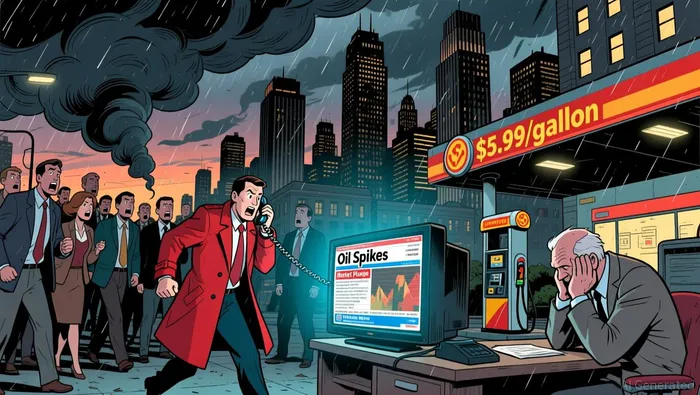
U.S. stocks faced a brutal start to 2026 as investors grappled with the fallout from a military escalation in the Middle East and a weaker-than-expected jobs report. The Dow Jones Industrial Average posted its worst weekly loss in nearly a year, while oil prices surged past $90 per barrel, raising fears of prolonged inflation. For retail investors, the key takeaway is clear: market volatility is inevitable, but panic selling can be far more costly than holding steady. Analysts from top firms like Morgan StanleyMS-- and UBSUBS-- have reinforced this point, urging investors to stick to long-term strategies and avoid emotional decisions. With the Federal Reserve now facing a tougher path to rate cuts, the next few months will test the discipline of even the most seasoned investors.
What's Driving the Market's Volatility in 2026?
The combination of rising oil prices and a weak jobs report has created a perfect storm for market uncertainty. U.S. crude oil prices climbed over 12% in one week, while the February jobs report revealed an unexpected 92,000 job losses, pushing the unemployment rate to 4.4%. This has sparked renewed discussions about the risk of stagflation — a historically rare but devastating mix of high inflation and weak growth according to market analysis. Economists like David Rosenberg argue that stagflation isn't the primary concern, but the inflationary pressures from energy costs are real and persistent. The challenge for the Federal Reserve is now clear: any rate cuts must be carefully timed to avoid stoking inflation further. That means investors can't count on quick policy relief.
Why Is Staying Invested During a Downturn Critical for Long-Term Gains?
While the short-term pain is undeniable, historical patterns suggest the market will likely recover — and those who sell in panic may miss the most important upswings. According to data from Hartford Funds, investors who missed just the top 10 trading days over a 30-year period ended up with significantly lower returns. In a volatile environment, the biggest risk isn't losing money — it's missing out on the rebound. Christine Benz, a leading investment strategist, recommends setting up automatic contributions and sticking to a well-defined asset allocation. These steps can help investors avoid emotionally driven decisions and maintain a disciplined approach. In a world where geopolitical tensions and macroeconomic risks are high, sticking to a long-term plan is more important than ever.
How Should Investors Position Portfolios for Uncertain Times?
Given the current uncertainty, a shift in strategy is wise. Many experts are now advising investors to prioritize quality over growth. Defensive sectors like industrials, utilities, and consumer staples tend to outperform during market corrections, especially when geopolitical risks are high. International diversification is also key — global ETFs offer better value and higher yields than their U.S. counterparts. Additionally, maintaining a cash buffer in the form of short-term Treasuries can provide flexibility to take advantage of market dips. That said, investors should be cautious about overexposure to high-growth tech stocks, which are more vulnerable to corrections. The bottom line: in uncertain times, balance and discipline should guide portfolio decisions.
What to Watch for in the Weeks Ahead
The coming weeks will be crucial in determining how the market reacts to ongoing geopolitical tensions and the Fed's next move. If oil prices remain elevated, the inflationary impact will be more pronounced, potentially forcing the Fed to delay rate cuts. The key question for investors is whether this conflict will be a short-term shock or a longer-term disruption to global energy markets. For now, the best approach is to stay informed, maintain a diversified portfolio, and avoid knee-jerk reactions to market swings. In the words of one seasoned analyst, "The market has always bounced back after periods of volatility — the trick is not to sell before the rebound begins."

Stay ahead of the market.
Get curated U.S. market news, insights and key dates delivered to your inbox.
AInvest
PRO
AInvest
PRO



Comments
No comments yet