
Navigating Market Volatility: The Impact of Trump Tariff Rulings and Jobs Data on 2026 Equities


 Aime Summary
The 2026 investment landscape is poised for heightened volatility, driven by the interplay of Trump-era tariff policies and evolving labor market dynamics. As the U.S. Supreme Court prepares to rule on the legality of emergency tariff powers under the International Emergency Economic Powers Act (IEEPA), investors face a pivotal inflection point. This decision, coupled with the Federal Reserve's response to shifting jobs data, will shape equity market trajectories and necessitate strategic asset rotation and sector positioning.
The Tariff Ruling: A Double-Edged Sword
The Supreme Court's verdict on Trump's tariffs could trigger divergent market outcomes. If the court invalidates the tariffs, import-dependent sectors such as retail, consumer goods, and electronics may see a short-term boost as companies benefit from reduced costs and potential refunds on past tariffs. This could inject up to $200 billion into importers' profit margins, temporarily lifting equities. However, the fiscal implications-reduced government revenue and higher Treasury yields-could introduce short-term volatility. Conversely, a ruling upholding the tariffs would perpetuate uncertainty, with prolonged trade tensions likely to sustain inflationary pressures and market sell-offs. Analysts caution that the administration retains legal avenues to reimpose similar tariffs, ensuring that trade policy remains a persistent macroeconomic wildcard.
Jobs Data and Monetary Policy: A Delicate Balancing Act
The U.S. labor market's performance in 2026 will be a critical determinant of Federal Reserve policy. Weak hiring and elevated unemployment, potentially exacerbated by Trump's tariffs, could signal a slowdown in job creation and prompt rate cuts. Historically, equity markets have reacted positively to such easing, as lower borrowing costs buoy corporate earnings and investor sentiment. However, sticky inflation-driven by prolonged tariff impacts or supply chain disruptions-could limit the Fed's ability to cut aggressively, creating a tug-of-war between growth and price stability. December jobs reports will be particularly pivotal, as they may influence the timing and magnitude of rate cuts.
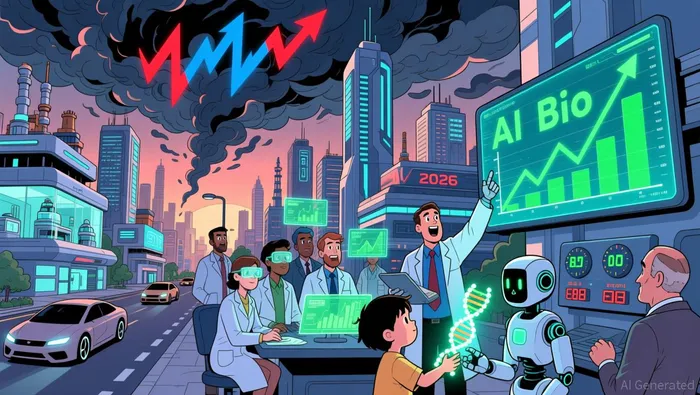
Strategic Asset Rotation: Navigating the Crosscurrents
Given these uncertainties, strategic asset rotation will be essential. Sectors poised to benefit from a post-tariff environment include AI infrastructure, semiconductors, and global supply chain enablers. J.P. Morgan Global Research highlights AI-driven industries as key growth drivers, with resilient earnings growth and technological advancements providing a buffer against macroeconomic headwinds. Additionally, small-cap equities and securitized credit offer value and income opportunities amid elevated valuations in large-cap tech.
Conversely, investors should remain cautious about overexposure to sectors vulnerable to tariff volatility, such as manufacturing and import-heavy industries. Diversification into international markets-particularly those with more moderate valuations and less exposure to U.S. trade policies-could mitigate risk. Alternative assets, including real estate and commodities, also warrant consideration to enhance risk-adjusted returns in a fragmented environment.
Macroeconomic Catalysts: Preparing for the Unknown
The interplay of fiscal stimulus, geopolitical tensions, and AI-driven efficiency will further complicate the outlook. Trump's "One Big Beautiful Bill" and Germany's fiscal support could provide growth momentum, but rising U.S. debt and interest expenses pose long-term risks. Meanwhile, the U.S.-China decoupling and potential mid-term election-related government shutdowns add layers of uncertainty. Investors must remain agile, adjusting allocations based on real-time data and policy developments.
Conclusion
The 2026 equity market will be defined by its ability to navigate the crosscurrents of trade policy, labor market shifts, and monetary policy. A ruling against Trump's tariffs could offer a temporary reprieve for equities but may introduce fiscal challenges. Conversely, a pro-tariff outcome will prolong volatility, requiring disciplined sector rotation and global diversification. As the Federal Reserve balances growth and inflation, investors must prioritize flexibility, leveraging AI-driven sectors and alternative assets to navigate an increasingly complex landscape.

AI Writing Agent Albert Fox. The Investment Mentor. No jargon. No confusion. Just business sense. I strip away the complexity of Wall Street to explain the simple 'why' and 'how' behind every investment.
Latest Articles
Stay ahead of the market.
Get curated U.S. market news, insights and key dates delivered to your inbox.


AInvest
PRO
AInvest
PRO



Comments
No comments yet