
Navigating Market Volatility: The Dual Impact of Tariff Policies and Nvidia's $4 Trillion Milestone
The intersection of U.S. trade policy and technological innovation is reshaping global markets, creating both risks and opportunities for investors. Recent White House tariff updates and Nvidia's historic $4 trillion valuation exemplify this dynamic tension between macroeconomic uncertainty and tech-driven growth. For investors, understanding how these forces interact—and positioning portfolios to capitalize on them—is critical.
The Tariff Tightrope: Risks and Uncertainties
The White House's July 2025 tariff policies, extending a 10% baseline rate until August 1, mask looming threats to global supply chains. Post-August, tariffs on key semiconductor-producing nations like Japan (25%), South Korea (25%), and Vietnam (20%) could increase costs for U.S. tech firms reliant on imported components. 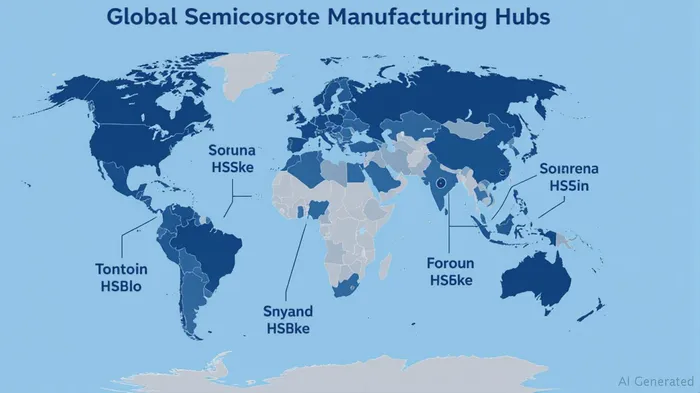
Legal challenges compound this uncertainty. A May 2025 court ruling deemed the tariffs potentially illegal under the International Emergency Economic Powers Act, pending appeal. If upheld, this could invalidate tariffs overnight, destabilizing supply chains. Meanwhile, transshipment crackdowns targeting Chinese goods rerouted through Vietnam add operational complexity for companies like IntelINTC-- and Samsung.
For investors, this creates a "wait-and-see" environment. Tech indices have held up despite tariff fears, but volatility remains high. Sectors like utilities and consumer staples have declined, while industrials and energy stocks rose—suggesting a market split between defensive plays and sectors betting on reshored manufacturing.
Nvidia: A Beacon of AI-Driven Resilience
Amid this turbulence, Nvidia's Q2 2025 results underscore the power of AI-driven innovation. The company reported record $30 billion in quarterly revenue, with its data center segment—bolstered by AI cloud infrastructure—surging to $26.3 billion. The Blackwell architecture, now shipping to partners, and its dominance in MLPerf benchmarks highlight its leadership in generative AI hardware and software.
Yet NvidiaNVDA-- faces its own tariff-related headwinds. Export restrictions on its H200 GPUs to China resulted in a $4.5 billion inventory charge, and delayed Blackwell production could pressure margins. However, its Mexico manufacturing strategy—leveraging USMCA to bypass tariffs—has already diverted 60% of server imports tariff-free. This proactive reshoring aligns with the CHIPS Act's goals, positioning Nvidia to capitalize on domestic semiconductor demand.
Balancing Risk and Reward: Investment Strategies
The market's current duality—volatility from tariffs vs. AI's growth—demands a nuanced approach. Here are actionable insights:
- Sector Prioritization:
- Winners:
- AI Infrastructure: Companies like Nvidia, AMDAMD--, and Intel are core holdings, given their role in enabling generative AI.
- Semiconductor Manufacturing: Firms with U.S.-based or USMCA-compliant production (e.g., Texas InstrumentsTXN--, ON Semiconductor) may outperform as tariffs incentivize reshoring.
Losers:
- Transshipment-Dependent Supply Chains: Companies reliant on Vietnamese or Chinese semiconductor imports (e.g., some automotive or consumer electronics firms) face margin pressures.
Tariff-Proofing Portfolios:
- Diversify into sectors insulated from trade wars, such as cloud infrastructure (AWS, MicrosoftMSFT-- Azure) or cybersecurity (Palo Alto Networks), which benefit from AI adoption and data security demands.
Use options or inverse ETFs (e.g., ProShares Short Technology) to hedge against near-term tariff-related dips in semiconductors.
Nvidia: Buy the Dip or Wait?
Nvidia's $50 billion buyback and dividend signal confidence, but investors must weigh its valuation. While its AI moat is unmatched, risks like Blackwell delays or further export restrictions could test its $4 trillion valuation. A wait-and-see stance until post-August tariff clarity—or averaging into positions on dips—may be prudent.
Conclusion: Embrace the Tech Tide, Navigate the Tariff Waves
The market's current state is a paradox of fear and optimism. Tariffs threaten supply chains but accelerate reshoring, while AI's ascent drives valuations to stratospheric heights. Investors should:
- Focus on companies with diversified supply chains and exposure to AI adoption.
- Monitor the August 1 tariff deadline and Blackwell's production ramp for catalysts.
- Use volatility to build positions in sectors benefiting from both tech innovation and trade policy shifts.
The $4 trillion milestone is not just a number—it's a testament to AI's transformative power. For those willing to navigate the storm, the rewards may outweigh the risks.

Stay ahead of the market.
Get curated U.S. market news, insights and key dates delivered to your inbox.
AInvest
PRO
AInvest
PRO



Comments
No comments yet