
Navigating Market Uncertainty: Strategic Positioning for a Volatile Outlook


 Aime Summary
The markets in 2023-2025 have been a rollercoaster, driven by trade tensions, policy uncertainty, and geopolitical risks. Yet,
as the S&P 500 posted a modest 5% gain in the first half of 2025, supported by solid earnings and economic data, it's clear that resilience remains the watchword. However, with rising tariffs and higher interest rates threatening household purchasing power and business investment, investors must adopt a proactive stance. The Federal Reserve's cautious approach-
projected to cut rates by 75 basis points by year-end-signals a pivot toward easing, but the path to stability remains fraught with volatility.
The Case for Sector Rotation: Balancing Growth and Defense
As the Fed transitions into an easing cycle, growth-oriented sectors like technology and AI infrastructure continue to shine. These sectors have benefited from robust capital expenditure and earnings growth, even as broader economic uncertainty pushes capital into defensive plays. For instance, utilities and healthcare have shown remarkable resilience, with utilities' stable cash flows and healthcare's inelastic demand making them ideal hedges against macroeconomic jitters
according to market analysis.
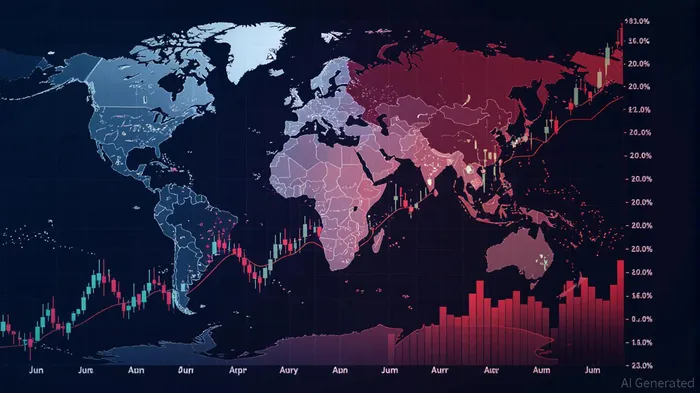
Meanwhile, financials and industrials are gaining traction. Financials are benefiting from stable net interest margins, while industrials are capitalizing on potential regulatory easing and a gradual recovery in global trade
according to market analysis. This duality-growth and defense-highlights the importance of sector rotation as a tactical tool. Investors should not bet blindly on one camp but instead balance their portfolios to capture both innovation-driven growth and the safety of defensive sectors.
Capitalizing on Market Pauses: Rebalancing for Resilience
Recent volatility has created opportunities for tactical rebalancing. International equities, which
surged 18% year-to-date in the MSCI EAFE® Index, offer diversification and exposure to markets less burdened by U.S. trade policies. Similarly, fixed income markets-particularly U.S. high yield and agency-backed securities-are expected to outperform in 2026 as they insulate against AI-related supply pressures
according to Q3 2025 market review.
Investors should also monitor the U.S. dollar's weakened position, which has allowed emerging market currencies to outperform amid expectations of reduced trade tensions
according to JPMorgan global research. A strategic tilt toward emerging market equities and currencies could pay dividends, provided geopolitical risks remain contained.
Tactical Adjustments: The Road Ahead
The key to navigating this volatile landscape lies in preemptive risk management. As the Fed's rate cuts materialize, sectors insulated from near-term inflationary pressures-such as consumer discretionary and materials-could see a late-cycle rebound
according to market analysis. However, patience is critical. The market is pricing in a slowdown, not a collapse, and investors must avoid overreacting to short-term noise
according to financial outlook reports.
For now, the playbook is clear: rotate into resilient sectors, hedge against downside risks with defensive plays, and stay nimble. As the calendar flips to 2026, the winners will be those who position today for tomorrow's opportunities.

Stay ahead of the market.
Get curated U.S. market news, insights and key dates delivered to your inbox.


AInvest
PRO
AInvest
PRO



Comments
No comments yet