
Navigating Market Holidays: Strategic Entry Points and Portfolio Adjustments Around U.S. Market Closures


 Aime Summary
Federal Reserve Policy and Holiday Proximity
The Federal Reserve's 2025 calendar features eight meetings, with several occurring near major market holidays. For instance, , . These proximities could amplify market sensitivity to policy signals, particularly as liquidity constraints during holidays may heighten volatility around Fed announcements. In July 2025, , underscoring how policy surprises near holidays can exacerbate market swings according to market analysis. Investors should monitor these overlapping dates closely, as reduced liquidity during holidays may amplify the impact of Fed messaging.
Historical Post-Holiday Performance: Patterns and Volatility
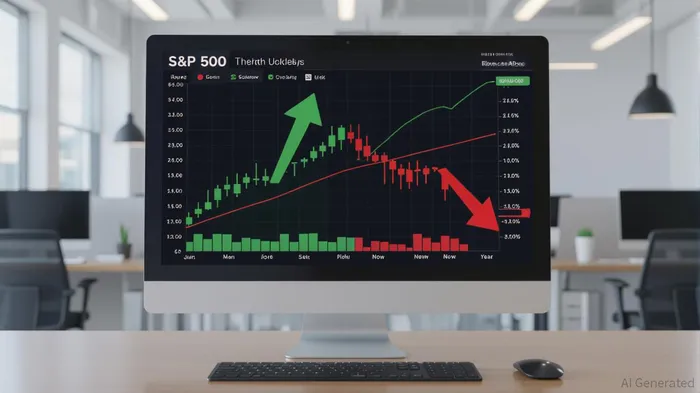 Historical data from 2020–2025 reveals distinct patterns in post-holiday market behavior. Thanksgiving week, for example, has historically delivered positive returns for the S&P 500 and Dow Jones, . The Wednesday before and Friday after have shown particularly strong performance, according to Investopedia data. Conversely, has been a weaker period, with the Dow declining two-thirds of the time over the past 25 years, albeit by modest margins according to Investopedia analysis.
The , a December phenomenon, according to Nasdaq research. October, meanwhile, remains the most volatile month historically, marked by events like (1987) and the 2008 financial crisis according to Nasdaq analysis. These patterns suggest that investors should adopt a nuanced approach: favoring entry points post-Thanksgiving and pre-Christmas while exercising caution in October and during weaker post-holiday periods like Cyber Monday.
Liquidity Shifts and Strategic Adjustments
Liquidity in U.S. markets typically contracts during holidays, particularly from late November through early January. During Thanksgiving week in 2025, U.S. according to Russell Investments research. Similar declines are observed in global fixed income, foreign exchange, and derivatives markets. These liquidity contractions often lead to wider and higher trading costs, necessitating .
Experts recommend adjusting to avoid periods of thin liquidity. For example, according to Russell Investments guidance. Additionally, , offering a window for efficient trading despite broader holiday-related constraints according to Russell Investments analysis.
Portfolio Adjustments: Sector Rotation and Risk Management
Given the Fed's cautious stance on rate cuts in 2025, portfolio strategies should prioritize sectors poised to benefit from lower borrowing costs. and technology stocks, for instance, have historically outperformed during periods of , as consumer spending and innovation cycles gain momentum according to Oppenheimer market strategy. Fixed-income allocations also become critical, with utilities-often viewed as bond proxies-offering stability as rates trend downward according to Oppenheimer research.
For longer-term investors, around holidays present opportunities to identify undervalued high-quality stocks. The April 2025 , for example, according to NY Fed research. By maintaining across asset classes and employing stop-loss orders during volatile periods, investors can balance .
Conclusion
Navigating U.S. market holidays in 2025 requires a dual focus on liquidity dynamics and policy alignment. By leveraging historical post-holiday trends, anticipating Fed-driven volatility, and adjusting execution timelines, investors can transform seasonal challenges into strategic advantages. As the year progresses, staying attuned to both calendar-driven liquidity shifts and macroeconomic signals will be key to optimizing returns in a market shaped by closures and reopenings alike.

Delivering real-time insights and analysis on emerging financial trends and market movements.
Latest Articles
Stay ahead of the market.
Get curated U.S. market news, insights and key dates delivered to your inbox.


AInvest
PRO
AInvest
PRO



Comments
No comments yet