
Navigating U.S. Manufacturing Weakness: Strategic Sector Rotation for a Soft Landing
 Aime Summary
The U.S. manufacturing sector is at a crossroads. The Richmond Fed Manufacturing Index for August 2025, . , signals a softening of pessimism in the Fifth District. While the index remains in contractionary territory, . . . This “soft miss” reflects a broader industrial landscape where weak demand in traditional sectors like chemicals contrasts with resilient growth in construction and engineering, driven by policy tailwinds and infrastructure spending. For investors, this divergence presents a compelling case for sector rotation: underweighting Chemical Products and overweighting Construction and Engineering to capitalize on shifting demand dynamics.
The Chemical Products Sector: A Contraction Amid Global Uncertainty
The U.S. chemical industry is grappling with a perfect storm of weak demand, global economic uncertainty, and shifting tariff policies. The American Chemistry Council and ISM Manufacturing PMI® data highlight a contraction in key metrics: new orders, production, . Customers are canceling or reducing orders, and supplier deliveries have slowed as firms report inventories as “too low.” While forward-looking indicators show some optimism, production costs are expected to accelerate, and destocking efforts will likely keep inventories shrinking.
The sector's challenges are compounded by its exposure to global markets. , with both domestic and foreign markets affected. For investors, this raises red flags: chemical producers like DowDOW-- Chemical and BASF face margin compression from weak pricing power and raw material volatility. A would likely show a widening gap, underscoring the sector's vulnerability.
Construction and Engineering: Policy-Driven Resilience and M&A Momentum
While the chemical sector falters, the construction and engineering industries are navigating a more nuanced path. The U.S. . However, the 2023 , , has injected demand for construction chemicals and materials. , driven by sustainable building solutions and urbanization.
The engineering sector, meanwhile, is experiencing a surge in M&A activity. , driven by an aging workforce and commercial design slowdowns. The (OBBBA), , further accelerates this trend. . A .
Labor market data also favors construction and engineering. , job gains in construction, natural resources, and utilities suggest sector-specific resilience. The V/U (vacancy-to-unemployment) ratio, , indicates tighter labor conditions in these industries, supporting wage growth and project execution efficiency.
Strategic Sector Rotation: Capitalizing on Divergent Trajectories
The case for underweighting Chemical Products and overweighting Construction and Engineering rests on three pillars:
- Policy Tailwinds: The OBBBA's tax incentives for infrastructure and industrial construction directly benefit engineering firms. Conversely, the phaseout of clean energy credits under the Inflation Reduction Act weakens demand for chemical products in renewable energy projects.
- M&A-Driven Growth: Engineering firms are leveraging acquisitions to address labor shortages and expand capabilities. This contrasts with the chemical sector's struggles to absorb cost pressures.
- Sustainability Synergies: Construction's shift toward bio-based concrete, recycled materials, and smart technology aligns with regulatory and client demands, creating a moat against cyclical downturns.
For a soft-landing scenario—where inflation moderates without a recession—Construction and Engineering offer defensive characteristics. Infrastructure spending is less sensitive to consumer demand, and engineering firms' project pipelines (bolstered by green and tech-enabled initiatives) provide visibility. Meanwhile, Chemical Products face margin erosion from global demand shifts and pricing pressures.
Investment Implications and Risks
A strategic portfolio might reduce exposure to chemical producers (e.g., Dow, BASF) and increase allocations to construction/engineering firms (e.g., StantecSTN--, WSP, AECOM). A would likely show a discount in engineering, suggesting undervaluation relative to fundamentals.
However, risks persist. Labor shortages in construction could delay projects, and the OBBBA's deficit impact may eventually pressure interest rates. Investors should also monitor the V/U ratio for signs of labor market tightening, which could reignite inflationary pressures.
Conclusion
The Richmond Fed's August miss underscores a manufacturing sector in transition. While Chemical Products face headwinds, Construction and Engineering are positioned to thrive in a policy-driven, sustainability-focused economy. By underweighting the former and overweighting the latter, investors can align with industrial demand shifts and capture market-beating returns in a soft-landing environment. The key lies in balancing near-term volatility with long-term structural trends—a strategy that rewards patience and sector-specific insight.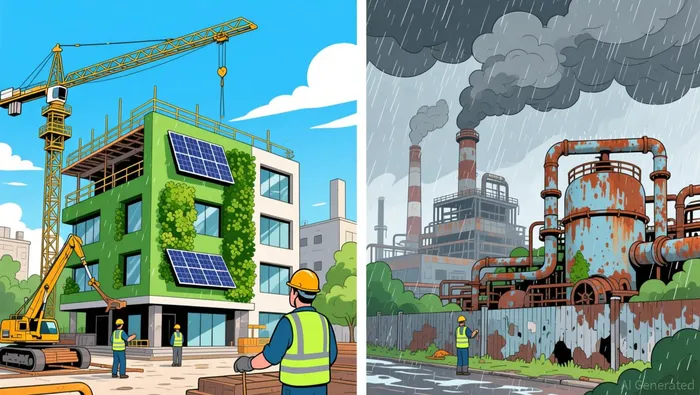

Stay ahead of the market.
Get curated U.S. market news, insights and key dates delivered to your inbox.




Comments
No comments yet