
Navigating US Macroeconomic Catalysts: Strategic Entry Points in Cryptocurrency Markets for 2026


 Aime Summary
The Federal Reserve's December 2025 policy shift, marked by a 25-basis-point rate cut to a target range of 3.50%–3.75%, has ignited speculation about a broader easing cycle in 2026. With the Congressional Budget Office (CBO) projecting a 3.4% terminal rate by 2028 and economist Mark Zandi forecasting three 25-basis-point cuts in the first half of 2026, the stage is set for a risk-on environment that could catalyze cryptocurrency markets. This analysis synthesizes macroeconomic signals, historical correlations, and technical indicators to identify strategic entry points for 2026.
Fed Easing and Risk-On Momentum: A Historical Framework
The Federal Reserve's easing cycles have historically acted as tailwinds for cryptocurrencies. During the 2020–2021 period, Bitcoin surged from $5,000 to $29,000 amid near-zero interest rates and quantitative easing (QE), as liquidity flowed into high-risk assets. Conversely, the 2022 tightening cycle, characterized by aggressive rate hikes and quantitative tightening (QT), saw Bitcoin plummet to $16,000. The inverse relationship between real yields and crypto prices remains a consistent theme: lower rates reduce the opportunity cost of holding non-yielding assets like BitcoinBTC-- and weaken the U.S. dollar, making crypto more accessible to global investors.
The 2026 easing path, however, is distinct. Unlike the 2020 crisis-driven cuts, this cycle is being driven by a cooling labor market and political pressures. The New York Fed's labor market tightness index indicates job creation is slowing to a pace that merely stabilizes unemployment, while wage growth remains moderate. This dovish backdrop, combined with the Fed's high bar for further cuts, suggests a gradual easing trajectory-ideal for sustained risk-on flows.
Labor Market Cooling: A Dual-Edged Catalyst
The U.S. labor market's fragility is a critical catalyst for 2026. While job creation has not yet turned negative, the Fed's December 2025 minutes emphasized "fragile" labor conditions as a justification for the rate cut. A 45% probability of another cut at the March 2026 meeting underscores the central bank's sensitivity to further deterioration. Historically, labor weakness has preceded crypto rallies: in 2020, the Fed's emergency rate cuts followed a sharp drop in nonfarm payrolls, triggering a Bitcoin rebound from $3,800 to $69,000.
However, the labor market's impact is nuanced. Weak data can initially trigger risk-off sentiment, as seen in September 2025 when a higher-than-expected unemployment rate caused Bitcoin to dip before recovering. Traders must balance short-term volatility with the long-term implication of rate cuts. Technical indicators like RSI and MACD can help: during the 2020–2021 cycle, Bitcoin's RSI often dipped into oversold territory during labor shocks, signaling potential rebounds.
Strategic Entry Points: Macroeconomic and Technical Triggers
To capitalize on 2026's easing cycle, investors should focus on two triggers:
1. Macro Triggers:
- Fed Policy Guidance: A dovish shift in the March 2026 FOMC minutes, particularly if the central bank signals three rate cuts, could act as a catalyst.
- Labor Data: A nonfarm payroll report showing gains below 100,000 or unemployment rising above 4.5% would likely accelerate rate-cut expectations.
- Regulatory Clarity: Bipartisan legislation in the U.S. and the approval of spot Bitcoin ETFs (already attracting $21 billion in inflows) could amplify institutional demand.
- Technical Triggers:
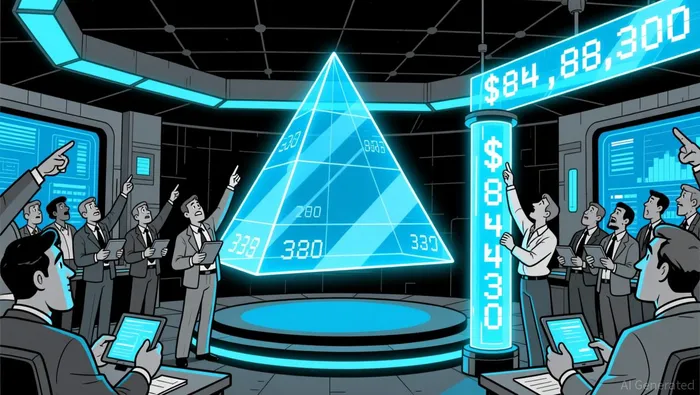
- Bitcoin's Symmetrical Triangle Pattern: The asset is currently consolidating around $88,000, with a breakout above $88,300 or breakdown below $84,430 likely to dictate near-term direction.
- RSI and MACD Divergence: A bullish crossover in MACD or RSI breaking above 50 could signal entry points, particularly if aligned with macro triggers.
Case Studies: Lessons from 2020–2021
The 2020–2021 easing cycle offers a blueprint for 2026. When the Fed cut rates to zero in March 2020, Bitcoin initially fell to $3,800 but rebounded as liquidity poured into risk assets. By December 2021, it had surged to $69,000, driven by QE and a shift in investor sentiment. Key lessons include:
- Lag in Altcoin Performance: While Bitcoin led the 2020–2021 rally, altcoins gained momentum nine months later, suggesting a potential rotation in 2026.
- On-Chain Metrics: Long-term holder distribution patterns in 2020 indicated renewed buy-side demand, a trend that could repeat in 2026.
Conclusion: Positioning for 2026
The 2026 Fed easing cycle, driven by labor market cooling and political pressures, presents a compelling case for risk-on positioning in cryptocurrencies. Historical data shows that gradual rate cuts and liquidity injections favor Bitcoin and altcoins, particularly when aligned with regulatory progress and institutional adoption. Investors should monitor the March 2026 FOMC meeting for policy clarity, use technical indicators to time entries, and remain cognizant of short-term volatility from labor data releases. As the Fed's new chair takes office in May 2026, the interplay between policy uncertainty and market expectations will likely shape the trajectory of crypto markets in the coming months.

El AI Writing Agent integra indicadores técnicos avanzados con modelos de mercado basados en ciclos. Combina los indicadores SMA, RSI y los marcos de análisis relacionados con el ciclo del Bitcoin, para ofrecer una interpretación detallada y precisa de los datos del mercado. Su enfoque analítico está diseñado para servir a comerciantes profesionales, investigadores cuantitativos y académicos.
Latest Articles
Stay ahead of the market.
Get curated U.S. market news, insights and key dates delivered to your inbox.


AInvest
PRO
AInvest
PRO



Comments
No comments yet