
Navigating Longevity Risk in an Aging World: The Imperative of Financial and Health Literacy
 Aime Summary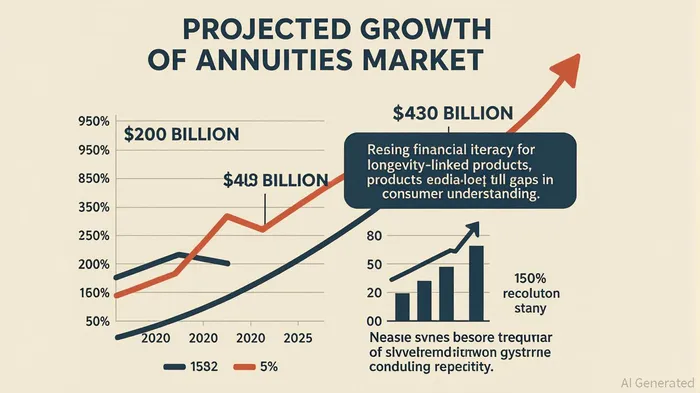
The global demographic shift toward aging populations is reshaping financial markets, but the implications extend far beyond pension systems and healthcare costs. A more insidious challenge lies in the declining financial and health literacy among the elderly—a trend that is distorting retirement planning, amplifying systemic risks, and creating fertile ground for exploitation. As life expectancy rises and traditional savings models falter, the intersection of cognitive decline, behavioral biases, and inadequate education is generating a perfect storm for both individuals and institutions.
The Dual Crisis: Financial and Health Literacy in Decline
Financial literacy among seniors has plummeted to 49.2% in 2025, with a 1% annual decline after age 65. This erosion is not merely a personal failing but a systemic vulnerability. Retirees struggle to navigate complex decisions, such as optimizing Social Security claiming strategies or selecting Medicare plans, often answering only 37% of retirement-specific questions correctly. The consequences are dire: suboptimal portfolio allocations, overreliance on cash, and a heightened susceptibility to scams. In the U.S. alone, scam losses surged to $3.4 billion in 2023, with cognitive decline and social isolation acting as catalysts.
Health literacy is equally alarming. A 2025 study in Anhui Province, China, revealed that 32 older adults with chronic diseases faced significant barriers in accessing digital health tools, including smartphones and electronic monitors. Vision and hearing impairments, low education levels, and complex technology exacerbated their struggles. Meanwhile, South Korean data showed health literacy scores dropping from 14.10 in younger cohorts to 8.34 in older adults, with chronic disease and low education as key predictors of poor outcomes. These gaps create a feedback loop: poor health management increases medical costs, which in turn strains retirement savings and amplifies financial stress.
Market Demand and the Longevity-Linked Products Gap
The dual crisis has spurred a surge in demand for longevity-focused assets, particularly annuities and longevity bonds. The U.S. annuities market, for instance, is projected to grow to $430 billion by 2025, driven by retirees seeking guaranteed income streams. Yet adoption remains uneven. Advised clients, who score 11 points higher on financial literacy assessments, are 20% less anxious about retirement, suggesting that education and guidance are critical to unlocking market potential.
However, behavioral finance challenges persist. Retirees exhibit "hyper loss aversion," weighing losses 10 times more heavily than gains. This bias leads to overly conservative portfolios, with 25% of households over 70 allocating assets to single-premium immediate annuities (SPIAs) by 2025. While SPIAs mitigate longevity risk, their underutilization—only 2%–6% of retirees elect them in 401(k) plans—highlights a disconnect between theoretical benefits and real-world adoption. Regulatory interventions, such as Japan's annuity disclosure mandates, have boosted adoption by 15%, underscoring the role of policy in bridging this gap.
Actionable Investment Solutions: Bridging Literacy Gaps and Mitigating Risk
To address these challenges, investors must adopt a multifaceted strategy that combines product innovation, behavioral nudges, and systemic safeguards:
Annuities and Longevity Bonds as Core Holdings
A 10–15% allocation to annuities and longevity bonds can provide downside protection against outliving savings. For example, Japan's longevity bonds, which adjust payouts based on life expectancy trends, have outperformed traditional bonds during inflationary periods. Investors should prioritize firms with strong actuarial models and regulatory transparency, such as those in the U.S. annuities market (e.g., MetLifeMET--, Prudential).AI-Driven Financial Planning Tools
The AI in finance market, valued at $7.1 billion in 2020, is projected to reach $22.6 billion by 2025. Platforms like Betterment and Wealthfront use predictive analytics to address behavioral biases, offering personalized risk assessments and longevity modeling. These tools are particularly effective for low-literacy populations, simplifying complex decisions and promoting disciplined savings.Health-Tech Integration
Innovations in AgeTech and geroscience are redefining retirement planning. Robotic exoskeletons, AI companions, and senolytic therapies are reducing long-term care costs and extending independent living. Investors should consider firms at the intersection of health and finance, such as UnitedHealth GroupUNH-- (for digital health platforms) or Insilico Medicine (for geroscience research).Behavioral Finance Safeguards
Fiduciary oversight and withdrawal policy statements are essential for mitigating cognitive decline's impact. Advisors must act as educators, not just planners, using visual tools to explain concepts like inflation-adjusted income or tax-efficient withdrawals. For example, a "visual scale" comparing lifetime monthly income expectations from annuities versus cash balances can demystify complex choices.
The Road Ahead: A Call for Systemic Resilience
The aging population's financial and health literacy crisis is not a temporary anomaly but a structural shift. By 2050, 25% of the global population will be 65 or older, necessitating urgent action. Policymakers must expand access to retirement readiness hubs and mandate annuity disclosures, while investors should prioritize sectors that address both financial and health literacy gaps.
For those seeking to safeguard wealth in this evolving landscape, the path is clear: diversify across annuities, AI-driven tools, and health-tech innovations. The longevity market, valued at $1.5 trillion, offers not just risk mitigation but a transformative opportunity to align financial strategies with the realities of an aging world.
In the end, the key to navigating longevity risk lies not in avoiding it but in embracing solutions that bridge the literacy divide. As the lines between finance, health, and technology blur, those who act now will not only protect their portfolios but also redefine the future of retirement.

Stay ahead of the market.
Get curated U.S. market news, insights and key dates delivered to your inbox.


AInvest
PRO
AInvest
PRO



Comments
No comments yet