
Navigating the July 9 Tariff Deadline: Sector Risks and Investment Opportunities
The July 9 expiration of the Trump-era tariff freeze has become a critical inflection point for U.S. markets, with industries ranging from manufacturing to technology bracing for potential disruptions. As reciprocal tariffs on $2.5 trillion of imports face reinstatement or escalation, investors must assess sector vulnerabilities while identifying opportunities in industries insulated from trade friction. Here's how to position portfolios ahead of this pivotal deadline.
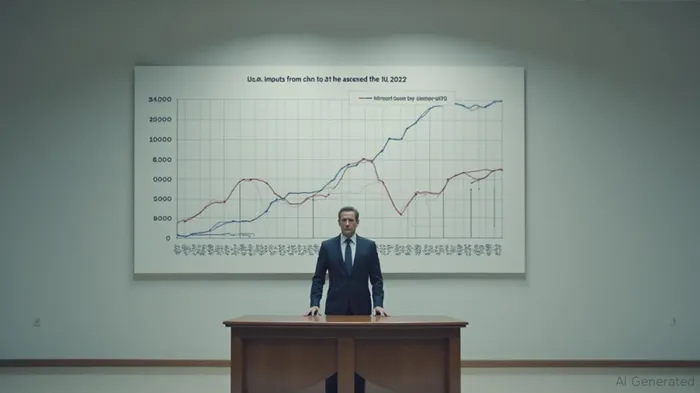
Manufacturing: The Crossroads of Pain and Profit
The manufacturing sector sits squarely in the crosshairs of renewed tariffs. Steel and aluminum tariffs—set to remain at 25-50% post-July 9—will amplify costs for automakers, machinery producers, and construction firms. Companies relying on imported raw materials or components face margin squeezes, while those with U.S.-based supply chains or access to tariff exemptions (e.g., aerospace under the U.S.-UK deal) could thrive.
Investment Play: Shift toward domestic suppliers of critical materials. Companies like Nucor (NUE), a U.S. steel producer, or Ball Corporation ( BLL), which benefits from aluminum exemptions, offer defensive positions.
Retail: Bracing for Higher Input Costs
Retailers, particularly those reliant on imported goods, face rising input costs as tariffs on apparel, electronics, and home goods could jump to 25-50%. Margins are likely to compress unless companies pass costs to consumers, a move that could dampen sales.
Investment Play: Focus on retailers with diversified supply chains or pricing power. Costco (COST), which sources more U.S. goods, and Home Depot (HD), with strong domestic suppliers, may outperform peers.
Technology: Supply Chain Risks vs. Domestic Growth
The tech sector faces a dual challenge: semiconductor shortages could worsen if tariffs on critical minerals (e.g., rare earths from China) are imposed, while companies like Intel (INTC) and Applied Materials (AMAT) might benefit from U.S. subsidies for domestic chip production under the CHIPS Act.
Investment Play: Favor companies with vertical integration or government-backed projects. Micron Technology (MU), which sources materials from tariff-exempt regions, and Lam Research (LRCX), a beneficiary of domestic chip manufacturing incentives, present strategic bets.
Defense & Infrastructure: Winners in a Protectionist Era
As trade tensions escalate, defense spending and domestic infrastructure projects are likely to accelerate. Companies like Lockheed Martin (LMT) and Boeing (BA) could see orders rise if geopolitical risks push allies to diversify supply chains. Meanwhile, Caterpillar (CAT) and Deere (DE) may benefit from infrastructure bills tied to U.S. steel exemptions.
Expert Insights and Market Signals
- Josh Lipsky of the Atlantic Council warns that 68% of U.S. imports remain at risk of new tariffs post-July 9, with the EU and Japan facing the highest likelihood of punitive measures.
- Holland & Knight's analysis estimates that reimposing “Liberation Day” rates could add $370 billion to import costs, potentially tipping the U.S. into a recession by mid-2026.
Portfolio Strategy: Hedge, Diversify, and Stay Nimble
- Rebalance Sectors: Reduce exposure to tariff-sensitive industries (e.g., autos, textiles) and increase allocations to defense, semiconductors, and domestic industrials.
- Use Hedging Tools: Consider options strategies or inverse ETFs (e.g., SDS) to mitigate downside risks in cyclical sectors.
- Target Tariff-Resistant Stocks: Prioritize companies with:
- Geographic Diversification: Nordstrom (JCP) sources fewer goods from China than peers.
- Government Contracts: Raytheon Technologies (RTX) benefits from defense spending.
- Inflation Hedges: Freeport-McMoRan (FCX), a copper producer, gains as tariffs drive demand for domestic metals.
Conclusion
The July 9 deadline is not merely a policy milestone—it's a catalyst for sector realignment. Investors who anticipate which industries will weather trade turbulence and which will emerge stronger will secure outsized returns. With legal challenges still pending and bilateral deals in flux, staying agile and informed is key. As the clock ticks down, defensive positioning and sector-specific focus are the best shields against the coming storm.
Jeanna Smialek is a financial analyst specializing in macroeconomic trends and sector-specific investment strategies.

Stay ahead of the market.
Get curated U.S. market news, insights and key dates delivered to your inbox.
AInvest
PRO
AInvest
PRO



Comments
No comments yet