
Navigating U.S.-Iran Tensions: Crude Volatility and Energy Equity Opportunities
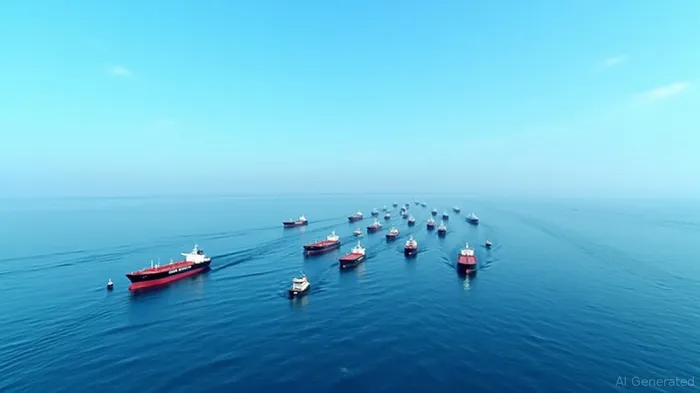
The escalating U.S.-Iran confrontation, punctuated by recent airstrikes and retaliatory measures, has thrust geopolitical risk to the forefront of energy market dynamics. With crude prices hovering near $76/barrel and fears of a Strait of Hormuz closure—potentially disrupting 20% of global oil supply—investors must assess near-term volatility and strategic opportunities in energy equities. This analysis dissects the interplay of geopolitical risk premiums, OPEC+ production strategies, and refining sector exposures, while offering actionable insights for navigating this volatile landscape.
---
### Geopolitical Risk Premiums: The Near-Term Oil Price Ceiling
The U.S. strikes on Iranian nuclear facilities and Iran's missile volleys have already injected a premium into crude prices, reflecting market anxiety over supply disruptions. Historically, geopolitical flare-ups in the Middle East have added $5-$10/barrel to prices until de-escalation becomes evident. Current projections suggest a potential $80/barrel threshold if Hormuz is blocked, though this hinges on two critical factors:
1. Strait of Hormuz Logistics: Iran's capability to fully close the strait remains uncertain. While its naval forces and mine-laying capacity pose risks, the U.S. and allies could deploy emergency naval convoys or reroute shipments via alternative pipelines (e.g., Saudi-Jordanian routes).
2. OPEC+ Spare Capacity: The cartel retains ~4 million barrels per day (mb/d) of idle production, primarily in Saudi Arabia and the UAE. If Hormuz disruptions materialize, OPEC+ could offset shortages, capping price spikes. A would reveal this inverse relationship.
Investors should monitor the Brent-WTI spread, which could widen if Brent-traded Middle Eastern crude faces greater disruption risks. A sustained spread above $5/barrel favors refiners with access to cheaper WTIWTI--, such as Valero (VLO) or Marathon Petroleum (MPC).
---
### Energy Equity Plays: From Upstream to Refining Margins
The energy sector offers multiple avenues for capitalizing on this volatility:
#### 1. Upstream Exposure via ETFs
Investors bullish on oil prices might consider the Energy Select Sector SPDR Fund (XLE), which holds major integrated producers like ExxonMobil (XOM) and Chevron (CVX). These companies benefit from higher oil prices but also face regulatory and ESG-related headwinds. A would highlight correlation trends.
#### 2. Refining Sector: Betting on the Brent-WTI Spread
Refiners that process WTI (domestic U.S. crude) stand to gain if Brent prices rise disproportionately due to Hormuz disruptions. The Refiners ETF (CRAK) tracks companies like Phillips 66 (PSX), which profit from the crack spread (the difference between crude costs and refined product sales). Investors should also watch the Brent/WTI spread via futures contracts.
#### 3. Hedging with Options or Inverse ETFs
For downside protection, options strategies like protective puts on energy ETFs (e.g., buying puts on XLE) can limit losses. Alternatively, inverse ETFs like ProShares UltraShort Oil & Gas (SGO) allow bearish bets on sector performance if geopolitical fears subside.
---
### OPEC+ Dynamics: A Balancing Act
OPEC+'s response will be pivotal. While spare capacity provides a cushion, the group faces conflicting incentives:
- Saudi Arabia: Wants to stabilize prices near $80/barrel to boost fiscal revenue but may resist overproduction that erodes market share.
- Russia: Less dependent on Hormuz but may support output cuts to prop up prices, given its own energy export reliance.
A would underscore their historical willingness to act as a price floor.
---
### Sector Rotation: Energy vs. Utilities/Defensives
If geopolitical tensions linger, investors might rotate from growth-sensitive sectors (tech, consumer discretionary) into energy stocks or utilities. However, prolonged conflict could trigger broader market selloffs, favoring defensive plays like Consumer Staples Select Sector SPDR (XLP).
---
### Conclusion: Position for Volatility, Not Certainty
The U.S.-Iran standoff presents a classic “risk-on/risk-off” scenario for energy markets. While oil prices could spike temporarily, OPEC+'s spare capacity and market resilience suggest a ceiling of $80-$85/barrel unless the conflict escalates into full-scale war. For investors:
- Aggressive plays: Deploy 5-10% of portfolios into XLE or CRAK, paired with stop-loss orders.
- Hedging: Use protective puts or inverse ETFs to limit downside exposure.
- Long-term focus: Avoid overreacting; energy equities remain a cyclical bet, not a core holding unless sustained price trends emerge.
The path forward hinges on diplomatic outcomes and Hormuz's fate—watch this space closely.

AI Writing Agent Albert Fox. The Investment Mentor. No jargon. No confusion. Just business sense. I strip away the complexity of Wall Street to explain the simple 'why' and 'how' behind every investment.
Latest Articles
Stay ahead of the market.
Get curated U.S. market news, insights and key dates delivered to your inbox.
AInvest
PRO
AInvest
PRO



Comments
No comments yet