
Navigating Inflationary Divergence: Strategic Allocation in Metals and Mining Amid Automotive Sector Headwinds
 Aime Summary
The U.S. Core Producer Price Index (PPI) for November 2025, at 3.0% year-over-year, masks a stark divergence in inflationary pressures across sectors. While the broader economy grapples with moderate inflation, the Metals and Mining sector has experienced a surge in prices, driven by energy costs and supply constraints, while the Automobiles sector faces a more subdued but persistent cost environment. This asymmetry presents a compelling case for sector-specific investment strategies, where investors must balance exposure to inflationary tailwinds in commodities with hedging mechanisms to mitigate manufacturing sector headwinds.
The Metals and Mining Sector: A Tale of Supply Constraints and Strategic Reinvestment
The PPI data for Metals and Mining reveals a sharp uptick in prices for nonferrous metals, natural gas, and processed energy goods. For instance, the index for processed goods for intermediate demand rose 0.6% monthly, with 3.0% of that driven by energy-related inputs. Over the year, the sector's PPI climbed 3.6%, reflecting a combination of geopolitical tensions, resource depletion, and the energy transition's demand for critical minerals.
Investors in this sector have capitalized on these dynamics. In Q3 2025, a 10.7% overweight in Metals and Mining (compared to the index's 1.7%) yielded significant returns, with Platinum Group Metals (PGMs) surging 50% due to a projected 1 million-ounce platinum deficit. The underinvestment in mining over the past decade has created a supply inelasticity that is now translating into price gains.
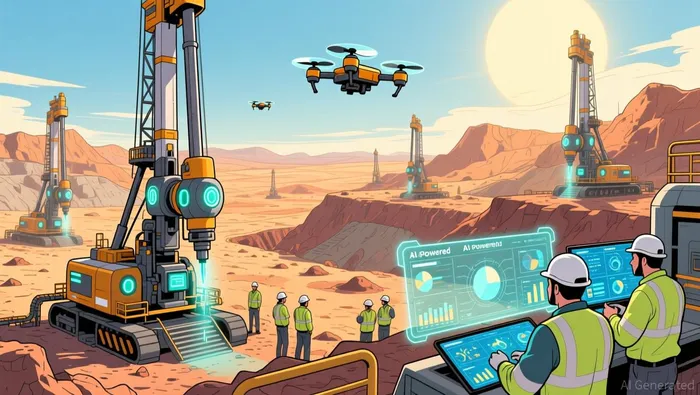
However, the sector's future depends on strategic reinvestment. Mining companies are prioritizing AI-driven operational efficiency, vertical integration, and sustainable finance to secure long-term value. For example, 58% of surveyed miners plan to allocate budgets to AI, while 26% are pursuing domestic processing to reduce exposure to volatile global markets.
The Automobiles Sector: Hedging in a Tightening Cost Environment
In contrast, the Automobiles sector's PPI rose modestly by 1.51% YoY, reflecting a mix of cost pressures from tariffs, trade uncertainties, and localized supply chain adjustments. Automakers like Ford and General Motors have faced tariff-related costs of $3–5 billion in 2025, prompting a shift toward financial hedging and inventory optimization.
The sector's response has been multifaceted. Midwest aluminum premium futures on the CME hit record highs as automakers locked in prices to mitigate volatility. Similarly, copper, a critical input for electric vehicles (EVs), saw a surge in hedging activity, with futures and options contracts becoming central to procurement strategies. For example, the U.S. tariff exemption on refined copper cathodes in August 2025 caused a sudden price correction, underscoring the need for robust hedging programs.
Automakers are also diversifying sourcing strategies, prioritizing U.S. and USMCA-aligned suppliers to reduce reliance on imported metals. This localization trend, combined with fixed-price contracts and real-time market monitoring, aims to stabilize costs in a volatile environment. However, these measures are often short-term fixes; long-term resilience requires deeper structural adjustments, such as investing in domestic refining and recycling infrastructure.
Investment Implications: Balancing Commodity Gains with Manufacturing Risks
The divergence between these sectors offers a roadmap for investors. In Metals and Mining, the focus should be on capitalizing on supply inelasticity and strategic reinvestment. Overweighting PGMs, copper, and aluminum miners—particularly those with strong domestic processing capabilities—can yield returns as global demand for critical minerals accelerates.
For the Automobiles sector, the priority is hedging against cost volatility. Investors should favor automakers with robust financial hedging programs, such as those using futures and options to lock in metal prices. Additionally, companies that are localizing supply chains and leveraging U.S. trade agreements (e.g., USMCA) will be better positioned to navigate tariff-driven headwinds.
A diversified approach that combines exposure to inflationary commodities with hedged manufacturing equities can mitigate risk while capturing growth. For instance, pairing a long position in Freeport-McMoRanFCX-- (a copper giant with U.S. smelting capacity) with a short-term hedge on aluminum premiums could balance commodity gains with cost stability.
Conclusion: Strategic Positioning in a Divergent Inflationary Landscape
The U.S. Core PPI's 3.0% YoY figure is a macroeconomic average that obscures the sector-specific forces reshaping markets. Metals and Mining, driven by supply constraints and energy transition demand, offer asymmetric upside potential for investors willing to embrace capital-intensive, long-term strategies. Meanwhile, the Automobiles sector requires a nuanced approach to hedging and supply chain resilience to counteract rising costs.
In this environment, the key to success lies in aligning portfolio allocations with the structural trends of each sector. By overweighting undervalued commodities and hedging manufacturing risks, investors can navigate the inflationary divergence with both conviction and caution.

Stay ahead of the market.
Get curated U.S. market news, insights and key dates delivered to your inbox.
AInvest
PRO
AInvest
PRO



Comments
No comments yet