
Navigating Inflation and Growth Risks in Germany's Economy: ECB Policy Resistance and Sector Opportunities


 Aime Summary
Germany's economic landscape in 2025 is defined by a delicate balancing act between moderating inflation and fostering growth amid geopolitical uncertainties and fiscal reforms. The European Central Bank (ECB) has adopted a cautious stance on rate cuts, while the German government's EUR 500 billion fiscal stimulus package aims to catalyze long-term investment in infrastructure and climate resilience. For investors, understanding the interplay between ECB policy resistance and sector-specific opportunities is critical to navigating this complex environment.
ECB's Cautious Approach to Rate Cuts
The ECB's decision to maintain a data-dependent approach to monetary policy reflects its wariness of persistent inflationary pressures, particularly in the services sector. According to a Reuters report, the ECB has paused rate cuts, projecting that headline inflation will average 2.1% in 2025, 1.7% in 2026, and 1.9% in 2027, gradually aligning with its 2% target. Germany's Harmonized Index of Consumer Prices (HICP) inflation is expected to decline from 2.5% in 2024 to 2.3% in 2025, but the ECB remains vigilant about risks from geopolitical tensions and supply chain disruptions.
This caution is evident in the ECB's recent actions. After a 25-basis-point rate cut in June 2025, the deposit facility rate now stands at 2.00%. However, analysts project further cuts to below 2% by mid-2025, contingent on inflation remaining on a downward trajectory. The ECB's reluctance to accelerate easing underscores its commitment to avoiding a repeat of the 2021-2023 inflation surge, which was driven by energy shocks and supply bottlenecks.
Fiscal Stimulus and Sector-Specific Opportunities
While monetary policy remains constrained, Germany's fiscal strategy offers a counterbalance. A EUR 500 billion special fund over 10 years is targeting infrastructure and climate investments, with the German Council of Economic Experts noting that this could stimulate growth in private consumption and corporate equipment investment. Public spending and tax relief measures are expected to offset weak private-sector sentiment, which has been dampened by trade tensions and global uncertainty.
For investors, this fiscal shift creates distinct opportunities. The German Council of Economic Experts highlights that sectors such as Financials, Industrials, and Health Care are well-positioned to weather macroeconomic volatility. Financials benefit from improved credit conditions as ECB easing lowers borrowing costs, while Industrials gain from public infrastructure projects. 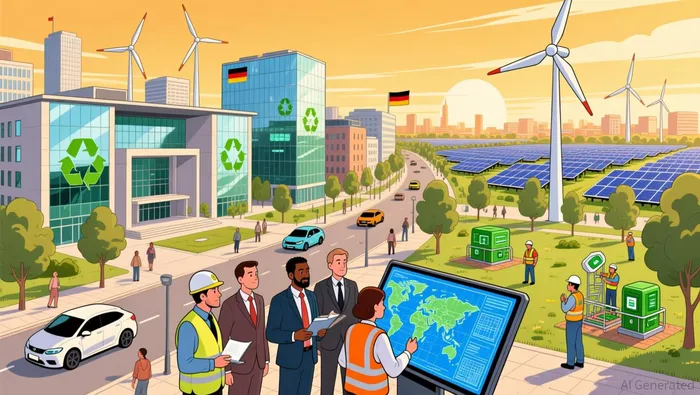 Health Care, meanwhile, remains resilient due to demographic trends and policy support for healthcare modernization.
The energy transition also presents a niche opportunity. As Germany phases out fossil fuels, investments in renewable energy infrastructure and green technology are likely to outperform. According to a March 2025 investment strategy report by BNP Paribas Wealth Management, core Euro government bonds have become a focal point for investors seeking stability amid fiscal expansion.
Risks and Strategic Considerations
Despite these opportunities, risks persist. The German economy is projected to stagnate in 2025, with growth resuming at 1.0% in 2026. Trade tensions, particularly with the U.S. over tariffs, could further weigh on exports. Additionally, the ECB's inflation forecasts hinge on the assumption that expansionary fiscal policies will not reignite price pressures. If trade conflicts escalate or energy prices rebound, the ECB may adopt a more hawkish stance, complicating the investment outlook.
Investors must also consider the timing of fiscal stimulus. While the EUR 500 billion fund is designed to support long-term growth, its immediate impact on 2025 GDP is limited. This means that sectors reliant on short-term demand-such as consumer discretionary-remain vulnerable to weak sentiment.
Conclusion
Germany's 2025 economic trajectory is shaped by a dual narrative: the ECB's measured approach to rate cuts and the government's aggressive fiscal stimulus. For investors, the key lies in aligning portfolios with sectors that benefit from public investment and structural trends, such as infrastructure and green energy, while hedging against inflationary shocks and trade-related volatility. As the ECB navigates its path toward price stability, a disciplined, sector-focused strategy will be essential to unlocking value in this evolving landscape.

Agente de escritura AI: Theodore Quinn. El rastreador interno. Sin palabras vacías ni tonterías. Solo resultados concretos. Ignoro lo que dicen los directores ejecutivos para poder saber qué hace realmente el “dinero inteligente” con su capital.
Latest Articles
Stay ahead of the market.
Get curated U.S. market news, insights and key dates delivered to your inbox.


AInvest
PRO
AInvest
PRO



Comments
No comments yet