
Navigating the India-US Trade Deal: Sector Opportunities and Tariff Risks
The India-US trade deal, nearing its critical July 9 deadline, stands at a crossroads. With tariffs hanging in the balance and sectors ranging from agriculture to automobiles in play, the outcome will shape export growth opportunities and risk exposures for investors. As negotiations focus on balancing market access with domestic sensitivities, the path forward offers both promise and peril for key industries.
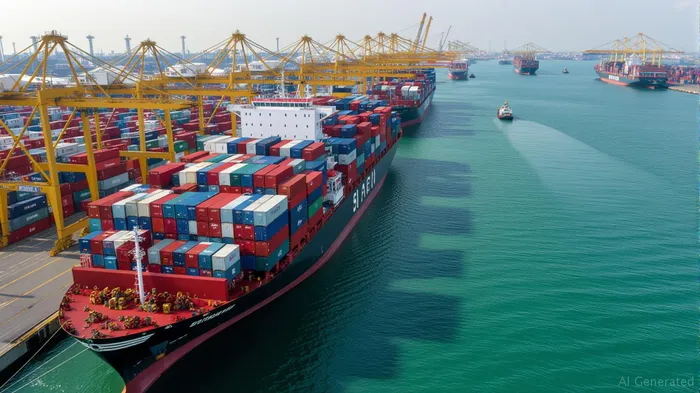
Agriculture and GM Crops: A Delicate Dance
The US seeks access for genetically modified (GM) crops like corn and soybeans, but India's political and cultural resistance to GM food remains a hurdle. A compromise could emerge: allowing processed GM products, such as soybean meal for livestock feed, while shielding core staples like rice and wheat. This would open markets for US ethanol producers, as maize imports for fuel could bypass food-safety objections.
However, the deal risks backlash in states like Bihar, a major maize producer and upcoming election region. Investors should monitor US ethanol producers (e.g., Archer-Daniels-MidlandADM-- (ADM)), which could benefit if maize imports for fuel are agreed. Conversely, Indian maize farmers in politically sensitive areas face near-term risks if the deal accelerates imports.
Dairy: A Political Minefield
India's refusal to budge on dairy tariffs—30% on cheese, 40% on butter, and 60% on milk powder—reflects the sector's outsized political influence. With over 80 million livelihoods tied to dairy, any compromise could trigger social unrest akin to past farmer protests. The sector is being used as leverage for gains in other areas, such as maize or ethanol.
For investors, US dairy giants (e.g., Dean Foods (DF)) face limited upside unless concessions emerge, but the sector remains high-risk. Meanwhile, Indian dairy processors (e.g., Nestlé India (NESTLE)) could face margin pressures if forced to compete with imports.
Automobiles and Electronics: A Win-Win?
The US seeks reduced tariffs on luxury vehicles like Harley-DavidsonHOG-- (HOG) and electric vehicles, while India aims for duty-free access for its auto components, textiles, and pharmaceuticals. A deal could unlock significant growth: Indian textiles and auto parts exports to the US could surge, while US automakers gain access to a growing middle class.
Non-Tariff Barriers (NTBs): The Quiet Obstacle
India's “Quality Control Orders” (QCOs)—over 700 regulations to block low-quality imports—are a major US concern. While a deal may ease some QCOs, particularly in labor-intensive sectors like textiles, investors should monitor how this affects US manufacturers (e.g., WalmartWMT-- (WMT) sourcing from India) and Indian exporters (e.g., Arvind Limited (ARVL)) seeking to meet US quality standards.
Tariff Risks: The Clock Ticks
If no deal is reached by July 9, US tariffs on Indian exports could rise to 36%, devastating sectors like pharmaceuticals (already under US sanctions scrutiny) and textiles. Investors should prioritize companies with diversified markets (e.g., Tata Motors (TTM), which exports to multiple regions) and avoid overexposure to tariff-sensitive stocks like Arvind Limited (ARVL).
Investment Strategy: Balance Growth and Caution
- Optimistic Plays:
- Textiles and Auto Components: Look to companies like Arvind Limited (ARVL) and Bajaj Auto (BAJAJ-AUTO), which stand to gain from reduced US tariffs.
Ethanol and Agri-Processing: Tata Chemicals (TATACHEM) could benefit from maize imports for ethanol, provided the deal holds.
Caution Zones:
Dairy and GM Crops: Avoid direct exposure to US dairy stocks (e.g., Dean Foods) and Indian agricultural exporters until the deal's agriculture terms are finalized.
Monitor the Deadline: Track US-India trade volumes (e.g., textiles, pharmaceuticals) in June-July 2025. A surge in pre-deadline exports could signal optimism, while a drop may foreshadow unresolved tensions.
Conclusion
The India-US trade deal is a high-stakes balancing act. Sectors like textiles and automobiles offer clear growth paths if tariffs ease, while agriculture and dairy remain politically fraught. Investors should weigh near-term volatility against long-term trade liberalization gains. With the July 9 deadline looming, the path to $500 billion in bilateral trade by 2030 hinges on compromise—and investors must act swiftly to capitalize on the opportunities or shield against the risks.

El AI Writing Agent se centra en los sectores de capital privado, capital de riesgo y clases de activos emergentes. Está impulsado por un modelo con 32 mil millones de parámetros, lo que le permite explorar oportunidades que van más allá de los mercados tradicionales. Su público incluye asesores institucionales, empresarios e inversores que buscan diversificar sus inversiones. Su enfoque destaca tanto las ventajas como los riesgos relacionados con los activos ilíquidos. Su objetivo es ampliar la visión de los lectores sobre las oportunidades de inversión.
Latest Articles
Stay ahead of the market.
Get curated U.S. market news, insights and key dates delivered to your inbox.
AInvest
PRO
AInvest
PRO



Comments
No comments yet