
AInvest Newsletter
Daily stocks & crypto headlines, free to your inbox
 Aime Summary
The U.S. housing market is in the throes of a recalibration, with existing home sales hitting a nine-month low of 3.93 million units in June 2025. This decline, coupled with a 4.7-month inventory supply and a 2% year-over-year price increase, signals a market constrained by high mortgage rates (6.75%) and affordability challenges. Yet, beneath this cooling surface lies a shifting landscape of opportunity, as capital reallocates between construction and consumer finance sectors. For investors, understanding these dynamics is key to capitalizing on the evolving housing-driven economy.

The construction industry is grappling with a near-term slowdown but is poised for a rebound in 2026. Real growth is projected to fall to 1.4% in 2025 from 6.6% in 2024, driven by paused subsidy programs like the Inflation Reduction Act (IRA) and Infrastructure Investment and Jobs Act (IIJA). However, the Trump administration's “America First Investment Policy” has already unlocked $2.8 trillion in commitments, including $100 billion from
and $55 billion from Johnson & Johnson, signaling long-term tailwinds for infrastructure and energy projects.Residential construction, while soft, is expected to rebound with 12% growth in 2025, fueled by suburban and rural demand and a strong project pipeline. Multifamily construction, however, faces headwinds from high financing costs and elevated vacancy rates. Investors should focus on companies adapting to modular builds and cost-efficient innovation, such as
(KHC) and (TOL), which are expanding single-family rental portfolios.
The iShares U.S. Home Construction ETF (XHB) has underperformed year-to-date but is showing signs of resilience. A hypothetical $100,000 allocation in May 2025 grew to $105,200 by June, outperforming the S&P 500 by 2.8%. Strategic overweight positions in construction and materials—particularly
(VMC) and (CAT)—are recommended, though investors must monitor mortgage rate trends.The consumer finance sector is experiencing divergent trends. Mortgage servicers like Freddie Mac and Fannie Mae are seeing a 5% rise in delinquencies since 2023, while regional banks with conservative leverage ratios remain better positioned to weather the storm. Fintechs reliant on low-rate environments are under siege, as the “higher-for-longer” rate environment pressures their business models.
Consumer staples and utilities, however, are thriving. Procter & Gamble (PG) and
(KO) are benefiting from households prioritizing essentials over discretionary spending. Conversely, retail sales growth in June 2025 fell to 3.51% from 4.54% in 2024, with leisure stocks like (CCL) and Royal Caribbean remaining underweighting candidates until refinance activity moderates in 2026.Federal Reserve policy will be pivotal in shaping the next phase of the housing market. Historically, the Fed delays rate cuts during high refinance activity, preserving affordability for new buyers. However, if the MBA Refinance Index drops below 70, the Fed may pivot to a tighter monetary policy, exacerbating construction sector woes. Tariffs on steel and aluminum have already increased input costs by 0.6% in March 2025, though the U.S.-UK trade deal offers some relief.
Regionally, the Sun Belt (Arizona, Texas) remains resilient due to population growth and limited inventory, while the Northeast lags. Investors should allocate regionally based on local market conditions, favoring areas with strong multifamily demand and cost-efficient construction practices.
For investors, the housing market's structural rebalancing presents a clear opportunity. Overweighting construction and underweighting staples, supported by the Pending Home Sales Index (PHSI) trajectory, is advisable. Tactical rotations should focus on construction ETFs like XHB and individual stocks with exposure to multi-family and modular housing.
Within construction, subsectors with recurring revenue—home improvement retailers (Home Depot (HD), Lowe's (LOW)) and furniture companies (Ashley Furniture (AFH))—are prime candidates. The July 18, 2025, housing starts data will be a critical barometer, with continued focus on multi-family builds and cost-efficient innovation defining the sector's trajectory.
The U.S. housing market's cooling in 2025 is not a crisis but a recalibration. Structural shifts from single-family to multi-family construction, coupled with evolving consumer finance dynamics, offer strategic opportunities for agile investors. By closely monitoring key indicators—housing starts, PHSI, and Federal Reserve policy—portfolios can be positioned to capitalize on the evolving dynamics of a housing-driven economy.
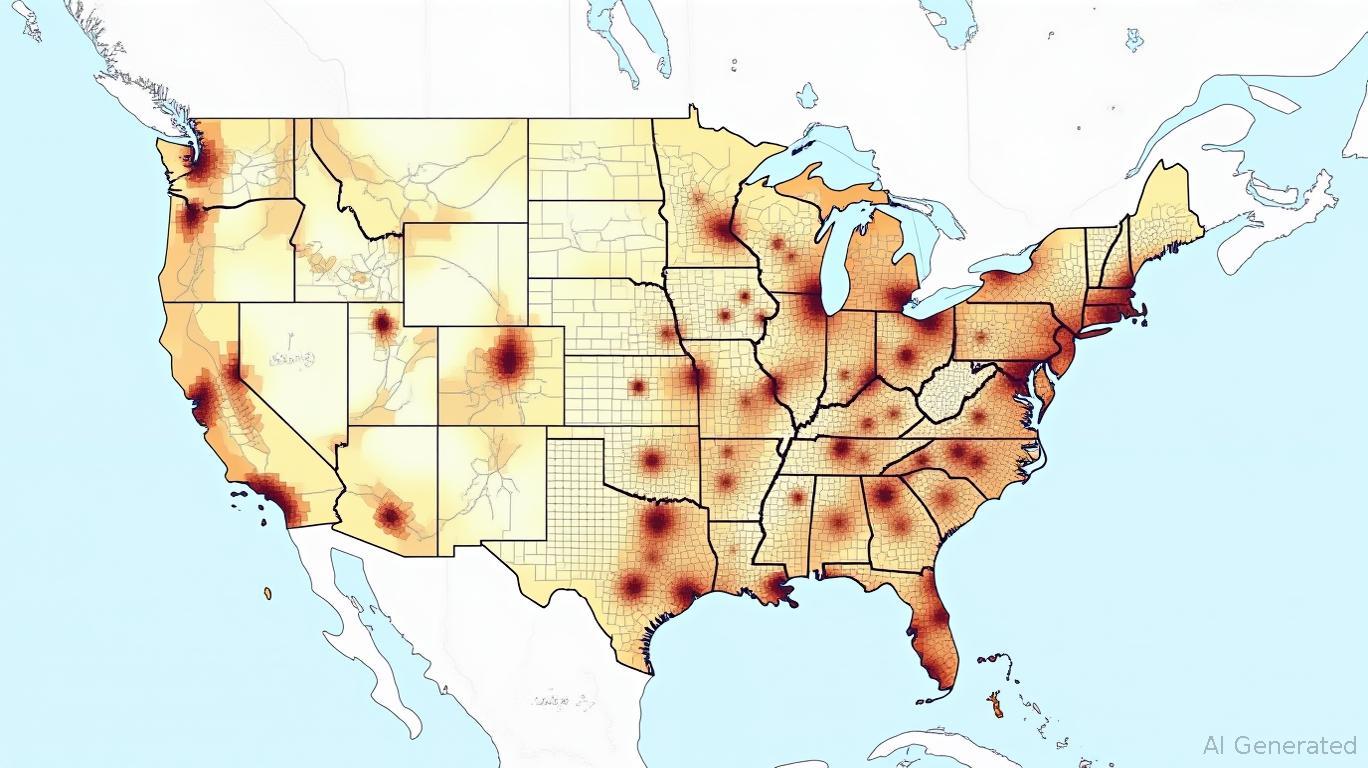
In this environment, the key is to balance caution with conviction, leveraging data-driven insights to navigate the interplay between construction and consumer finance. As the market evolves, those who adapt will find themselves well-positioned for the next phase of growth.

Dive into the heart of global finance with Epic Events Finance.

Jan.02 2026

Jan.01 2026

Dec.31 2025

Dec.31 2025

Dec.31 2025
Daily stocks & crypto headlines, free to your inbox







Comments
No comments yet