
Navigating the Holidays: Operational Agility and Customer Retention in Regional Grocery Chains
 Aime Summary
The resilience of consumer retail during peak holiday periods hinges on the ability of regional grocery chains to adapt operations and retain customers in a landscape defined by economic uncertainty and shifting consumer behavior. As the 2023–2024 holiday season unfolded, these retailers demonstrated a blend of strategic innovation and technological integration to navigate compressed shopping windows, inflationary pressures, and evolving customer expectations. For investors, understanding these strategies offers critical insights into the sustainability of retail performance during high-stakes periods.
Operational Adaptability: Balancing Efficiency and Demand
Regional grocery chains have increasingly prioritized operational agility to align with the realities of a post-pandemic retail environment. A key adaptation has been the optimization of inventory management through predictive analytics and real-time data. For instance, WalmartWMT-- and TargetTGT--
leveraged machine learning to refine demand forecasting, ensuring product availability while minimizing overstock risks. This approach proved vital during the 2024 holiday season,
marked by a late Thanksgiving and compressed shopping window, which required early and frequent promotions to capture consumer spending.
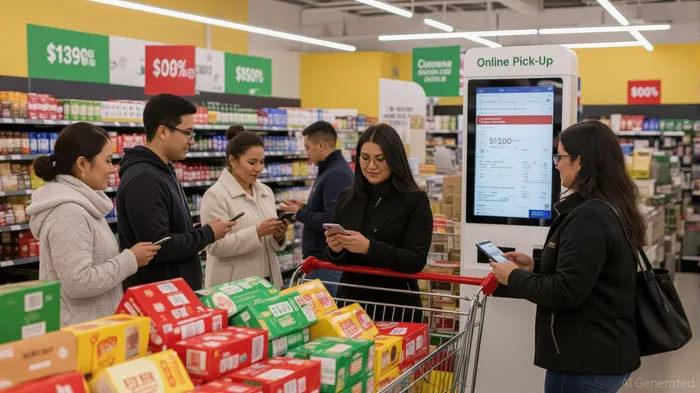 Simultaneously, the shift toward omnichannel retailing has become a cornerstone of operational resilience.
With mobile commerce surpassing 50% of online holiday sales in 2023, regional chains have invested in seamless integration between online and in-store experiences. This includes enhancing inventory visibility across channels, streamlining logistics for efficient delivery, and offering flexible fulfillment options such as in-store pickup and consolidated shipments. These measures not only reduce logistical costs but also
cater to price-conscious consumers, who increasingly trade off delivery speed for cost savings.
Customer Retention: Personalization and Loyalty in a Competitive Market
Amid rising inflation and economic uncertainty, retaining customers has demanded a dual focus on affordability and engagement. Regional grocery chains have turned to loyalty programs as a strategic tool, leveraging AI-driven personalization to deliver tailored discounts and rewards. For example, AlbertsonsACI-- and KrogerKR-- have deployed data analytics to create dynamic, localized offers that resonate with individual shoppers, while tiered membership systems incentivize higher spending through exclusive perks
according to a PYMNTS study.
According to a PYMNTS study, 44% of consumers expressed a strong preference for card-linked, personalized offers from grocery stores, underscoring the effectiveness of such initiatives.
Gamification has further enhanced loyalty campaigns. Programs like Loblaw's PC Insiders Challenge and Woolworths' "Bank for Christmas" initiative
incentivize year-round spending by offering seasonal rewards, blending immediate incentives with long-term customer relationships. These strategies align with broader trends:
51% of consumers now expect consistent experiences across digital and physical platforms, a demand met by omnichannel loyalty systems that allow seamless redemption of rewards both online and in-store.
Community and Convenience: Differentiating in a Crowded Market
Beyond technology and pricing, regional chains have emphasized experiential offerings to foster emotional connections with customers. In-store events, such as cooking demonstrations and holiday-themed promotions, have become tools to differentiate from national competitors
according to retail trends. Additionally,
the rise of convenience-driven shopping-exemplified by a 13% increase in demand for prepared foods during the 2024 holiday season-has prompted retailers to expand their in-store services, including ready-to-eat meals and recipe-based advertising.
Community engagement further strengthens retention. Programs like Meijer's mPerks, which
integrates charitable contributions, resonate with shoppers seeking to align their purchases with social values. Such initiatives not only enhance brand loyalty but also mitigate the impact of price competition by fostering emotional equity.
Strategic Implications for Investors
For investors, the resilience of regional grocery chains during peak holiday periods hinges on their ability to balance cost efficiency with customer-centric innovation. The integration of AI and data analytics into inventory and promotional strategies has proven critical in managing supply chain volatility and aligning with consumer priorities
according to case studies. Meanwhile, loyalty programs and omnichannel engagement have emerged as linchpins of retention, particularly in an era where uncommitted shoppers frequently cross multiple retailers.
However, challenges remain. Persistent supply chain pressures and staff shortages necessitate continued investment in logistics and workforce management. Moreover, the success of these strategies depends on the ability to adapt to regional and generational spending patterns,
such as higher holiday expenditures by households with children.
In conclusion, regional grocery chains that combine operational agility with personalized, community-focused customer retention strategies are well-positioned to thrive during peak retail periods. For investors, these practices highlight the importance of technological integration, data-driven decision-making, and a deep understanding of evolving consumer behavior in building resilient retail models.

Stay ahead of the market.
Get curated U.S. market news, insights and key dates delivered to your inbox.
AInvest
PRO
AInvest
PRO



Comments
No comments yet