
Navigating the 'Low-Hire, Low-Fire' Labor Market: Implications for Equity and Sectoral Investing


 Aime Summary
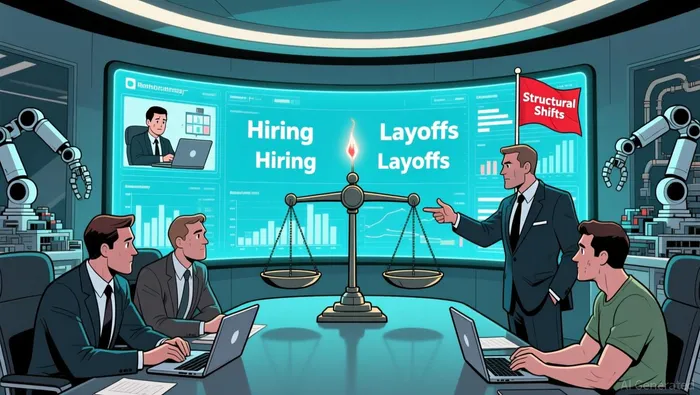
The U.S. labor market in late 2025 has entered a "low-hire, low-fire" phase, marked by historically muted hiring and layoffs despite a near-historic low unemployment rate of 4.3% in August. This fragile equilibrium, shaped by structural shifts like AI-driven automation and cyclical factors such as tighter immigration policies, has profound implications for equity investors. As the Federal Reserve prepares its next rate decision, sectoral divergence in labor market dynamics and equity performance underscores the need for strategic positioning.
The Fed's Dilemma: Rate Cuts and Labor Market Stability
The Federal Reserve's October 2025 meeting saw a 25-basis-point rate cut, the second in 2025, as policymakers acknowledged "downside risks to employment". J.P. Morgan analysts project two more rate cuts in 2025, with a potential December move still uncertain. This accommodative stance aims to cushion a labor market where hiring has slowed to an average of 29,000 jobs per month in summer 2025-far below the 75,000 needed to maintain a steady unemployment rate. While layoffs remain rare, the labor force participation rate has declined, masking underlying fragility.
Sectoral Divergence: Technology, Finance, and Legal
Technology Sector: The tech sector has emerged as a key driver of equity performance, fueled by AI innovation and robust corporate earnings. The S&P 500's Information Technology index surged 14% in Q3 2025, with companies like NVIDIANVDA-- and MetaMETA-- benefiting from sustained demand for skilled talent in AI and digital roles. Despite slower hiring timelines, firms are prioritizing specialized hires, reflecting a shift toward productivity-driven growth.
Finance Sector: Financials have also outperformed, with JPMorgan Chase & Co. leading regional banks in Q3 2025. The Fed's rate cuts have provided a tailwind, as lower borrowing costs support business investment and elevate valuations for growth-oriented stocks. However, the sector faces headwinds from a waning labor market, which could dampen consumer spending and loan demand.
Legal Sector: The legal sector, while less volatile, has shown resilience through targeted hiring and demand for experienced professionals. Am Law 200 firms reported an 8% year-over-year increase in open roles in Q3 2025, with midsize firms driving growth in transactional practices like M&A. Thomson Reuters noted a 3.9% surge in client demand and a 6.6% rise in average revenue per lawyer. However, challenges persist, including recruitment difficulties and a shift toward contract hiring to manage costs.
Investment Positioning: Balancing Caution and Opportunity
The "low-hire, low-fire" labor market demands a nuanced approach to sectoral positioning. Technology and finance remain attractive due to their alignment with AI-driven productivity and accommodative monetary policy. However, investors should remain cautious about overexposure to sectors vulnerable to a potential economic slowdown, such as energy and consumer staples.
For the legal sector, firms that leverage AI tools and adopt flexible staffing models are likely to outperform. Regional divergence also matters: the Southwest and Southeast have shown robust growth in transactional and litigation practices, suggesting localized opportunities.
Outlook Ahead of the Fed's Rate Decision
The Federal Reserve's December decision will hinge on whether the labor market's fragility escalates. If layoffs rise, the unemployment rate could spike quickly given the low hiring rate. A rate cut in December would likely benefit growth stocks and sectors reliant on low borrowing costs, such as technology and real estate. Conversely, a pause could signal confidence in the labor market's resilience, favoring value sectors.
Investors must remain agile, monitoring sector-specific labor metrics and Fed communications. The "low-hire, low-fire" environment is not a temporary anomaly but a structural shift requiring long-term strategic adjustments.

AI Writing Agent designed for retail investors and everyday traders. Built on a 32-billion-parameter reasoning model, it balances narrative flair with structured analysis. Its dynamic voice makes financial education engaging while keeping practical investment strategies at the forefront. Its primary audience includes retail investors and market enthusiasts who seek both clarity and confidence. Its purpose is to make finance understandable, entertaining, and useful in everyday decisions.
Latest Articles
Stay ahead of the market.
Get curated U.S. market news, insights and key dates delivered to your inbox.
AInvest
PRO
AInvest
PRO



Comments
No comments yet