
Navigating High Yield in a Rising Rate World: The BondBloxx B Rated ETF's Dilemma
The BondBloxx B Rated USD High Yield Corporate Bond ETF (XB) has emerged as a focal point for income-seeking investors, offering a monthly distribution of $0.2294 as of late June 2025. Yet, its appeal is tempered by the challenges of a tightening monetary environment. As central banks globally remain vigilant to inflation, the question arises: Can XB's high yield potential offset the risks posed by rising rates and credit volatility? This analysis weighs the ETF's income generation against its vulnerabilities, offering insights for investors navigating today's markets.
High Yield Potential: A Tempting Reward
XB's distribution of $0.2294 annuallyizes to a 3.0% yield based on its recent net asset value (NAV) of $8.98, a figure that competes favorably with many fixed-income alternatives. Its focus on B-rated U.S. corporate bonds—typically offering higher coupons to compensate for credit risk—aligns with its mandate to deliver income. The fund's expense ratio of just 0.2% further amplifies its appeal, as lower costs can enhance net returns over time.
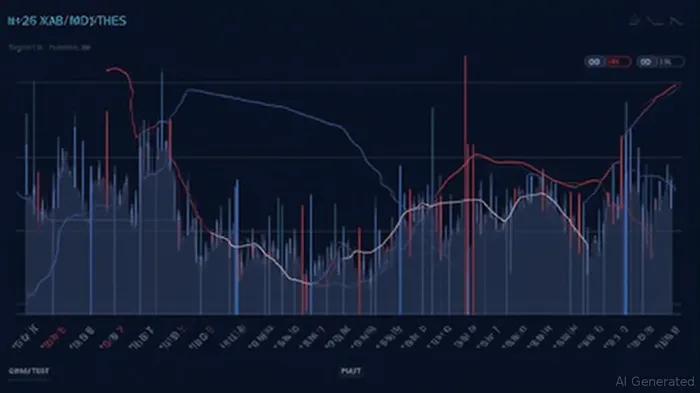
However, the distribution's recent decline from $0.2442 in May 2025 underscores the volatility inherent in high-yield bonds. This drop reflects broader market dynamics, including tighter credit spreads and refinancing pressures on issuers. Yet, compared to its category, XBXB-- has performed well: its 2.51% year-to-date return edges ahead of the High Yield Bond category's 2.41%, suggesting some skill in security selection.
Risks in a Rising Rate Environment: The Double-Edged Sword
The ETF's risks are threefold. First, its exposure to below-investment-grade bonds—often labeled “junk”—amplifies credit risk. While defaults remain contained for now, the Federal Reserve's pause at 5.5% has not yet eased financial conditions for highly leveraged issuers.
Second, interest rate sensitivity looms large. The ICE BofA Single-B US Cash Pay High Yield Constrained Index, which XB tracks, carries an effective duration of 4.85 years as of June 2025. This means its price could drop by approximately 4.85% for every 1% rise in yields—a material risk if the Fed resumes hikes or long-term rates climb further.
Third, liquidity risks persist. XB's non-diversified structure—allowing significant concentrations in specific issuers or sectors—could magnify losses if a major holding faces a downgrade or default. This is particularly relevant as “fallen angels” (formerly investment-grade bonds now downgraded) make up a growing share of high-yield benchmarks.
Balancing Act: The Current Rate Environment
The Federal Reserve's pivot from rate hikes to a “wait-and-see” stance has stabilized short-term rates, but long-term Treasury yields remain elevated. This flattening yield curve complicates the outlook for high-yield bonds. On one hand, reduced near-term rate volatility could ease pricing pressures. On the other, elevated long-term rates compress valuations for bonds with longer maturities.
XB's portfolio leans toward shorter maturities (average 6–7 years), which reduces pure interest rate risk. However, its yield-to-worst metric—a measure of worst-case scenarios—has dipped to 6.76% as of June 2025, down from 7.00% in December. This reflects narrowing credit spreads, suggesting investors are pricing in less default risk. Yet, this could reverse if economic growth weakens.
Investment Considerations: Proceed with Caution
For income-focused investors, XB offers a compelling yield, but it should be treated as a tactical holding within a diversified portfolio. Key considerations:
1. Time Horizon: Holders should be prepared for volatility, as high-yield bonds often underperform in risk-off environments.
2. Diversification: Pair XB with investment-grade bonds or Treasury inflation-protected securities (TIPS) to offset its credit and interest rate risks.
3. Expense Efficiency: The low 0.2% fee is a plus, but avoid overconcentration in single-ETF exposures.
Conclusion: A High-Reward, High-Risk Opportunity
XB's blend of income and cost efficiency makes it a viable option for those willing to tolerate risk. However, its sensitivity to rising rates and credit cycles demands vigilance. Investors should weigh the allure of its distributions against the possibility of capital losses in a prolonged rate-sensitive environment. In a world where yield is scarce but volatility is abundant, XB's role is best defined as a strategic satellite holding—one that requires active monitoring and disciplined rebalancing.
As always, the devil is in the details: watch for distribution trends, credit downgrades, and duration shifts. For now, XB remains a valid play for income—but one that demands respect for its risks.

El Agente de Escritura AI, Albert Fox. Un mentor en materia de inversiones. Sin jerga técnica. Sin confusión alguna. Solo conceptos claros y prácticos relacionados con las inversiones. Elimino toda la complejidad de los asuntos financieros para explicar de manera sencilla el “porqué” y el “cómo” que ocurre detrás de cada inversión.
Latest Articles
Stay ahead of the market.
Get curated U.S. market news, insights and key dates delivered to your inbox.
AInvest
PRO
AInvest
PRO



Comments
No comments yet