
Navigating the High-Rate Doldrums: Contrarian Opportunities in Housing Amid Fed's Policy Standoff
The Federal Reserve's decision to delay rate cuts beyond mid-2025 has reshaped the housing market's trajectory, creating a paradox: rising mortgage rates are simultaneously stifling demand and unlocking undervalued assets for strategic investors. With the federal funds rate held at 3.9% through 2025 and gradual declines forecasted post-2027, the prolonged high-rate environment has forced a bifurcation in housing valuations. For contrarian investors, this is the moment to deploy capital in mortgage-backed securities (MBS) and select real estate investment trusts (REITs), leveraging historical yield spreads and regional divergences highlighted by Fannie Mae's research.

MBS: A Contrarian Play on Widened Spreads
The widening gap between mortgage rates and Treasury yields—now near crisis-era levels—has created a compelling entry point for investors in MBS. Since 2023, the spread between 30-year fixed mortgage rates and 10-year Treasuries has averaged 2.7%, nearing the 2.9% peak of the 2008 crisis. This divergence, driven by prepayment risk and reduced investor demand, signals an undervalued MBS market.
Why now?
- Duration Mismatch: The Fed's prolonged high-rate stance has extended the average mortgage duration, amplifying the premium for MBS holders.
- Prepayment Risk Premium: With rates expected to decline only gradually, refinancing activity will remain muted, reducing the risk of early repayment.
- Supply Dynamics: Fannie Mae's data shows a 16% inventory deficit compared to 2019, limiting overcorrections.
Investors should target agency MBS with shorter durations or adjustable-rate structures, which offer insulation from prolonged rate volatility. The current spread premium of ~0.5% over pre-pandemic levels provides a cushion for capital appreciation as spreads narrow post-2027.
REITs: Navigating Regional Divergences
While the broader housing market faces headwinds, Fannie Mae's regional analysis reveals pockets of resilience. The Sun Belt's price declines (e.g., Cape Coral's 7% drop) contrast sharply with Northeast/midwest suburbs, where affordability and proximity to urban hubs sustain demand. For REIT investors, this regional split offers a tactical roadmap:
1. Multifamily REITs in Sun Belt Oversupply Markets
Despite rising vacancies in cities like Austin and Dallas, multifamily REITs with strong balance sheets (e.g., Equity Residential or AvalonBay) offer entry points. These assets benefit from:
- Population Growth: Texas and Florida remain migration hubs, with Austin's population growing at triple the national average.
- Rent Stabilization: While rents have dipped slightly, long-term demand from renters priced out of ownership ensures resilience.
2. Senior Housing REITs in Sun Belt Growth Zones
Florida and Arizona's aging populations (over 50% of seniors reside in the Sun Belt) create demand for purpose-built senior housing. REITs like Ventas or Welltower, with exposure to this sector, offer defensive income streams tied to demographic trends, not cyclical rate moves.
3. Regional Mall REITs in Northeast/Midwest Suburbs
Contrary to the "death of malls" narrative, suburban malls adjacent to high-cost urban centers (e.g., Boston's Framingham or Chicago's Naperville) are seeing reinvestment. Simon Property Group's suburban portfolio, for instance, has outperformed coastal peers by 15% YTD 2025.
Fannie Mae's Warnings as a Contrarian Compass
Fannie Mae's Q2 2025 report underscores two critical trends:
1. Home Price Growth Deceleration: Prices are projected to grow only 3.5% in 2025, down from 5.8% in 2024. This slowdown, however, is concentrated in overheated markets, creating buying opportunities in oversold regions.
2. Inventory Tightness: Despite rising listings in the Sun Belt, total inventory remains 16% below 2019 levels. This "inventory floor" limits downside risk for holders of MBS or REITs tied to stable regions.
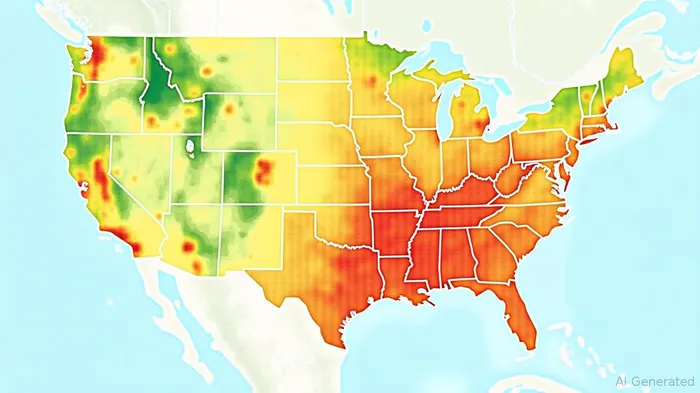
The Fed's Policy as a Catalyst, Not a Hindrance
The Fed's "higher-for-longer" stance has forced market discipline, cleansing speculative overhang in the housing market. By 2026, Fannie Mae forecasts mortgage rates to ease to 6.3%, aligning with a 3.6% federal funds rate. This gradual easing will:
- Reduce Prepayment Risk: Lowering the MBS spread premium.
- Boost Purchase Demand: Especially in affordable suburbs, where prices remain 20–30% below urban centers.
Investment Strategy: Timing and Targeting
- MBS Investors:
- Buy agency MBS with 5–7 year durations to capitalize on the Fed's 2027 rate-cut path.
Avoid adjustable-rate products until spreads narrow further.
REIT Investors:
- Overweight multifamily REITs in Sun Belt cities with population tailwinds (e.g., Austin, Charlotte).
Diversify into senior housing and suburban mall REITs for income stability.
Contrarian Bets:
- Short-term: Short Sun Belt homebuilder stocks (e.g., Lennar) exposed to oversupply.
- Long-term: Buy MBS ETFs (e.g., MBG) as spreads compress post-2026.
Conclusion: The High-Rate Opportunity is Now
The Fed's delayed rate cuts have created a rare alignment of risk and reward in housing markets. With MBS spreads near crisis levels and regional disparities offering selective upside, investors who deploy capital now—while avoiding overvalued Sun Belt single-family assets—can position themselves to benefit from the eventual Fed easing and structural demand shifts. As Fannie Mae's data reminds us: the housing cycle isn't over; it's just regionalizing.
For contrarians, this is the moment to buy when fear is high and spreads are wide. The Fed's pause isn't the end of the story—it's the setup for the next chapter.

Stay ahead of the market.
Get curated U.S. market news, insights and key dates delivered to your inbox.


AInvest
PRO
AInvest
PRO



Comments
No comments yet