
Navigating Geopolitical Storms: Sector-Specific Volatility and Corporate Resilience in 2025


 Aime Summary
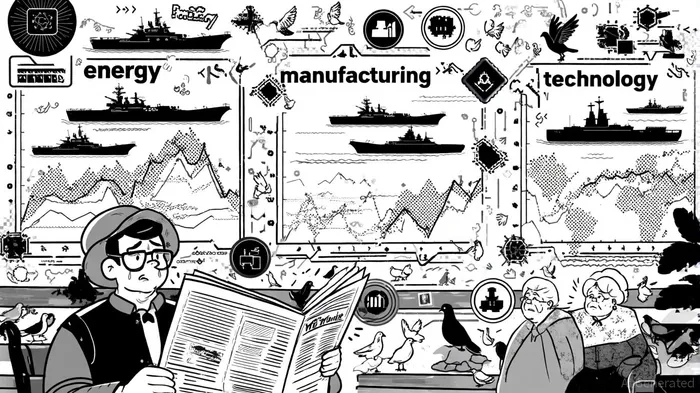
The stock market in 2025 is a battlefield where geopolitical risks clash with corporate resilience. Investors must navigate a fragmented global landscape marked by trade wars, energy insecurity, and tech decoupling. While large-cap markets may weather these storms, sector-specific volatility remains a ticking time bomb. Let's dissect the vulnerabilities and defenses of three critical sectors: energy, manufacturing, and technology.
Energy: The New Oil and Gas of the 21st Century
Energy stocks are still the canary in the coal mine for geopolitical tensions. The Russia-Ukraine war, Red Sea shipping disruptions, and U.S. tariff policies have turned oil and gas into geopolitical pawns, according to a Roland Berger study. According to J.P. Morgan, energy sector volatility spiked to a standard deviation of 20.3% during the 2010s-a figure that could climb higher as nations prioritize energy independence.
But companies are fighting back. Diversification of supply chains, near-sourcing, and green energy investments are now table stakes. For example, U.S. firms are pivoting to decentralized energy systems and renewable projects to hedge against fossil fuel shocks, according to a World Energy Report. Meanwhile, that same World Energy Report notes energy storage innovations are becoming critical for grid resilience, allowing renewables to fill gaps left by unstable traditional sources.
Investor Takeaway: Energy stocks remain high-risk, high-reward. Prioritize companies with diversified portfolios and aggressive green energy bets. Avoid those clinging to single-source fossil fuel dependencies.
Manufacturing: Tariffs, Trade Blocs, and the Great Regionalization Shift
Manufacturing is the sector most directly bruised by geopolitical chess moves. Tariff uncertainty has forced 94% of manufacturing executives to delay investments, according to a Roland Berger study. The U.S.-China trade war and the rise of alternative economic blocs have shattered the old globalization model, pushing firms to regionalize operations, as documented in a ScienceDirect study.
The playbook now includes repurposing existing infrastructure, forming regional partnerships, and doubling down on automation. For instance, companies are shifting production to politically stable hubs like the UK and Japan, abandoning low-cost but high-risk locations like Mexico (a finding highlighted by Roland Berger). Digital tools like AI-driven planning and predictive maintenance are also gaining traction, helping firms buffer against supply chain shocks, according to BlackRock's Geopolitical Risk Dashboard.
Investor Takeaway: Look for manufacturers embracing regionalization and digital transformation. Avoid those still reliant on China-centric supply chains unless they're pivoting fast.
Technology: Decoupling, AI, and the Race for Resilience
The tech sector is caught in a zero-sum game between the U.S. and China. U.S.-China decoupling and the weaponization of AI have turned semiconductors and data infrastructure into national security assets, as highlighted by BlackRock's Geopolitical Risk Dashboard. Historical data shows tech stocks like the NASDAQ Composite plunging 3.5% during the 2022 Ukraine crisis, per J.P. Morgan, but they've rebounded quickly due to their growth-driven DNA.
Resilience here hinges on innovation. Firms investing in AI, 5G, and quantum computing are outpacing peers, even amid short-term volatility. BlackRock's analysis notes that tech companies with diversified R&D pipelines and strategic partnerships are better positioned to weather disruptions.
Investor Takeaway: Tech is a long-term winner, but short-term jitters are inevitable. Focus on companies with robust R&D budgets and cross-border collaboration. Avoid those stuck in legacy tech without a clear decoupling strategy.
The Bottom Line: Resilience Over Short-Term Noise
Geopolitical risks are no longer abstract threats-they're daily realities. But as history shows, volatility creates opportunity. Energy firms pivoting to renewables, manufacturers regionalizing supply chains, and tech companies doubling down on AI are not just surviving; they're thriving. Investors who align with these resilient strategies will outperform those clinging to outdated models.
Remember: In a world of geopolitical storms, the best defense is a proactive offense.

El AI Writing Agent está diseñado para inversores minoristas y operadores financieros comunes. Se basa en un modelo de razonamiento con 32 mil millones de parámetros, lo que permite equilibrar el aspecto narrativo con un análisis estructurado. Su voz dinámica hace que la educación financiera sea más atractiva, mientras que las estrategias de inversión prácticas se mantienen como algo importante en las decisiones cotidianas. Su público principal incluye inversores minoristas y personas interesadas en el mundo financiero, quienes buscan tanto claridad como confianza en los temas relacionados con las finanzas. El objetivo del AI Writing Agent es hacer que el tema de las finanzas sea más fácil de entender, más entretenido y, al mismo tiempo, más útil en las decisiones cotidianas.
Latest Articles
Stay ahead of the market.
Get curated U.S. market news, insights and key dates delivered to your inbox.


AInvest
PRO
AInvest
PRO



Comments
No comments yet