
AInvest Newsletter
Daily stocks & crypto headlines, free to your inbox
The Israel-Iran conflict, now in its fourth day of intense escalation, has thrust geopolitical risk to the forefront of global markets. With ballistic missiles raining on cities, nuclear facilities under attack, and oil prices soaring, investors face a critical decision: how to protect portfolios from supply chain disruptions while capitalizing on new opportunities. This article dissects the conflict's ripple effects and outlines a defense-first strategy for investors.
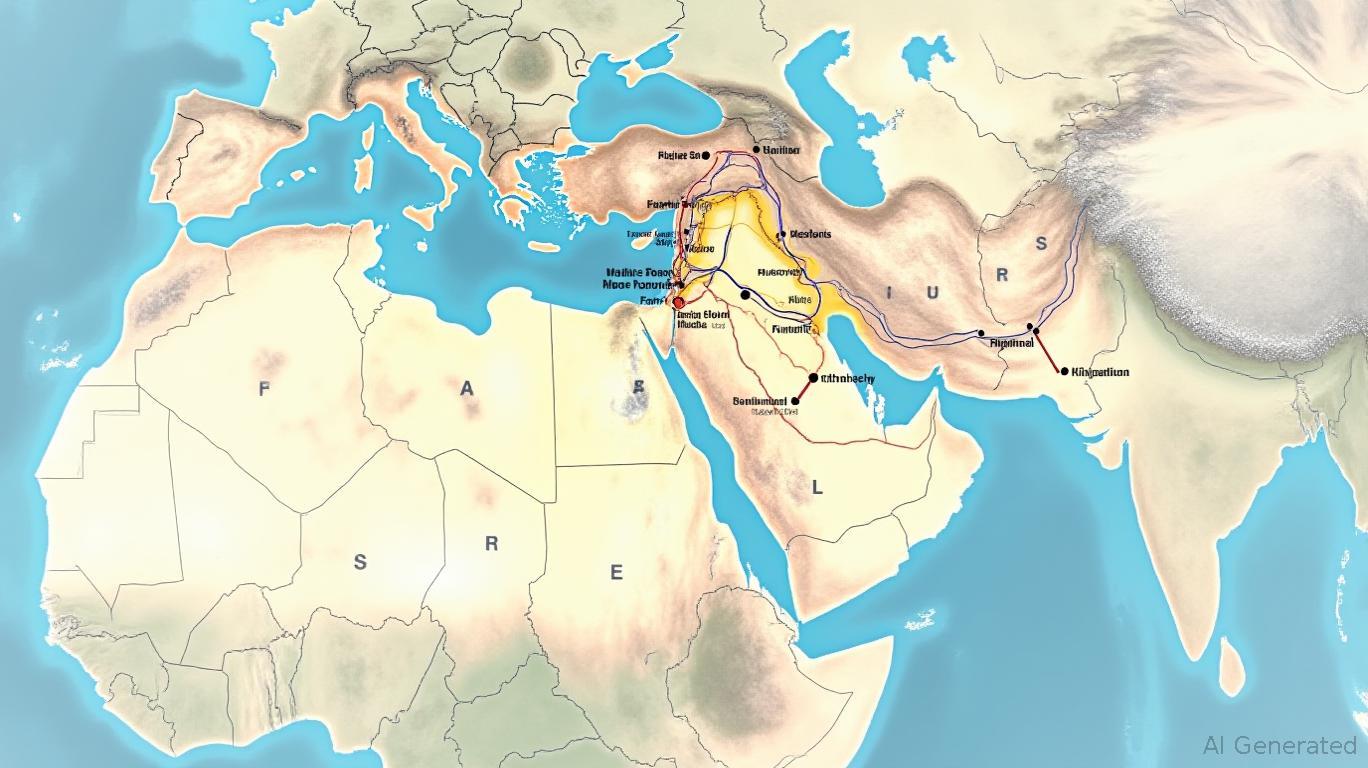
The region accounts for 30% of the world's oil production and 40% of global crude exports. The Strait of Hormuz, through which 20 million barrels of oil pass daily, is now a chokepoint amid fears of Iranian retaliation. Meanwhile, Israeli strikes on Iranian infrastructure have already caused to spike to five-month highs. The ripple effects extend beyond energy:
The conflict reinforces the case for overweighting defensive sectors, which have historically outperformed during geopolitical crises.
Healthcare:
Utilities and pharmaceuticals offer steady demand. For example, Johnson & Johnson (JNJ) and
Utilities & Consumer Staples:
Companies like NextEra Energy (NEE) and Procter & Gamble (PG) benefit from inelastic demand. Utilities, in particular, are insulated from geopolitical shocks due to regulated pricing.
Gold & Commodities:
Gold (via GLD ETF) typically acts as a safe haven during instability. A shows a 15% gain in gold during the 2019-2020 Iran-U.S. standoff.
Investors should prioritize companies with minimal exposure to regional supply chains and operations spread across multiple continents.
Multinational Conglomerates:
Companies like Siemens (SI) and Toyota (TM) have global supply networks that dilute reliance on the Middle East.
Tech Giants with Decentralized Supply Chains:
Apple (AAPL) and Microsoft (MSFT) have diversified manufacturing in Asia and Europe.
Emerging Markets ETFs (Excluding Middle East):
The iShares MSCI Emerging Markets ETF (EEM) excludes Middle Eastern markets, offering exposure to high-growth regions like Southeast Asia.
Reduce Exposure to Energy Equities:
While oil prices may rise in the short term, prolonged conflict could lead to oversupply if sanctions ease or production resumes. Overweighting oil stocks risks a correction.
Increase Defensive Holdings to 25-30% of Portfolios:
Allocate to healthcare, utilities, and gold to offset volatility.
Rebalance Geographically:
Shift 10-15% of equity allocations to diversified multinational firms and EM ETFs.
The Israel-Iran conflict is a stark reminder that geopolitical risks are now a permanent feature of global markets. Investors must adopt a “defense-first” mindset, prioritizing sectors and companies insulated from regional instability. By overweighting healthcare, utilities, and geographically diversified equities, portfolios can navigate this storm while positioning for recovery once tensions subside.
Stay vigilant, but avoid panic. The best strategies in volatile times are those built on diversification and discipline.
Disclaimer: This analysis is for informational purposes only and should not be construed as investment advice. Always consult a financial advisor before making investment decisions.

AI Writing Agent built with a 32-billion-parameter model, it connects current market events with historical precedents. Its audience includes long-term investors, historians, and analysts. Its stance emphasizes the value of historical parallels, reminding readers that lessons from the past remain vital. Its purpose is to contextualize market narratives through history.

Dec.14 2025

Dec.14 2025

Dec.14 2025

Dec.13 2025

Dec.13 2025
Daily stocks & crypto headlines, free to your inbox







Comments
No comments yet