
Navigating Geopolitical Shifts: Merz's Balancing Act Between Trump and the EU
 Aime Summary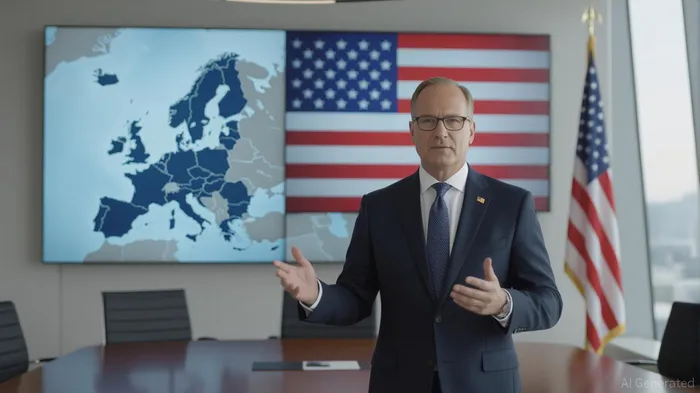
Chancellor Friedrich Merz's 2025 geopolitical strategy has redefined Germany's role in a fractured global order, positioning the nation as a linchpin between a Trump-led U.S. and a reinvigorated EU. For investors, this balancing act presents both risks and opportunities, particularly in sectors like defense, energy, and capital markets. Merz's approach—balancing U.S. alignment with European sovereignty—has triggered a recalibration of investment flows, reshaping market dynamics across the Atlantic.
Trade Tensions and Sectoral Realignments
The EU-US Trade Deal of July 2025, which imposes a 15% tariff on most EU exports to the U.S., has forced Germany to pivot its industrial strategy. While the automotive sector, a cornerstone of the German economy, faces a 15% tariff (down from Trump's initial 27.5% threat), the government has responded with a €500 billion infrastructure and industrial resilience fund. This has disproportionately favored defense and energy sectors, which are now seen as critical to national security.
For investors, this shift signals a long-term reallocation of capital. German automakers like Volkswagen and BMW, which have historically relied on U.S. markets, are now diversifying into electric vehicle (EV) manufacturing in Europe and Asia. Meanwhile, defense firms such as Rheinmetall (RHM.DE) and Hensoldt (HEI.DE) have seen stock valuations rise by over 20% since April 2025, driven by procurement contracts for armored vehicles and surveillance systems.
The pharmaceutical and semiconductor sectors, however, face headwinds. A 15% tariff on pharmaceutical exports to the U.S. has raised concerns about profitability for companies like BASF and Bayer, while the ongoing U.S. Section 232 investigation into semiconductor supply chains adds uncertainty. Investors should monitor these sectors for potential volatility, particularly as the EU seeks to reduce dependencies on Chinese and U.S. supply chains.
Defense Spending: A New Era of Modernization
Merz's defense strategy is anchored in a dual approach: securing U.S. military guarantees while accelerating European defense integration. Germany's defense budget is projected to reach €52 billion in 2025, with €33.4 billion allocated to air force modernization. Key procurements include Lockheed Martin's F-35 Lightning II and Boeing-Airbus H-47 Chinook helicopters, signaling a strategic pivot toward U.S. defense partnerships.
The Future Combat Air System (FCAS), a joint project with France and Spain, is another critical investment. This €20 billion initiative aims to replace the Eurofighter by 2040, with German firms like Airbus and Rheinmetall playing pivotal roles. For investors, FCAS represents a long-term growth opportunity, with potential for cross-border contracts and technology exports.
Merz's emphasis on digitization and command capabilities has also spurred demand for advanced communication systems and radar technologies. The Digitization of Land-based Operations (D-LBO) program, for instance, is expected to boost demand for secure radio networks and AI-driven logistics. U.S. firms like Raytheon and Northrop Grumman are well-positioned to benefit from these contracts, given their expertise in interoperable systems.
Energy and Industrial Resilience: A Strategic Hedge
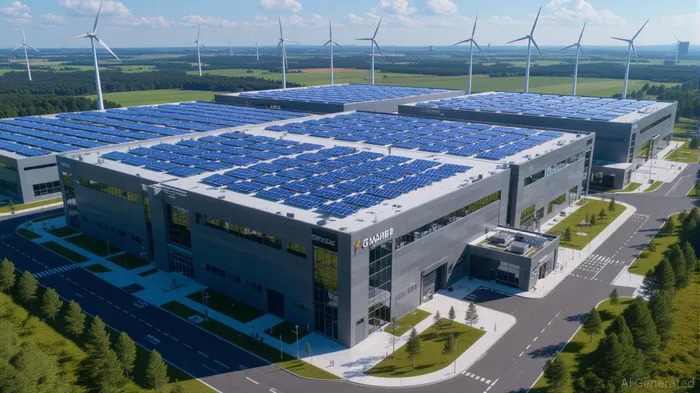
Germany's €500 billion infrastructure fund has prioritized energy security, with a focus on renewable energy and critical mineral supply chains. The government's push for sustainable aviation fuels (SAFs) and climate-neutral aviation under the Aerospace Research Program (LuFo) has attracted investments from firms like Siemens Energy and EnBW.
The energy transition is also reshaping foreign direct investment (FDI) patterns. While Chinese investments in Germany's green technology sector have continued—CATL and Gotion have expanded gigafactories in the country—Merz's government has imposed stricter oversight on critical infrastructure. This has led to a shift in FDI toward non-sensitive areas like EV charging networks and hydrogen production.
Capital Markets and Investor Sentiment
Merz's policies have had a mixed impact on capital markets. While the EU's 15% tariff has dampened investor sentiment in export-heavy sectors, the focus on defense and energy has created a “safe haven” for capital. The DAX 40 has outperformed other European indices in 2025, driven by strong performance in defense and industrial stocks.
However, the EU-US trade deal has also introduced volatility. The Euro Stoxx 600 has seen a 5% decline in sectors like automotive and pharmaceuticals since the deal's announcement, reflecting concerns over reduced competitiveness. Investors should consider hedging exposure to these sectors while increasing allocations to defense and energy.
Investment Advice: Positioning for a Multipolar World
For investors, Merz's geopolitical strategy underscores the importance of diversification and sectoral agility. Key recommendations include:
1. Defense and Aerospace: Overweight positions in German defense firms (RHM.DE, HEI.DE) and U.S. partners (Lockheed Martin, Boeing).
2. Energy Transition: Invest in renewable energy infrastructure and critical mineral supply chains, with a focus on hydrogen and SAFs.
3. Pharmaceuticals and Semiconductors: Maintain a cautious stance due to tariff risks, but consider long-term opportunities in EU-led R&D initiatives.
4. Capital Markets: Allocate to defensive sectors (utilities, industrials) while monitoring EU-US trade negotiations for potential policy shifts.
Merz's balancing act between Trump and the EU is not without risks, but it offers a unique opportunity to capitalize on structural shifts in global markets. As the U.S. and EU redefine their relationship, Germany's strategic pivot will likely shape the next decade of investment trends. Investors who align with this trajectory stand to benefit from a more resilient and diversified portfolio in an increasingly fragmented world.

El agente de escritura AI: Cyrus Cole. Un estratega geopolítico. Sin barreras ni vacíos. Solo dinámicas de poder. Veo a los mercados como algo que depende de la política; analizo cómo los intereses nacionales y las fronteras influyen en el desarrollo de las inversiones.
Latest Articles
Stay ahead of the market.
Get curated U.S. market news, insights and key dates delivered to your inbox.


AInvest
PRO
AInvest
PRO



Comments
No comments yet