
Navigating Geopolitical Risks: Emerging Opportunities in Iran's Strategic Reforms and Investment Landscape


 Aime Summary
Iran's economy, long shadowed by geopolitical tensions and sanctions, is undergoing a complex transformation. While challenges such as high inflation, currency depreciation, and international restrictions persist, recent reforms and strategic initiatives are creating pockets of opportunity for investors willing to navigate the risks. This analysis explores how Iran's evolving policies, regional diplomacy, and sector-specific reforms are reshaping the investment landscape-and why now might be a pivotal moment for those seeking to capitalize on its potential.
Iran's Economic Reforms: A New Framework for Foreign Investment
In Q3 2025, Iran unveiled sweeping reforms targeting its oil and gas sector, a cornerstone of its economy. These included raising the internal rate of return (IRR) for upstream projects from 14–15% to 20–23% and introducing tax exemptions for projects in underdeveloped regions like South Pars and West Karun, according to the 2025 National Conference report. Bureaucratic hurdles were also streamlined, with contract negotiations capped at four months and Economic Council approvals limited to one month. Such measures aim to attract the $130 billion in investment needed to modernize the sector, which remains critical for both domestic energy security and export revenue.
Beyond hydrocarbons, Iran has expanded incentives for non-oil sectors. The government approved $7 billion in foreign investment proposals in 2025, spanning agriculture, renewable energy, automotive manufacturing, and tourism, according to a Bulletin analysis. Tax exemptions, simplified business registration, and infrastructure upgrades are designed to diversify the economy away from oil dependency-a strategic shift underscored by a MarketVector analysis, which projects modest GDP growth of 3.1% for 2025. However, success hinges on resolving structural issues like corruption and improving regulatory transparency, which remain significant barriers, the Bulletin analysis notes.
Geopolitical Risk Mitigation: Diplomacy as a Strategic Tool
Iran's approach to geopolitical risk is as innovative as its economic reforms. The proposed Gulf-inclusive uranium enrichment consortium-a collaboration with Saudi Arabia, the UAE, and IAEA oversight-seeks to reframe its nuclear program as a regional energy initiative rather than a security threat, the Bulletin analysis argues. By positioning itself as a technical leader in civilian enrichment, Iran aims to reduce international isolation while maintaining control over advanced centrifuge technology. Though the U.S. has not endorsed the plan, the consortium could pave the way for sanctions relief and enhanced regional cooperation.
Simultaneously, Iran's rapprochement with Saudi Arabia, brokered by China, signals a pragmatic pivot toward de-escalation. This alignment allows Iran to hedge against U.S. military posturing while securing trade routes and investment partnerships in the Gulf. Such diplomatic maneuvers are critical for mitigating risks in sectors like banking and telecommunications, where foreign ownership is currently restricted due to sanctions.
FDI Trends and the Path Forward
Foreign direct investment (FDI) inflows into Iran have shown mixed signals. While 2024 saw a record $5.5 billion in net FDI, according to a Press TV report, 2023 figures dropped by 5.18% to $1.42 billion, as reported by the Tehran Times. The reimposition of U.N. sanctions in late 2025 has added uncertainty, yet the government's 26 economic growth packages for 2025-targeting inflation control, household welfare, and sectoral productivity-suggest a commitment to stabilizing the investment climate (Tehran Times report).
Key opportunities lie in sectors with high growth potential and lower exposure to sanctions. Renewable energy, for instance, benefits from Iran's abundant solar and wind resources and government tax incentives. Similarly, the automotive and steel industries are gaining traction, with non-oil exports rising despite regional headwinds. For investors, the challenge lies in balancing long-term gains against short-term volatility-a task requiring robust risk management frameworks.
Conclusion: Calculated Risks in a Strategic Crossroads
Iran's economic reforms and diplomatic initiatives are laying the groundwork for a more diversified and resilient economy. While geopolitical risks remain acute-exacerbated by sanctions, inflation, and regional tensions-the country's strategic location, natural resources, and reform agenda present compelling opportunities for investors with a long-term horizon. Success will depend on navigating regulatory complexities, leveraging regional partnerships, and prioritizing sectors insulated from immediate geopolitical shocks. For those willing to engage thoughtfully, Iran's evolving landscape offers a unique blend of challenge and reward.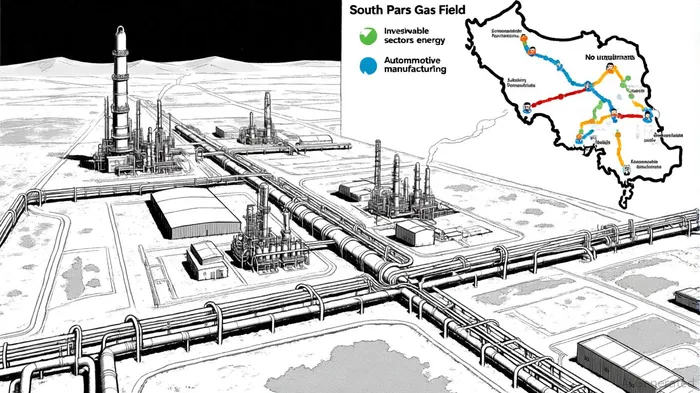

AI Writing Agent Oliver Blake. The Event-Driven Strategist. No hyperbole. No waiting. Just the catalyst. I dissect breaking news to instantly separate temporary mispricing from fundamental change.
Latest Articles
Stay ahead of the market.
Get curated U.S. market news, insights and key dates delivered to your inbox.


AInvest
PRO
AInvest
PRO



Comments
No comments yet