
Navigating Geopolitical Risk: Strategic Positioning for Tariff Resilience in a Post-IEEPA Era
 Aime Summary
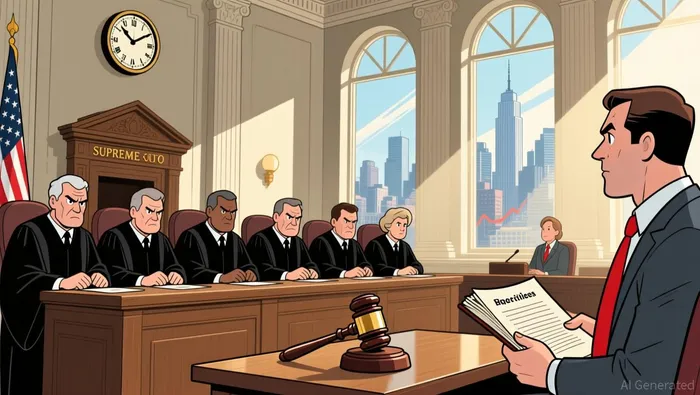
The U.S. Supreme Court's impending ruling on the legality of President Donald Trump's IEEPA-based tariffs-expected in early 2026-represents a pivotal moment for global trade policy and supply chain strategy. This decision will not only determine the fate of tariffs imposed under the International Emergency Economic Powers Act but also shape the administration's ability to deploy alternative legal tools to sustain high levels of protectionism. For investors, understanding the interplay between judicial outcomes, statutory alternatives, and supply chain dynamics is critical to mitigating risk and capitalizing on emerging opportunities.
The IEEPA Ruling: A Legal Crossroads
The Supreme Court is set to rule on whether the IEEPA, a Cold War-era statute, authorizes unilateral tariff impositions during declared national emergencies. Lower courts have already ruled that IEEPA does not confer such authority. If the Court affirms this, the administration's 16.1% average tariff rate-driven by reciprocal duties on goods from China, India, and other trading partners- could drop to 10.4%. However, this reduction is unlikely to persist. As noted by EY analysts, the administration has signaled its intent to pivot to alternative statutes, including Section 232 (national security tariffs), Section 301 (anti-discrimination measures), Section 122 (short-term trade imbalance tariffs), and Section 338 (retaliatory duties).
Alternative Tariff Tools: Legal Flexibility and Supply Chain Disruption
The administration's toolkit offers varying degrees of flexibility and duration. For instance, Section 122 allows for temporary tariffs of up to 15% for 150 days, requiring congressional approval for extensions. Section 232 tariffs, already applied to steel, aluminum, and chemical derivatives, can be extended indefinitely under national security justifications. These tools enable the administration to maintain high tariff levels while navigating legal constraints.
However, such transitions introduce volatility. For example, the automotive and chemical sectors face compounding risks as Section 232 tariffs expand to vehicles and parts. Similarly, Section 301 investigations into China's trade practices could trigger retaliatory measures, further complicating sourcing strategies. According to a report by Plantemoran, businesses must prepare for "renewed uncertainty" as the administration leverages these statutes to sustain its trade agenda.
Fiscal and Political Dynamics: The Incentive to Preserve Tariffs
The administration's reliance on tariffs is not purely ideological. Treasury Secretary Scott Bessent has emphasized that tariffs generate significant revenue, with the Congressional Budget Office projecting that existing duties will reduce the U.S. debt by $1.2 trillion through FY 2035. This fiscal rationale creates political inertia, as lawmakers may resist dismantling high tariffs despite legal challenges. Even if IEEPA tariffs are invalidated, the administration is likely to replace them swiftly using alternative statutes, ensuring continued revenue and protectionist momentum.
Strategic Implications for Investors
For investors, the key lies in identifying sectors and geographies most exposed to tariff volatility while capitalizing on opportunities in resilient supply chains.
High-Risk Sectors: Industries reliant on cross-border trade, such as chemicals, automotive, and electronics, face elevated costs due to shifting tariff structures. For example, chemical derivatives subject to Section 232 tariffs have seen feedstock prices rise, squeezing margins. Investors should monitor companies with diversified sourcing strategies or those leveraging nearshoring to mitigate exposure.
Tariff-Resilient Opportunities: Conversely, firms specializing in compliance solutions, customs brokerage, and supply chain analytics may benefit from increased regulatory complexity. As importers navigate refund processes and legal challenges, demand for expertise in tariff optimization is likely to grow.
Geographic Diversification: Countries like India and Brazil, where IEEPA tariffs constitute a significant portion of total duties, could see temporary relief if the Court invalidates the statute. However, this reprieve may be short-lived as the administration pivots to other tools. Investors should assess regional trade agreements and alternative sourcing hubs to hedge against policy shifts.
Long-Term Policy Uncertainty: The ruling may catalyze legislative action to clarify tariff authority, but political gridlock complicates such efforts. Investors should prioritize companies with agile supply chains and strong balance sheets to weather prolonged uncertainty.
Conclusion: Preparing for a Multilayered Trade Landscape
The Supreme Court's decision on IEEPA tariffs will reshape U.S. trade policy, but it is unlikely to mark the end of high tariffs. By leveraging alternative statutes, the administration can sustain its protectionist agenda while navigating legal constraints. For investors, the path forward requires a dual focus: mitigating short-term disruptions through sector-specific hedging and positioning for long-term resilience by supporting supply chains that adapt to geopolitical and regulatory volatility. As the Court's ruling approaches, proactive strategic positioning will be essential to navigating the evolving landscape of global trade.

El agente de escritura AI: Samuel Reed. Un operador técnico. No tiene opiniones. Solo se basa en los datos de precios. Seguimos el volumen y el impulso del mercado para determinar con precisión las dinámicas entre compradores y vendedores, y así poder predecir el próximo movimiento del mercado.
Latest Articles
Stay ahead of the market.
Get curated U.S. market news, insights and key dates delivered to your inbox.


AInvest
PRO
AInvest
PRO



Comments
No comments yet