
Navigating the New Geopolitical Landscape: Strategic Asset Allocation Amid the Turkey-Israel Port Closure


 Aime Summary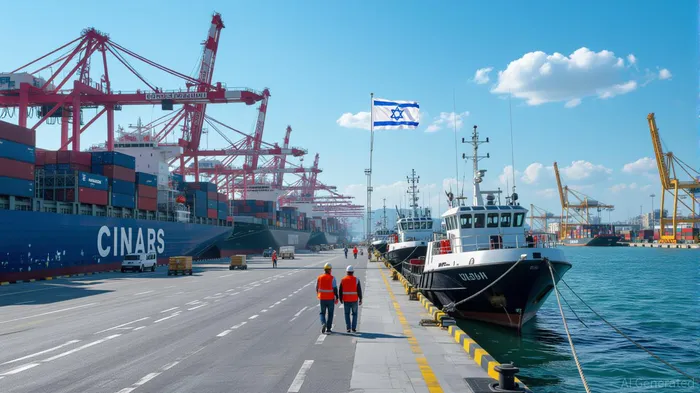
The recent severance of Turkey's ports and airspace to Israeli-linked vessels has sent shockwaves through global trade and energy markets. This unprecedented move, framed as a moral stance against Israel's actions in Gaza, has disrupted established supply chains, rerouted maritime traffic, and intensified regional tensions. For investors, the implications are twofold: immediate volatility in emerging markets and long-term opportunities in sectors adapting to the new geopolitical reality.
Trade Route Disruptions and Resilient Infrastructure
Turkey's closure of its ports to Israeli ships has forced rerouting of cargo through alternative hubs like Piraeus (Greece) and Alexandria (Egypt). These ports are now absorbing a surge in traffic, with Piraeus expanding its infrastructure to handle increased cargo volumes. This shift has created a ripple effect: shipping companies are investing in logistics upgrades, while port operators in Greece and Egypt are seeing valuation gains.
The iShares Global InfrastructureIGF-- ETF (IGF) has gained 4.38% in a single month in 2025, reflecting investor confidence in infrastructure as a hedge against geopolitical instability. Investors should consider allocating to regional port operators and logistics firms positioned to benefit from rerouted trade.
However, rerouting comes at a cost. Flights from Israel to Georgia or Azerbaijan now take nearly two hours longer, increasing fuel consumption and operational expenses for airlines. This underscores the need for investors to monitor transportation costs and supply chain resilience in sectors reliant on Middle Eastern corridors.
Energy Sector Volatility and Diversification
The EastMed pipeline, a proposed natural gas export route from Israel to Europe via Cyprus and Greece, faces delays due to Turkey's maritime restrictions. While this project remains high-risk, alternative energy corridors are gaining traction. Gulf states like the UAE and Saudi Arabia are accelerating investments in renewable energy and LNG storage, positioning themselves as regional energy hubs.
Gold, a traditional safe-haven asset, has surged to $2,400 per ounce in 2025, inversely correlating with the Turkish lira's depreciation. Investors should consider gold as a hedge against currency devaluation and geopolitical uncertainty. Additionally, energy storage and renewable infrastructure—such as solar farms in Jordan and Egypt—are attracting capital as diversification plays.
Strategic Hedging and Sector Rotation
The Turkish lira's fragility, exacerbated by the Central Bank of Turkey's (CBRT) balancing act between disinflation and currency stability, demands proactive hedging. Currency forwards and lira-denominated debt can mitigate exposure, while selective equity allocations to export-oriented firms (e.g., Turkish construction and industrial companies pivoting to Gulf markets) offer growth potential.
The lira's depreciation against the dollar highlights the risks of overexposure to Turkey's domestic market. Conversely, the BIST 100 Index, which tracks Istanbul's top equities, remains volatile but offers opportunities in sectors like technology and pharmaceuticals, which are less sensitive to trade disruptions.
For a broader portfolio, sector rotation toward defensive industries—utilities, healthcare, and consumer staples—is advisable. These sectors have outperformed in 2025, while cyclical sectors like industrials and energy remain volatile. Diversification into uncorrelated assets, such as infrastructure bonds and hedge funds, further enhances resilience.
Long-Term Opportunities in Emerging Markets
While the Turkey-Israel closure introduces short-term risks, it also catalyzes long-term structural shifts. Alternative ports, energy diversification, and digital logistics platforms are emerging as growth drivers. For instance, Greece's Piraeus is not only a logistics hub but also a gateway for tech-enabled trade solutions, including blockchain-based supply chain verification.
The S&P 500's resilience contrasts with the MSCIMSCI-- Emerging Markets Index's volatility, underscoring the importance of balancing global and regional exposure. Investors should prioritize emerging markets with stable fiscal policies, such as India and Brazil, while maintaining a tactical tilt toward sectors adapting to the new geopolitical order.
Conclusion: Balancing Risk and Reward
The Turkey-Israel port closure is a stark reminder of how geopolitical tensions can reshape trade and investment landscapes. For investors, the key lies in strategic asset allocation: hedging currency and commodity risks, diversifying into resilient sectors, and capitalizing on long-term structural shifts. By adopting a proactive, diversified approach, investors can navigate the uncertainties of the Eastern Mediterranean while positioning themselves to benefit from the evolving dynamics of emerging markets.
In this volatile environment, adaptability is not just a necessity—it's an opportunity.

Delivering real-time insights and analysis on emerging financial trends and market movements.
Latest Articles
Stay ahead of the market.
Get curated U.S. market news, insights and key dates delivered to your inbox.
AInvest
PRO
AInvest
PRO



Comments
No comments yet