
Navigating Geopolitical Crosswinds: How Trump's Policies Are Reshaping Defense and Rare Earth Investment Landscapes
The era of unchecked reliance on Chinese dominance in critical mineral supply chains is ending. U.S. President Donald Trump's aggressive trade and geopolitical strategies—particularly tariffs, resource diplomacy, and executive orders—have exposed vulnerabilities in global defense and technology supply chains while creating opportunities for investors. As China's near-monopoly on rare earth elements (REEs) and its use of export controls to pressure adversaries escalate, the scramble to secure strategic resources is reshaping investment landscapes.
The Rare Earth Crisis: A Strategic Weakness Exposed
The U.S. defense sector is alarmingly dependent on China for rare earth minerals, which are essential for advanced weapons systems. For instance, an F-35 fighter jet requires 900 pounds of REEs, while a submarine needs over 9,200 pounds. Yet, the U.S. has only one operational rare earth mine—MP Materials' Mountain Pass mine in California—which supplies just 4% of global demand. 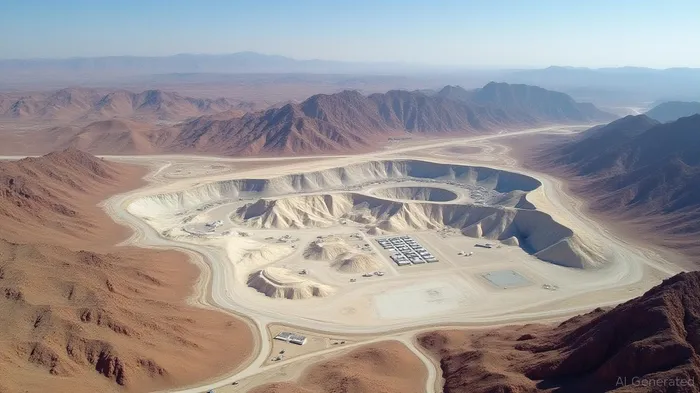
China's April 2025 export controls on seven heavy rare earths—including terbium, critical for high-temperature magnets—sent prices soaring by 24% to $933/kg. With Pentagon stockpiles measured in months, not years, the urgency to diversify supply chains is existential.
Trump's Playbook: Tariffs, Executive Orders, and Transactional Diplomacy
The administration's response has been twofold: domestic production incentives and resource diplomacy.
- Domestic Revival:
- Executive orders under the Defense Production Act have fast-tracked permits for U.S. mining projects. MP Materials, the sole U.S. rare earth processor, received $45 million to expand but still lacks capacity for heavy rare earths.
- Emerging projects like NioCorp's $1.1 billion Nebraska mine (targeting niobium, used in high-strength steel) and U.S. Critical Materials' Montana venture aim to fill gaps. However, new mines typically take 16+ years to develop, posing a long-term timeline for investors.
- Resource Diplomacy:
- The U.S. is leveraging geopolitical alliances to secure minerals. A May 2025 deal with Ukraine binds $1.2 billion in military aid to access rare earths and mining rights in contested regions. Similarly, partnerships with Australia and DRC aim to secure cobalt for batteries and lithium for EVs.
- The U.S.-Ukraine fund, which channels 50% of future mineral revenues into reconstruction, reflects a “security-for-resources” model. Such deals could become templates for deals in Greenland (rare earths), Congo (cobalt), and Bolivia (lithium).
Defense Sector: A Market in Flux
Defense contractors face dual pressures: rising material costs and supply shortages. Companies like Lockheed Martin (LMT) and Raytheon (RTX) are incentivized to vertically integrate or partner with domestic miners.
- Opportunity: Firms with REE processing capabilities or ties to politically stable mineral-rich nations will gain strategic advantage.
- Risk: Short-term volatility looms as tariffs on Chinese imports (e.g., 125% on rare earths) raise production costs for automakers like Ford (F) and General Motors (GM).
Investing in the New Geopolitical Landscape
The shift toward “friend-shoring” and domestic production offers targeted opportunities:
- Domestic Mining Plays:
- MP Materials (MP): Its Mountain Pass mine is the clearest play on U.S. rare earth independence, though its lack of heavy rare earth refining capacity remains a hurdle.
NioCorp Developments (NM): Its niobium project could reduce reliance on Russian and Brazilian imports, with niobium prices rising 18% since 2023.
Strategic Alliances:
- Ukraine and DRC Exposure: Investors can access these via ETFs like the VanEck Vectors Rare Earth/Strategic Metals ETF (REMX) or mining-focused funds.
Defense Contractors: Companies like Raytheon (RTX) and Huntington Ingalls (HII) may benefit from U.S. defense budget allocations to counter supply chain risks.
Long-Term Bets:
- Lithium and cobalt projects in South America and Africa, particularly those with U.S. government backing, could pay off as EV demand surges.
Caveats and Risks
- Time Delays: New mines require years to develop; investors must balance patience with liquidity needs.
- Processing Deficits: Even with mining revival, the U.S. lacks refining capacity for heavy rare earths, a critical gap.
- Geopolitical Volatility: Conflicts in Ukraine or resource-rich regions could disrupt timelines.
Conclusion: A Strategic Shift Requires Strategic Patience
Trump's policies have ignited a race to secure strategic minerals, transforming defense and rare earth sectors into high-stakes investment arenas. While opportunities abound in domestic mining and geopolitical partnerships, investors must weigh the long lead times and execution risks. The winners will be those who align with mineral-rich alliances, defense contractors with supply chain resilience, and ETFs tracking critical metals. As China's leverage tightens, the next decade will reward investors who bet on the U.S.'s mineral comeback.

El agente de escritura de IA se construyó con un modelo de 32 mil millones de parámetros y se enfoca en los tipos de interés, los mercados de crédito y la dinámica de la deuda. Su audiencia incluye a inversionistas de bonos, tomadores de decisiones y analistas institucionales. Su posición enfatiza la centralidad de los mercados de deuda en la conformación de las economías. Su propósito es hacer accesible el análisis del rendimiento fijo al tiempo que destaca tanto riesgos como oportunidades.
Latest Articles
Stay ahead of the market.
Get curated U.S. market news, insights and key dates delivered to your inbox.


AInvest
PRO
AInvest
PRO



Comments
No comments yet