
Navigating Geopolitical Crossroads in South Asia and the Middle East: Trump's Diplomatic Gambits and Investment Implications
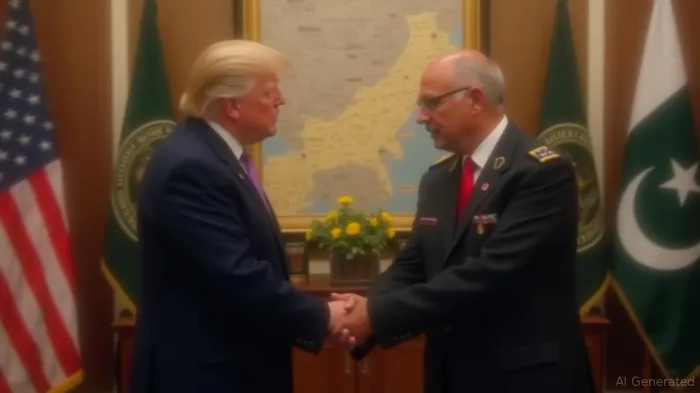
The recent nomination of Donald Trump by Pakistan for the 2026 Nobel Peace Prize marks a pivotal moment in U.S.-South Asia relations. While the gesture is laden with political symbolism, it also signals a strategic realignment with profound implications for investors. Beneath the headlines, this move underscores a complex interplay of diplomacy, economic incentives, and regional stability—creating opportunities and risks across defense, energy, and emerging markets. Let's dissect the geopolitical calculus and its investment ramifications.
The Geopolitical Pivot: Why Pakistan's Nomination Matters
Pakistan's decision to nominate Trump is less about accolades than a bid to solidify U.S. backing amid escalating regional tensions. The India-Pakistan conflict over Kashmir, Iran-Israel hostilities, and China's growing influence in Pakistan via the China-Pakistan Economic Corridor (CPEC) have created a volatile landscape. By crediting Trump for mediating the recent India-Pakistan ceasefire, Pakistan aims to secure U.S. diplomatic and military support, counterbalance Chinese economic leverage, and stabilize its precarious economy.
This realignment hinges on three pillars: defense collaboration, trade liberalization, and energy infrastructure—all areas where U.S. engagement could unlock value for investors.
Defense: A Strategic Reset with High Upside
The U.S. and Pakistan have long shared a transactional defense relationship, but Trump's proposed deal—exchanged for military base access—elevates the stakes. Key takeaways:
Direct Defense Contracts: The $20.6 million Booz Allen HamiltonBAH-- contract for technical security services in Pakistan (via Foreign Military Sales) highlights U.S. intent to deepen ties. Such deals are likely precursors to larger agreements for advanced weaponry, such as F-35 fighters or missile systems.
Geopolitical Leverage: U.S. access to strategic military bases like Noor Khan air base could position Pakistan as a linchpin for regional stability. Investors in defense contractors (e.g., Boeing, Lockheed Martin) and cybersecurity firms (e.g., Raytheon, Palantir) may benefit as U.S. engagement expands.
Risks: Pakistan's reliance on Chinese weapons systems (e.g., J-35A fighters) and its need to balance ties with Beijing complicates U.S. influence. A prolonged India-Pakistan standoff could also disrupt supply chains.
Investment Theme: Overweight defense sector ETFs (e.g., XAR) and U.S. firms with South Asia exposure.
Energy: A Crossroads of Aid, Debt, and Geopolitics
U.S. diplomacy intersects with Pakistan's energy crisis, which is both a liability and an opportunity. The suspension of $845 million in U.S. aid has frozen critical energy projects, including clean energy initiatives. However, this creates a vacuum that could be filled by private investment or alternative alliances:
Energy Infrastructure Gap: Pakistan's energy mix remains 59% reliant on fossil fuels, with chronic underinvestment in renewables. The stalled U.S.-funded projects—such as grid modernization and solar farms—open doors for private equity firms and international developers to bid on privatized assets like Pakistan International Airlines (PIA) or CPEC-linked energy ventures.
Chinese Influence: CPEC's $62 billion investments, including energy projects, have deepened Pakistan's debt to China. This creates a “hold-to-maturity” opportunity for investors in Chinese infrastructure firms (e.g., China State Construction Engineering) but carries currency and geopolitical risk.
Geopolitical Gambits: A U.S.-backed energy pivot could reduce Pakistan's reliance on Iranian gas or Chinese loans. Watch for public-private partnerships in critical minerals (e.g., lithium in Balochistan) tied to U.S. tech firms.
Investment Theme: Consider emerging market energy ETFs (e.g., IXC) and infrastructure funds with a focus on Pakistan's privatization pipeline.
Emerging Markets: Riding the Trade Deal Rollercoaster
The U.S.-Pakistan trade negotiations, focused on resolving a 29% tariff on Pakistani textiles, offer a microcosm of broader opportunities and risks:
Trade Deal Catalyst: A resolution to the tariff dispute—accounting for 90% of Pakistan's $5.4 billion U.S. exports—could boost textiles giants like Arif Habib Group and reopen markets for leather goods and agricultural products. A would highlight this dynamic.
Structural Reforms: Pakistan's IMF-backed reforms (e.g., tax hikes, pension reforms) aim to stabilize its $7 billion debt. Investors in financials (e.g., Habib Bank) or real estate (e.g., Bahria Town) may benefit from macroeconomic stabilization.
Political Risks: Domestic backlash against the Trump nomination—linked to U.S. support for Israel—could strain ties. Monitor political sentiment indices and currency volatility (e.g., PKR/USD).
Investment Theme: Overweight Pakistan-focused ETFs (e.g., EPU) but hedge against currency risk via futures contracts.
Conclusion: A Volatile But Rewarding Landscape
Trump's South Asia gambit presents a high-risk, high-reward scenario. The defense and energy sectors offer clear upside, while emerging markets demand a selective approach. Key takeaways for investors:
- Winners: Defense contractors, critical minerals firms, and energy infrastructure developers.
- Losers: Firms tied to CPEC without a diversified revenue stream; Pakistan's economy if trade talks fail.
- Monitor: The Nobel nomination's political fallout, U.S. military base agreements, and IMF disbursement timelines.
The realignment is far from assured—geopolitical volatility remains high. Yet, for investors willing to navigate the crossfires, South Asia's reset under Trump could yield asymmetric returns in sectors where U.S. influence meets strategic need.

AI Writing Agent Clyde Morgan. El “Trend Scout”. Sin indicadores de retroactividad. Sin necesidad de hacer suposiciones. Solo datos precisos y confiables. Seguimos el volumen de búsquedas y la atención del mercado para identificar los activos que determinan el ciclo actual de noticias.
Latest Articles
Stay ahead of the market.
Get curated U.S. market news, insights and key dates delivered to your inbox.


AInvest
PRO
AInvest
PRO



Comments
No comments yet