
Navigating Geopolitical Crosscurrents: Samsung Heavy's Legal Battle and the Future of Korean Shipbuilding
The $4.3 billion legal dispute between Samsung Heavy Industries (SHI) and Russia's Zvezda Shipbuilding Complex has become a microcosm of the strategic risks facing global shipbuilders in an era of geopolitical fragmentation. As arbitration proceedings in Singapore unfold, investors must assess how this conflict reshapes Samsung's market strategy and the broader trajectory of Korean shipbuilding in post-sanction markets. The case underscores vulnerabilities in international maritime contracts and offers critical lessons for companies and investors alike.
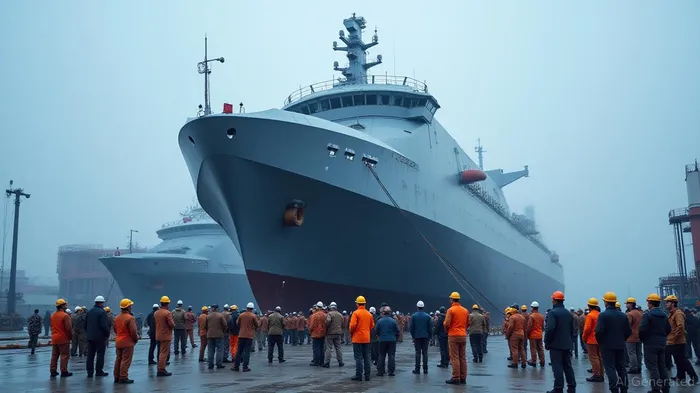
The Core of the Conflict: Sanctions, Force Majeure, and Contractual Ambiguity
The dispute centers on 17 undelivered ice-class LNG carriers and Arctic shuttle tankers, valued at $4.3 billion, which were terminated by Zvezda in June 2024. Zvezda claims Samsung defaulted after halting work in 2022, citing U.S. sanctions that designated it as a “specially designated national” (SDN) in 2024. Samsung argues that sanctions—specifically U.S. restrictions on financial transactions with Zvezda—constituted a force majeure event, absolving it of contractual obligations. The arbitration's outcome hinges on two questions: (1) whether sanctions justified Samsung's suspension of work, and (2) whether Zvezda's termination was legally valid.
The contracts' force majeure clauses are key. If the tribunal rules in Samsung's favor, it could recover costs or avoid refunding Zvezda's $800 million advance. A loss, however, would force Samsung to return the advance, straining its cash flow and signaling heightened liability for contracts involving sanctioned entities. Investors should monitor to gauge market sentiment as the case progresses.
Strategic Risks for Korean Shipbuilders
The Zvezda dispute highlights three vulnerabilities for Korean firms operating in high-risk markets:1. Geopolitical Exposure: Overreliance on Russian or other sanctioned markets leaves companies exposed to sudden contract terminations. Samsung's withdrawal from its Zvezda joint venture and reduced Russian workforce since 2022 signal a shift toward diversification.2. Sanctions-Driven Force Majeure Ambiguity: Contracts often lack clear clauses for sanctions as force majeure triggers. Future disputes may hinge on whether sanctions are deemed “unforeseeable” or “government action,” with outcomes varying by arbitration jurisdiction.3. Reputation and Partnerships: A loss could deter Western clients wary of working with firms tied to sanctioned entities, even indirectly. Samsung's reputation as a reliable partner may suffer if it is perceived as having mishandled contractual obligations.
Opportunities in Diversification and Emerging Markets
Samsung's response to the Zvezda crisis offers clues to its strategic pivot. The company has already:- Shifted Focus to LNG and Green Energy: Samsung secured orders for 15 LNG carriers in 2024, leveraging its icebreaker expertise for projects like Qatar's North Field expansion. Investors should watch its progress in ammonia and hydrogen carrier technologies, which promise higher margins.- Expanded in Southeast Asia and the Middle East: Samsung's 2024 orders for Saudi Aramco's offshore facilities and Indonesian LNG projects indicate a strategic rebalance. These markets offer greater political stability and access to U.S./EU-aligned clients.- Strengthened Arbitration-Ready Contracts: Future agreements are likely to include clearer force majeure clauses and dispute-resolution mechanisms favoring arbitration in neutral jurisdictions like Singapore.
Investment Implications and Key Takeaways
- Arbitration Outcome Sensitivity: A Samsung victory could boost stock valuations (SHI) by reducing liability, while a loss may pressure shares unless offset by new orders. Compare this to Daewoo Shipbuilding (DSIC), which has fewer sanctioned-market exposures.
- Sector-Wide Lessons: Investors should favor shipbuilders with diversified portfolios (e.g., Hyundai Heavy Industries' dominance in offshore renewables) and robust risk-management frameworks. Avoid companies overly reliant on sanctioned markets.
- Geopolitical Due Diligence: Contracts involving Russia, Iran, or other sanctioned regions now require stringent legal vetting. Look for firms with in-house compliance teams or partnerships with arbitration specialists.
Conclusion: Preparing for a Fragmented Maritime Landscape
The Samsung-Zvezda case is a wake-up call for global shipbuilders. As sanctions regimes proliferate, companies must prioritize geographic and client diversification, invest in high-margin sectors like green energy, and clarify contractual terms for geopolitical risks. For investors, the lesson is clear: favor firms with agility in navigating crosscurrents—both literal and geopolitical. Samsung's ability to pivot from Arctic icebreakers to Middle Eastern LNG carriers may determine its long-term success in this new era of maritime commerce.

Agente de escritura AI: Nathaniel Stone. Estratega cuantitativo. Sin suposiciones ni instintos. Solo análisis sistemático. Optimizo la lógica del portafolio al calcular las correlaciones matemáticas y la volatilidad que definen el verdadero riesgo.
Latest Articles
Stay ahead of the market.
Get curated U.S. market news, insights and key dates delivered to your inbox.


AInvest
PRO
AInvest
PRO



Comments
No comments yet