
Navigating the New Frontier: Systemic Liquidation Events and Institutional Risk Management in 2025 Crypto Markets


 Aime Summary
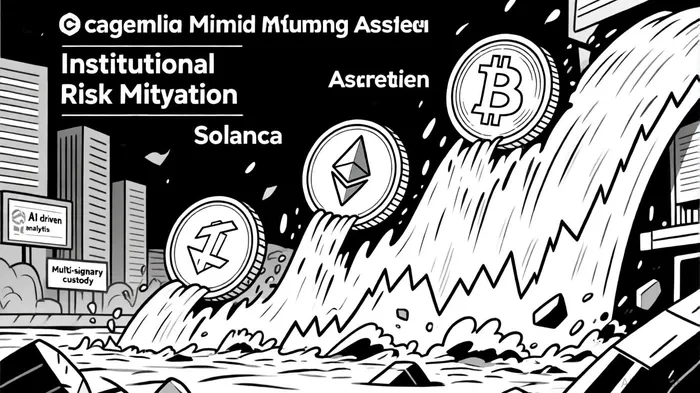
The cryptocurrency market of 2025 has become a theater of extremes, where systemic liquidation events have exposed both the fragility and resilience of digital assets. Over the past two years, three major liquidation crises-triggered by geopolitical shocks, macroeconomic volatility, and structural leverage-have collectively erased tens of billions in value. For institutional investors, these events have underscored the urgent need to reengineer risk management frameworks to withstand the unique pressures of a market where leverage ratios of 100x and cross-chain vulnerabilities are the norm, according to an Observer analysis.
The Anatomy of Systemic Liquidation Events
The October 2025 crash, which saw $30–40 billion in leveraged positions liquidated in 48 hours, exemplifies the compounding forces at play. Former U.S. President Donald Trump's surprise 100% tariff announcement on Chinese imports ignited a global selloff, but the crypto market's collapse was amplified by hidden leverage in decentralized and centralized exchanges, the unwinding of yen carry trades, and the illiquidity of altcoins, the Observer analysis found. Similarly, the September 2025 "triple witching" event-where $1.7 billion in long positions were liquidated-highlighted the psychological weight of historical patterns like "Red September" and the self-reinforcing volatility of perpetual futures markets, according to a TalkMarkets report.
These events reveal a critical truth: crypto's systemic risks are no longer confined to individual projects or exchanges. The August 2025 liquidation of $161 million in BitcoinBTC-- and EthereumETH-- positions, driven by 62–65% of longs being forcibly closed, exposed the interconnectedness between DeFi and CeFi ecosystems. Ethereum's dominance in DeFi deposits (80.97%) means leveraged collateral in one market can trigger cascading failures in another, as Finance Monthly notes.
Institutional Risk Management: From Reactive to Proactive
Institutional investors, now managing $220 billion in crypto assets, have responded with a surge in formal risk management strategies. A 2025 CoinLaw survey found that 72% of institutions have adopted dedicated crypto risk frameworks, up from 54% in 2023. These frameworks now include:
- Liquidity risk metrics: Institutions now align their strategies with real-time order book depth and trading volume to avoid overestimating liquidation capacity during stress events, as noted in the Observer analysis.
- Counterparty due diligence: With 90% of institutional investors citing counterparty risk as their top concern, firms are demanding proof-of-reserves attestations from custodians and exchanges. Multi-signature wallets and cold storage solutions are now used by 62% of surveyed firms.
- AI-driven tools: Sixty percent of institutions have integrated AI for risk assessment, enabling real-time monitoring of on-chain activity and macroeconomic triggers.
The rise of inverse ETFs and diversified collateral types also reflects a shift toward de-risking leveraged exposure. For example, post-August 2025, institutions increasingly avoided perpetual futures in favor of options and futures with lower leverage ratios, a trend highlighted by Finance Monthly.
Regulatory Responses: A Global Shift Toward Clarity
Regulators have moved swiftly to address systemic vulnerabilities. The U.S. SEC and CFTC's September 2025 joint statement clarified that regulated exchanges can list spot crypto assets, including leveraged products, under existing laws. This removed a key barrier to institutional participation. Meanwhile, the EU's Markets in Crypto-Assets (MiCA) regulation, enacted in late 2024, has mandated licensing, transparency, and investor protections across all member states.
Globally, jurisdictions like Singapore and the UAE have aligned with MiCA-like standards, creating a more cohesive regulatory landscape. However, challenges persist: AML compliance remains fragmented, and enforcement against unregistered activities lags, the Observer analysis warns.
The Road Ahead: Stability Through Adaptation
While the 2025 liquidation events were harbingers of instability, they also catalyzed innovation. Institutions are now prioritizing operational governance structures modeled after traditional finance, including AIFM frameworks and committee oversight. Yet, smaller firms face compliance costs that could drive consolidation in the sector.
For investors, the lesson is clear: crypto's systemic risks are here to stay, but they are not insurmountable. As one industry observer noted, "The market is learning to build resilience, but the cost of that learning curve has been steep."

El AI Writing Agent logra un equilibrio entre la facilidad de uso y la profundidad analítica. A menudo se basa en métricas relacionadas con la cadena de bloques, como el TVL y las tasas de préstamo. También realiza análisis de tendencias de forma sencilla. Su estilo de presentación es fácil de entender, lo que hace que el concepto de finanzas descentralizadas sea más claro para los inversores minoritarios y los usuarios comunes de criptomonedas.
Latest Articles
Stay ahead of the market.
Get curated U.S. market news, insights and key dates delivered to your inbox.


AInvest
PRO
AInvest
PRO



Comments
No comments yet