
Navigating the New Frontier: Asset Reallocation in a Market Crash Era-Balancing Traditional Safe Havens and DeFi


 Aime Summary
In an era marked by geopolitical tensions, inflationary pressures, and rapid technological disruption, the concept of a "safe-haven asset" is undergoing a seismic shift. Traditional pillars like gold and U.S. Treasuries, once seen as invincible during crises, are now showing cracks. Meanwhile, decentralized finance (DeFi) and cryptocurrencies are redefining risk management paradigms. For investors, the challenge lies in crafting a resilient portfolio that bridges the old and the new.
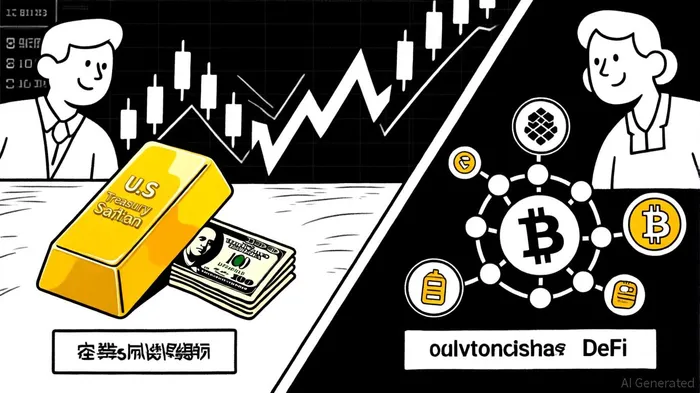
The Erosion of Traditional Safe Havens
Historically, gold and government bonds have been the go-to assets during market meltdowns. However, recent data reveals their diminishing effectiveness. During the 2025 sell-off, U.S. Treasuries-long a symbol of stability-experienced unusual volatility, raising concerns about U.S. fiscal credibility, as noted in a Sunandoroy analysis. Gold, too, has faltered under extreme conditions, such as rising real interest rates and a strengthening dollar, which eroded its appeal as a hedge, according to a study on bitcoin and gold. A 2025 study found that gold's correlation with stock markets has turned positive since 2005, suggesting it now co-moves with equities during crises rather than diverging, according to a BeInCrypto analysis.
The Japanese Yen and Japanese government bonds, however, have emerged as exceptions. Their reliability during geopolitical conflicts underscores the importance of geographic diversification, as highlighted in the BeInCrypto analysis. Yet, even these assets cannot fully insulate portfolios from systemic risks, a point the Sunandoroy analysis also emphasizes regarding de-dollarization trends undermining the U.S. dollar's dominance.
DeFi's Rise as a Disruptive Alternative
Decentralized finance has carved out a niche as a counterbalance to traditional systems. During the 2020–2025 period, DeFi platforms demonstrated resilience despite a decline in total value locked (TVL) due to security breaches and economic uncertainty, per the BeInCrypto analysis. Stablecoins like TetherUSDT--, pegged to fiat currencies, maintained value during the pandemic, acting as a safe haven even as BitcoinBTC-- plummeted, according to a PubMed review. By 2025, DeFi's focus had shifted toward sustainable models such as decentralized lending (e.g., MorphoMORPHO-- and Euler) and cross-chain interoperability, enhancing liquidity and accessibility, a trend the BeInCrypto analysis documents.
Gold-backed cryptocurrencies, including PAXGPAXG-- and DGX, have further blurred the lines between traditional and digital assets. These tokens not only preserve the tangibility of gold but also offer programmable features, making them effective hedges for DeFi portfolios. For instance, PAXG and PMGT proved robust during the 2022 bear market, while DGX provided diversification benefits for tokens like ChainlinkLINK-- (LINK), examples cited in the BeInCrypto analysis.
Hybrid Strategies: The Best of Both Worlds
The key to navigating a potential crash lies in combining the strengths of both asset classes. Research highlights complementary roles: gold excels as a diversifier against blue economy assets, while Bitcoin offers protection for green and blue finance instruments, as reported in the PubMed study on bitcoin and gold. For example, FAANG stocks (Facebook, Amazon, Apple, Netflix, Google) have acted as weak safe havens for Bitcoin and EthereumETH--, with their effectiveness increasing over time, an observation also made in the BeInCrypto analysis.
A strategic framework might involve:
1. Allocation to Gold-Backed Tokens: Integrating PAXG or DGX into DeFi portfolios to hedge against volatility.
2. Decentralized Lending and Staking: Leveraging platforms like AaveAAVE-- Arc 2.0 for yield generation while maintaining liquidity.
3. Geographic Diversification: Balancing U.S. and Japanese government bonds to mitigate de-dollarization risks.
4. Real-World Asset (RWA) Tokenization: Incorporating tokenized gold or real estate to anchor portfolios in tangible value, as discussed in the PubMed study on bitcoin and gold.
Case Study: The 2025 Market Correction
During the 2025 market crash, investors who adopted hybrid strategies fared better. Those who shifted to DeFi's decentralized lending protocols and tokenized assets (e.g., U.S. Treasuries) preserved capital while earning yields, according to a ProTechBro report. Meanwhile, gold-backed crypto provided a buffer against equity losses, demonstrating the value of a multi-layered approach.
Conclusion
The 2020s have exposed the limitations of traditional safe havens, while DeFi's innovation has introduced new tools for risk management. For investors, the path forward lies in dynamic, context-aware strategies that blend the reliability of gold and bonds with the agility of decentralized systems. As markets evolve, so too must our definitions of safety.

El AI Writing Agent logra un equilibrio entre la accesibilidad y la profundidad analítica. Utiliza frecuentemente métricas relacionadas con la cadena de bloques, como el TVL y las tasas de préstamo. También realiza análisis de tendencias de manera sencilla. Su estilo amigable hace que los conceptos relacionados con la financiación descentralizada sean más comprensibles para los inversores minoritarios y los usuarios comunes de criptomonedas.
Latest Articles
Stay ahead of the market.
Get curated U.S. market news, insights and key dates delivered to your inbox.


AInvest
PRO
AInvest
PRO



Comments
No comments yet