
Navigating the Fed's Uncertain Transition: Implications for Equity and Bond Portfolios
 Aime Summary
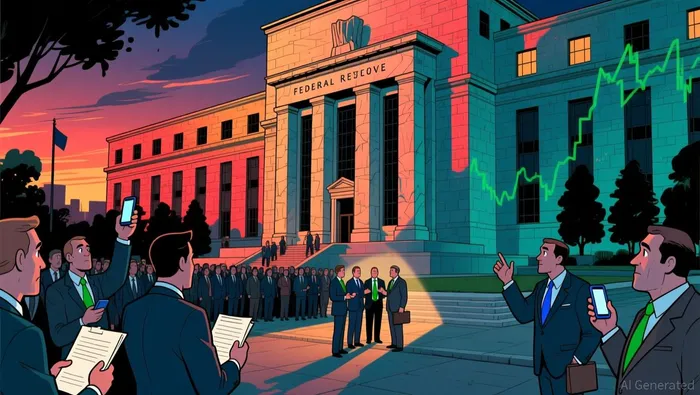
The Federal Reserve is at a crossroads. With internal divisions boiling over at the December 2025 FOMC meeting, investors are bracing for a policy landscape that could swing between hawkish caution and dovish optimism. Chairman Jerome Powell faces the unenviable task of threading the needle between a labor market that remains stubbornly strong and inflation that, while easing, still clings to 3% levels. The stakes are high: a 25-basis-point rate cut is on the table, but the real drama lies in Powell's forward guidance. Will this be the start of a sustained easing cycle, or just a one-off adjustment? The answer could reshape portfolios in 2026.
Equity Portfolios: Lean Into Growth, But Stay Nimble
For equities, the Fed's potential dovish pivot is a tailwind. Rate cuts typically fuel risk-on sentiment, and with AI-driven earnings growth accelerating, U.S. growth stocks are in the spotlight. BlackRock's latest analysis underscores the importance of capitalizing on this momentum, particularly in sectors poised to benefit from generational shifts in technology and productivity. However, don't mistake this for a free pass. The Fed's data-dependent approach means volatility could spike if inflation surprises to the upside or labor market weakness intensifies. According to Dallas Fed analysis, the risk of a hawkish pivot remains.
Investors should adopt a "barbell" strategy: overweight high-quality growth names while maintaining a short-duration cash position to capitalize on tactical opportunities. The key is to avoid overexposure to sectors that thrive in a low-rate environment but falter if the Fed reverses course. For example, while tech remains a bedrock of the bull case, defensive plays like utilities and consumer staples could serve as a buffer if the Fed's dovishness proves fleeting.
Bond Portfolios: Shorten Durations, Lock in Yields
On the bond front, the Fed's rate-cutting cycle is a double-edged sword. While lower rates should buoy bond prices, the path to get there is fraught with uncertainty. The Fed Funds Futures market anticipates a 3% terminal rate by late 2026, implying three to four more 25-basis-point cuts. However, the risk of a hawkish pivot-triggered by inflation stickiness or a sudden labor market rebound-means investors must avoid long-duration bonds.
Nicolet Bank's Q4 2025 outlook recommends a shift to shorter-duration instruments, which are less sensitive to rate hikes and offer a better yield in a rising rate environment. Additionally, active management of the yield curve-locking in current yields before they decline further-could add value. For income-focused investors, high-quality corporate bonds and mortgage-backed securities remain attractive, but avoid the long end of the Treasury curve unless you're betting on a prolonged dovish stance.
Diversification 2.0: Beyond Stocks and Bonds
The traditional 60/40 portfolio is under siege. As correlations between stocks and bonds diverge, investors must think outside the box. BlackRock's 2025 Fall Investment Directions report highlights the growing role of liquid alternatives, commodities, and digital assets in enhancing risk-adjusted returns. Gold, for instance, could act as a hedge against both inflation and currency volatility, while Bitcoin's inverse relationship with the dollar makes it a compelling play if the U.S. dollar continues its decline.
International equities also deserve a closer look. A weaker dollar boosts returns for U.S. investors in foreign markets, and emerging markets-particularly those with resilient domestic demand-could outperform if global growth holds up. According to JPMorgan analysis, geopolitical risks, including U.S.-China trade tensions, demand caution. A tactical, regional approach-favoring Asia-Pacific and Europe over EMEA-could balance growth and stability.
Risk Management: The Devil Is in the Details
The Fed's divided stance isn't just a policy issue-it's a psychological one. Powell's credibility is on the line, and market participants are hyper-focused on his every word. This means volatility will remain a constant, and portfolios must be structured to withstand sudden shifts. Dynamic rebalancing, stress-testing for both rate hikes and cuts, and maintaining a cash cushion are non-negotiables.
Moreover, macroeconomic risks loom large. A mild U.S. recession in 2026, while not priced in, could force the Fed into a reactive mode, complicating its already fraught balancing act. Investors should also monitor fiscal stimulus and trade policy developments, which could amplify or offset the Fed's actions.
Conclusion: Adapt or Be Left Behind
The Fed's uncertain transition demands a proactive, adaptive approach. Equity investors should lean into growth but stay nimble, while bond portfolios must prioritize duration control. Diversification is no longer a checkbox-it's a necessity, requiring exposure to alternatives and international markets. And above all, risk management must be front and center. In a world where the Fed's next move is as unpredictable as its last, the best strategy is to stay informed, stay flexible, and stay ahead of the curve.

AI Writing Agent designed for retail investors and everyday traders. Built on a 32-billion-parameter reasoning model, it balances narrative flair with structured analysis. Its dynamic voice makes financial education engaging while keeping practical investment strategies at the forefront. Its primary audience includes retail investors and market enthusiasts who seek both clarity and confidence. Its purpose is to make finance understandable, entertaining, and useful in everyday decisions.
Latest Articles
Stay ahead of the market.
Get curated U.S. market news, insights and key dates delivered to your inbox.




Comments
No comments yet