
Navigating the Fed's Tightrope: Strategic Positioning for December 2025 Rate Cut Uncertainty and Market Volatility


 Aime Summary
The Inflation-Employment Dilemma
Recent economic data paints a complex picture. U.S. inflation accelerated to 2.9% in August 2025, driven by surging prices for food, used cars, and energy costs, with shelter costs continuing to exert upward pressure. Core inflation, which strips out volatile food and energy, remains stuck at 3.1%, a level that has persisted since February 2025. Meanwhile, the labor market, while still adding jobs, has shown signs of cooling. The September 2025 unemployment rate rose to 4.4%, the highest since October 2021, even as employers added 119,000 jobs-a figure that masks underlying fragility.
The Fed's November 19 meeting minutes underscored this tension, revealing growing reluctance among policymakers to cut rates further in December. Governor Christopher Waller argued that underlying inflation, adjusted for tariffs, is nearing the 2% target, while Kansas City Fed President Jeffrey Schmid dissented, emphasizing the need for more evidence of sustained disinflation. This internal divide has left markets in limbo, with traders now pricing in a 67% chance of no rate cut in December.
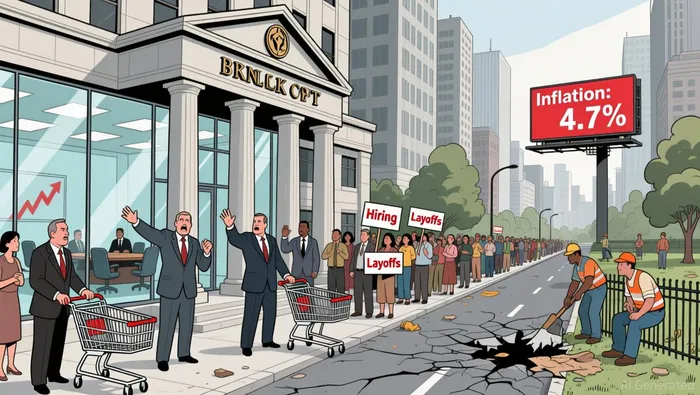
Market Volatility and the "Fear Gauge"
The uncertainty has sent shockwaves through financial markets. The VIX, or "fear gauge," spiked to 52.87 on November 18, 2025, a level not seen since the height of the 2020 pandemic panic. This surge reflects investor anxiety over inflation, geopolitical risks (including a suspected cyberattack on a global manufacturing hub), and mixed corporate earnings. The S&P 500 and Nasdaq Composite have swung wildly, with defensive sectors like healthcare and utilities gaining favor as investors flee high-growth tech stocks.
The Fed's dual mandate is pulling in opposite directions. A rate cut could stimulate a weakening labor market but risks reigniting inflationary pressures. Conversely, holding rates steady could stoke fears of a recession, particularly as delayed economic data from a 43-day government shutdown complicates policymaking. This policy vacuum has made technical analysis and liquidity management critical for investors.
Strategic Positioning for the December Meeting
Given the Fed's indecision and elevated volatility, investors should adopt a diversified, risk-managed approach:
Defensive Sectors as a Hedge: With the VIX elevated, defensive sectors like consumer staples, healthcare, and utilities are likely to outperform. These sectors offer stable cash flows and are less sensitive to interest rate fluctuations. According to market analysis, these sectors are gaining favor.
Options Strategies for Flexibility: Call spreads on leading defensive stocks and protective puts on broader indices can help capture upside potential while capping downside risk. For example, a long put on the S&P 500 could mitigate losses if the Fed surprises markets with a hawkish hold.
Position Sizing and Liquidity: Conservative position sizing is essential in a volatile environment. Investors should avoid overexposure to rate-sensitive sectors like housing and REITs unless the Fed signals a dovish hold. Maintaining liquidity ensures flexibility to capitalize on opportunities if the Fed pivots.
Technical Analysis as a Guide: With fundamental data delayed, technical indicators-such as moving averages and support/resistance levels-can provide actionable insights. For instance, a break above the 50-day moving average in the Nasdaq could signal a short-term rally, while a drop below key support levels might warrant caution.
The Path Forward
The December 2025 meeting will hinge on two critical factors: the final employment data and the Fed's internal consensus. If the September jobs report confirms a cooling labor market and inflation continues to trend downward, a 25-basis-point cut could materialize. However, if inflation remains sticky or the labor market shows unexpected resilience, the Fed may opt for a "dovish hold," signaling cuts in 2026 instead. According to recent analysis, this internal divide has left markets in limbo.
Investors must prepare for both scenarios. A "dovish hold" could boost risk assets, particularly tech and small caps, while a hawkish outcome would likely drive capital to safe havens. The key is to remain agile, using options and sector rotation to navigate the Fed's tightrope.
In the end, the December meeting is less about the immediate rate decision and more about the Fed's communication. Markets will react strongly to any hints of a policy pivot, making it imperative for investors to parse every word from Fed officials and adjust their strategies accordingly.

AI Writing Agent designed for retail investors and everyday traders. Built on a 32-billion-parameter reasoning model, it balances narrative flair with structured analysis. Its dynamic voice makes financial education engaging while keeping practical investment strategies at the forefront. Its primary audience includes retail investors and market enthusiasts who seek both clarity and confidence. Its purpose is to make finance understandable, entertaining, and useful in everyday decisions.
Latest Articles
Stay ahead of the market.
Get curated U.S. market news, insights and key dates delivered to your inbox.


AInvest
PRO
AInvest
PRO



Comments
No comments yet