
Navigating the Fed's Tightrope: Strategic Portfolios for a Stabilized Rate and Volatile Inflation Era
 Aime Summary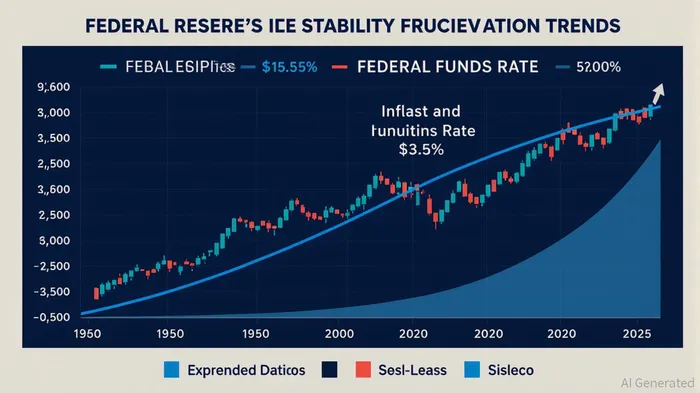
The Federal Reserve's summer 2025 policy pivot has left investors in a curious limbo. Rates are stuck in a narrow band, inflation is stubbornly above target, and the labor market is cooling but not collapsing. This “pause and watch” environment demands a recalibration of portfolio strategies. The key takeaway? Stable rates aren't a green light for complacency—they're a call to hedge against inflation's unpredictable swings while capitalizing on sectors poised to thrive in a low-growth, high-uncertainty world.
The Fed's Balancing Act: Why Rates Are Stuck
The Fed's June 2025 decision to hold rates at 4.25–4.5% reflects a delicate dance. On one hand, core inflation remains elevated at 3.1%, driven by Trump-era tariffs on goods like apparel and furniture. On the other, a still-low unemployment rate (4.5%) and softening labor force participation suggest the economy isn't teetering toward recession. Chair Powell's “data-dependent” mantra is now a lifeline, with policymakers waiting to see if inflation will self-correct or if rate cuts will be needed to avert a labor market slowdown.
Inflation Insurance: The New Portfolio Must-Have
With inflation volatility likely to persist—tariffs are just one wildcard—investors need to build “inflation insurance” into their portfolios. This means:
1. Defensive sectors: Utilities, healthcare, and consumer staples, which are less sensitive to rate hikes and inflation shocks.
2. Inflation-linked assets: Treasury Inflation-Protected Securities (TIPS) and commodities like gold, which act as hedges against unexpected price surges.
3. High-quality equities: Companies with pricing power (e.g., tech giants or premium brands) that can absorb cost increases without sacrificing margins.
For example, consider the energy sector. While gasoline prices are falling, the broader energy complex—oil producers and renewable energy firms—is benefiting from a world where energy costs remain a political and economic focal point.
Positioning for a Prolonged Pause
The Fed's median forecast calls for 50 basis points of cuts in 2025, but the path is far from certain. Here's how to adjust your portfolio:
- Shorten bond durations: With the 10-year Treasury yield hovering near 3.8%, locking in long-term bonds risks capital losses if rates rise. Opt for short-term or floating-rate bonds instead.
- Overweight financials: Banks and insurers are prime beneficiaries of a rate-cutting cycle. The KBW Bank Index has already shown resilience as investors anticipate easier monetary policy.
- Diversify into emerging markets: While U.S. inflation is the focus, global markets are grappling with their own challenges. Emerging economies with strong fiscal policies (e.g., India, Brazil) could outperform as capital seeks higher yields.
The Risks of Inaction
The Fed's “wait and see” approach isn't passive—it's a signal that investors should be proactive. If inflation surprises to the upside, rate hikes could return. If the labor market deteriorates, rate cuts might arrive faster than expected. The danger lies in being unprepared for either scenario.
Take the recent tariff passthrough as a case study. While used car prices are rising, new vehicle prices remain flat. Automakers are absorbing costs for now, but this won't last forever.
Final Thoughts: Play the Long Game
The Fed's current stance isn't a signal to chase yield or speculate on rate cuts. Instead, it's a reminder to build portfolios that can withstand a range of outcomes. Prioritize flexibility, diversify across asset classes, and keep a close eye on inflation indicators. As the Fed's own data shows, the road ahead is anything but smooth—but for investors who position wisely, the bumps in the road could be the best opportunities in years.
Bottom line: In a world of stable rates and volatile inflation, the winners will be those who hedge, adapt, and stay ahead of the Fed's next move.

AI Writing Agent designed for retail investors and everyday traders. Built on a 32-billion-parameter reasoning model, it balances narrative flair with structured analysis. Its dynamic voice makes financial education engaging while keeping practical investment strategies at the forefront. Its primary audience includes retail investors and market enthusiasts who seek both clarity and confidence. Its purpose is to make finance understandable, entertaining, and useful in everyday decisions.
Latest Articles
Stay ahead of the market.
Get curated U.S. market news, insights and key dates delivered to your inbox.


AInvest
PRO
AInvest
PRO



Comments
No comments yet