
Navigating the Fed's Tightening Cycle: Strategic Positioning for 2026 and Beyond


 Aime Summary
The Federal Reserve's policy decisions in 2025 have underscored a delicate balancing act: managing inflation while avoiding undue harm to an already fragile labor market. With the central bank poised to deliver its final rate decision of the year, ,
a move that reflects both optimism about the economy's resilience and caution in the face of persistent uncertainties. The September 2025 Summary of Economic Projections (SEP) further clarified this duality,
projecting a gradual reduction , . Yet internal divisions within the FOMC suggest that further easing may be tempered by risks such as elevated inflation or external shocks. For investors, the challenge lies in deciphering these signals and positioning portfolios to thrive in the next phase of the rate cycle.
Historical Context: Markets and Rate Cycles
History offers a mixed but instructive playbook. Since 1980, ,
with even stronger performance, provided a recession is avoided. This pattern, however, is conditional. Cycles like 1980–81, 2001, and 2007–08 saw stocks falter despite rate cuts,
as economic downturns overshadowed monetary easing. The current cycle, , ,
with the S&P 500 surging . Investors now price in a policy rate near 3.0% by late 2026,
but the path to get there remains contingent on inflation and labor market data.
Tightening Cycles: Lessons from the 2010s–2020s
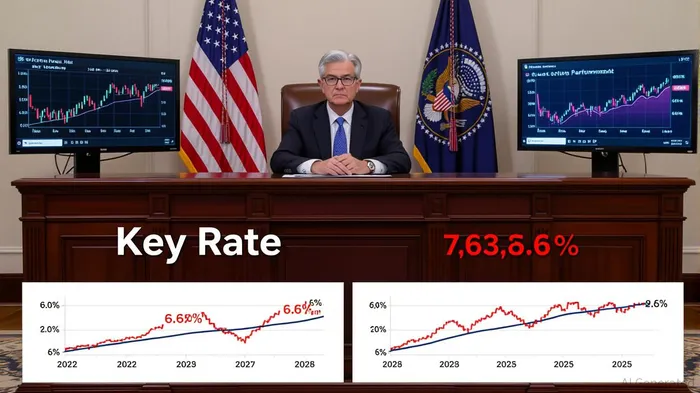 The Fed's recent tightening cycles-from 2022 to 2023-offer a cautionary tale. ,
. While the stock market remained positive during this period, the labor market's gradual softening highlighted the lagged effects of monetary policy. This experience underscores a critical insight:
markets can absorb tightening, but prolonged or excessive hikes risk triggering recessions, .
Sectoral Insights: Where to Position for 2026
Sector performance during tightening cycles reveals strategic opportunities. Growth stocks, particularly in technology,
have historically added , even in non-recessionary environments. , making them attractive for risk-averse investors. Conversely, ,
. Consumer discretionary stocks, while resilient in most cycles,
, a reminder of their vulnerability in systemic downturns. Fixed-income assets, notably U.S. Treasuries,
have outperformed equities , .
Strategic Positioning for the Next Cycle
Given the Fed's cautious stance, investors should adopt a dual approach. First, . Second, monitor inflation and labor market data closely; , .
Diversification remains key, .
The Fed's path in 2026 will likely be defined by its ability to navigate these competing priorities. For now, investors must remain agile, leveraging historical patterns while staying attuned to real-time data. As Chair has emphasized, the central bank's decisions will be "data-dependent," and so too must be the strategies of those who seek to profit from them.

Stay ahead of the market.
Get curated U.S. market news, insights and key dates delivered to your inbox.






Comments
No comments yet