
Navigating the Fed's Rate-Cut Cycle: Timing the Inflection Point in 2025


 Aime Summary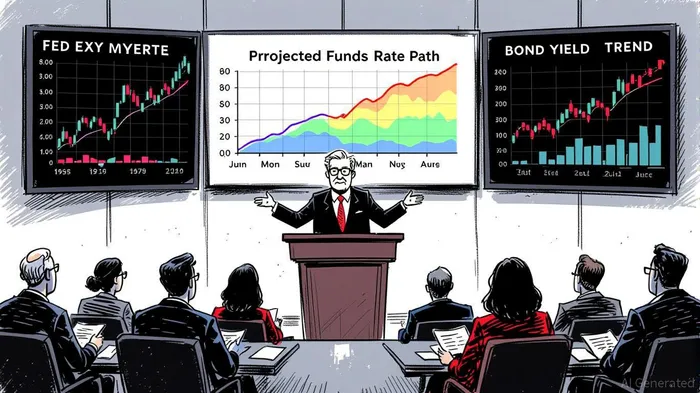
The Federal Reserve's 2025 policy trajectory has reached a pivotal juncture. With the June 2025 FOMC projections signaling a 50-basis-point rate cut and a gradual easing path through 2027, markets are no longer debating if cuts will materialize but when and how fast they will unfold. This shift reflects a critical inflection point in market psychology, where investors must recalibrate strategies to account for the Fed's evolving credibility, economic data volatility, and the accelerating pace of monetary easing.
The Fed's Policy Path: From Consensus to Uncertainty
The FOMC's median projection of a 3.9% federal funds rate by year-end 2025, down from 4.4% in March, underscores a consensus-driven approach to rate cuts. However, the central bank's credibility faces a test as it balances a soft-landing narrative—1.4% GDP growth, 4.5% unemployment, and 3.0% PCE inflation—with emerging risks like tariff-driven inflation and a cooling labor market. While the Fed's 2% inflation target remains a cornerstone of its mandate, recent volatility in consumer inflation expectations (up to 4.9%) has eroded some of its perceived reliability.
The September 2025 meeting now looms as a potential catalyst. J.P. Morgan forecasts up to 2.5 rate cuts by year-end, with a 14% probability of a 50-basis-point cut priced in after the August jobs report. This rapid recalibration highlights how sensitive markets are to the Fed's communication and data surprises. Investors must now prepare for a scenario where the pace of cuts accelerates beyond the initially projected 50 bps, particularly if labor market weakness intensifies.
Asset Class Reactions: Winners and Losers in a Dovish Environment
The anticipated rate-cut cycle has already reshaped asset valuations and positioning strategies:
- Equities: Large-cap tech and communication services stocks, driven by AI adoption and structural growth, have outperformed. reveals how rate expectations have amplified sector rotations. International equities also gain traction as the U.S. dollar weakens post-cuts.
- Bonds: Intermediate-duration bonds (3–7 years) are favored to balance yield and duration risk, while long-duration assets face underweighting. illustrates the inverse relationship between rate expectations and bond prices.
- Commodities: Gold's safe-haven appeal has surged, with gold ETFs seeing inflows amid policy uncertainty.
- Real Estate: REITs, with favorable debt maturities and low leverage, are positioned to benefit from cheaper financing.
- Cash: Yields on cash equivalents are declining, prompting investors to lock in returns via bond ladders or CDs.
Central Bank Credibility and Market Psychology
The Fed's credibility hinges on its ability to align actions with its dual mandate. While the central bank has maintained long-term inflation expectations near 2%, recent divergences—such as the jump in consumer inflation forecasts—have introduced skepticism. The appointment of Stephen Miran, a dovish voice on the FOMC, could tip the balance toward aggressive easing, particularly if tariffs exacerbate inflationary pressures.
Market psychology is further complicated by the Fed's communication strategy. A September rate cut framed as a “risk management” move could signal a shift from data-dependent to preemptive easing, altering investor expectations for subsequent meetings. This dynamic creates a self-fulfilling prophecy: the more the Fed telegraphs flexibility, the more markets price in accelerated cuts.
Positioning Strategies for the 2025 Rate-Cut Cycle
Investors must adopt a multi-asset, agile approach to navigate the shifting landscape:
- Equities: Overweight U.S. large-cap tech and international equities for growth and diversification.
- Bonds: Extend duration selectively in intermediate-term bonds while hedging with high-quality corporate debt.
- Commodities: Allocate to gold and energy to hedge against inflation and geopolitical risks.
- Real Estate: Favor REITs with strong balance sheets and long-term debt maturities.
- Cash: Transition cash into higher-yielding instruments like CDs or Treasury bonds before rates decline further.
underscores the metal's role as a policy uncertainty hedge.
Conclusion: Agility Over Certainty
The 2025 rate-cut cycle demands a disciplined, diversified strategy. While the Fed's projections suggest a measured easing path, the interplay of economic data, communication, and credibility risks could accelerate the timeline. Investors who stress-test portfolios for both soft- and hard-landing scenarios—while maintaining liquidity and sector agility—will be best positioned to capitalize on the opportunities ahead. In this environment, timing is as critical as conviction.

Stay ahead of the market.
Get curated U.S. market news, insights and key dates delivered to your inbox.






Comments
No comments yet