
Navigating the Fed's Dovish Pivot: Strategic Implications for Currency and Equity Markets


 Aime Summary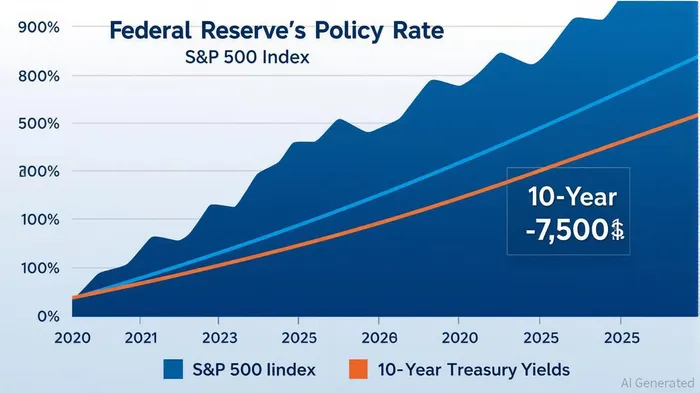
The Federal Reserve's Jackson Hole 2025 speech by Jerome Powell marked a pivotal recalibration of monetary policy, signaling a dovish pivot amid a fragile labor market and emerging stagflationary risks. This recalibration, coupled with a revised monetary policy framework, has reshaped the landscape for currency and equity markets, demanding a nuanced approach to asset allocation. Investors must now balance the dual pressures of inflationary headwinds and growth concerns, all while navigating the political and structural uncertainties of a post-pandemic global economy.
Powell's Recalibration: A Dovish Pivot in a Complex Environment
Powell's speech underscored a shift toward flexibility in the Fed's policy framework, moving away from rigid inflation-targeting models toward a more adaptive strategy. The central bank now acknowledges that maximum employment can exceed traditional estimates without triggering inflationary spirals, a departure from the “shortfalls” language of the past. This recalibration reflects the Fed's recognition of structural changes in the labor market, where both supply and demand for labor have slowed, creating a “curious” equilibrium.
The Fed's policy rate is now 100 basis points closer to neutral, with Powell explicitly warning of downside risks to employment and upside risks to inflation. This duality has led to a strategic pivot: while the Fed remains committed to price stability, it is prepared to cut rates to mitigate labor market fragility. The prospect of a September rate cut, priced in by markets at 89%, has already triggered a surge in equities and a broad weakening of the U.S. dollar.
Stagflationary Risks: Echoes of the 1970s in a Modern Context
The specter of stagflation—high inflation coupled with economic stagnation—has resurfaced, driven by the Trump administration's aggressive tariff policies. These tariffs, akin to the oil shocks of the 1970s, are inflating production costs and threatening to stifle growth. Unlike the 1970s, however, today's economy operates under higher debt levels and lower interest rate cushions, limiting the Fed's ability to respond with traditional tightening cycles.
Historical parallels reveal a critical lesson: stagflation erodes investor confidence, drives capital into cash and commodities, and forces central banks to prioritize inflation control at the expense of growth. In 2025, the Fed's revised framework aims to preempt such scenarios by managing inflation expectations through forward guidance and targeted interventions. Yet, the risk of a self-reinforcing cycle—where higher tariffs drive inflation, which in turn weakens the dollar and further inflates import costs—remains a pressing concern.
Strategic Implications for Investors: The Barbell Approach
In this environment, investors are adopting a “barbell strategy” to hedge against both inflation and growth volatility. This approach combines high-conviction, rate-sensitive equities with long-duration bonds and inflation-linked assets.
- Rate-Sensitive Equities: Sectors such as real estate (REITs in healthcare and data centers), small-cap stocks, and semiconductors are gaining traction. The Russell 2000 index, for instance, has historically delivered 36% returns in the 12 months following rate-cutting cycles, as discount rates decline and valuations expand.
- Inflation Hedges: Long-duration bonds, Treasury Inflation-Protected Securities (TIPS), and commodities like gold are being prioritized. The 10-year Treasury yield's decline post-Powell's speech highlights the market's anticipation of rate cuts, making duration-sensitive assets more attractive.
- Geographic Diversification: A weaker U.S. dollar is fueling capital inflows into emerging markets (EM), particularly in countries with strong fiscal policies. Investors are overweighting EM currencies and EM equities, while maintaining a modest underweight in the dollar and an overweight in the euro.
Navigating Political and Geopolitical Uncertainties
The Trump administration's pressure on the Fed to accelerate rate cuts introduces an element of policy uncertainty. While Powell has reaffirmed the Fed's independence, the political climate demands agility in portfolio management. Investors are advised to rebalance regularly, favoring high-quality credits in high-yield bonds and avoiding sectors vulnerable to trade shocks, such as telecommunications.
Emerging markets, though offering growth potential, require careful selection. Countries with robust fiscal frameworks, like Germany and Italy, are seen as safer bets, while others face risks from global growth slowdowns. Currency positioning is equally critical: the euro's strength against the dollar, projected to reach 1.20–1.22, underscores the need for a diversified currency basket.
Conclusion: A Delicate Balance in a Shifting Landscape
The Fed's dovish pivot, while aimed at stabilizing the labor market, operates within a stagflationary framework that demands strategic foresight. Investors must balance growth opportunities in rate-sensitive equities with inflation hedges and geographic diversification. As Powell's speech signals a departure from rigid policy models, the focus shifts to adaptability—leveraging forward guidance, managing expectations, and maintaining liquidity to weather macroeconomic and political turbulence.
In this recalibrated environment, the barbell strategy offers a roadmap: a dual focus on growth and protection, anchored by a disciplined approach to risk. The coming months will test the resilience of both markets and policymakers, but for those who navigate the duality of inflation and growth with precision, the rewards could be substantial.

Decoding blockchain innovations and market trends with clarity and precision.
Latest Articles
Stay ahead of the market.
Get curated U.S. market news, insights and key dates delivered to your inbox.






Comments
No comments yet