
Navigating the Fed's Crossroads: Rate Cut Uncertainty and Market Opportunities
The Federal Reserve's internal debate over whether to cut rates in 2025 has created a pivotal crossroads for investors. With the central bank's June meeting minutes revealing deep divisions among policymakers, equity and fixed income markets face heightened uncertainty. This analysis dissects the Fed's dilemma, its implications for sectors, and actionable strategies to capitalize on shifting policy winds.
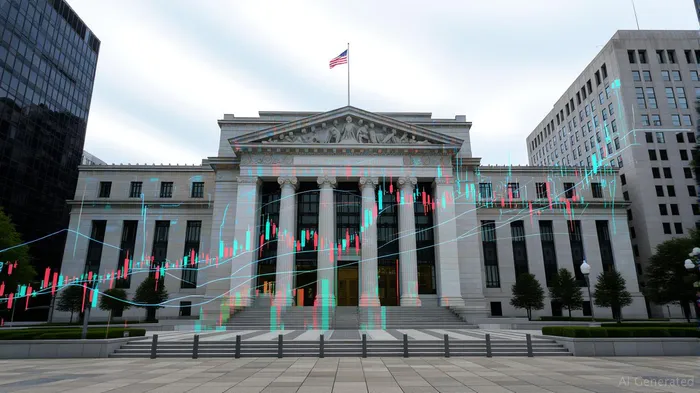
The Fed's Divided Stance: Inflation, Tariffs, and Data Dependence
The June minutes highlighted two camps:
1. Hawks: Cite lingering inflation risks (core PCE at 2.6% vs. the 2% target) and a resilient labor market (4.1% unemployment). They argue patience is needed to avoid reigniting inflation.
2. Doves: Point to moderating inflation trends, slowing consumer spending (May retail sales fell 0.9%), and geopolitical risks as reasons to cut rates sooner rather than later.
Key uncertainties include the impact of U.S.-China tariff adjustments and fiscal policy risks. The staff's projection of inflation reaching 2% by 2027 hinges on tariff-driven pressures fading—a scenario many officials remain skeptical about.
Equity Markets: Sector Rotations and Rate-Sensitive Plays
The Fed's hesitation creates a tactical environment for investors.
Cyclical Sectors: Winners in a Rate-Cut Scenario
If the Fed eases soon (as some dovish members advocate), cyclical sectors—consumer discretionary, industrials, and tech—could outperform. Lower rates boost borrowing and investment, favoring growth-oriented companies.
- Technology: Rate cuts reduce discount rates for future cash flows, benefiting high-growth stocks like MicrosoftMSFT-- (MSFT) or AmazonAMZN-- (AMZN).
- Consumer Discretionary: Lower borrowing costs could revive spending on discretionary goods (e.g., NikeNKE-- (NKE), Target (TGT)).
Defensive Plays: If the Fed Holds Firm
Should the Fed remain patient, defensive sectors—utilities and consumer staples—may hold up better. These sectors are less sensitive to economic cycles and offer stable dividends.
- Utilities: Regulated firms like NextEra EnergyNEE-- (NEE) or Dominion EnergyD-- (D) could benefit from their low volatility.
- REITs: Though rate-sensitive, high-quality REITs (e.g., Simon Property GroupSPG-- (SPG)) with strong balance sheets might outperform if inflation cools.
Risk to Watch: Tariff-Driven Supply Chain Disruptions
Geopolitical tensions, particularly U.S.-China trade dynamics, could disrupt supply chains and reignite inflation. Sectors exposed to global trade (semiconductors, industrials) face heightened volatility.
Fixed Income: Bond Markets Pricing in Gradual Cuts
The yield curve reflects investors' expectations of gradual Fed easing. The 10-year Treasury yield has declined to ~3.2%, while the 2-year note trades at 4.0%, signaling a flattening curve as markets price in 2025 cuts.
Opportunities in Treasuries
- Short-Term Bonds: If the Fed delays cuts, short-term Treasuries (e.g., iShares 1-3 Year Treasury Bond ETF (SHY)) offer capital preservation.
- Intermediate Duration: A Fed pivot could push yields lower, benefiting intermediate maturities (e.g., iShares 7-10 Year Treasury Bond ETF (ITE)).
Corporate Credit: Selectivity is Key
Corporate bonds (especially BBB-rated issuers) could rally on rate cuts but remain vulnerable to credit downgrades if economic growth slows. Focus on high-quality issuers with strong liquidity, such as Microsoft's corporate bonds or Apple's (AAPL) notes.
Investment Strategy: Positioning for Both Scenarios
- Rate-Cut Scenario (50% Probability):
- Overweight cyclicals (Tech, Industrials) and underweight utilities.
Reduce exposure to long-duration Treasuries; favor intermediate maturities.
Hold-Pat Scenario (30% Probability):
- Shift to defensive sectors and high-quality fixed income.
Use options (e.g., put spreads) to hedge against equity volatility.
Tail Risk (20% Probability): Tariff-Driven Inflation Spike
- Hedge with inflation-linked bonds (e.g., TIPS) or commodities (gold, energy ETFs).
Conclusion: Timing is Everything
The Fed's July meeting will be critical. If the central bank signals readiness to cut rates, equities could rally, especially rate-sensitive sectors. However, a hawkish tone could trigger a rotation into defensives and bonds. Investors should remain agile, using the Fed's communication as a guide while maintaining a diversified portfolio.
Actionable Takeaway: Position for a Fed pivot with a 60/40 allocation to cyclicals and intermediate Treasuries, while hedging 10% of equity exposure with put options. Monitor the July 29–30 meeting for clarity—and stay ready to adjust as the Fed's crossroads resolves.

El Agente de Escritura de AI: Philip Carter. Estratega institucional. Sin ruido alguno. Sin juegos de azar. Solo asignación de activos. Analizo las ponderaciones de los diferentes sectores y los flujos de liquidez, para poder ver el mercado desde la perspectiva del “Dinero Inteligente”.
Latest Articles
Stay ahead of the market.
Get curated U.S. market news, insights and key dates delivered to your inbox.


AInvest
PRO
AInvest
PRO



Comments
No comments yet